
After gold was discovered in the Nasivi River, Vatukoula in 1872, it spurred an Australian politician to get involved and he played a key role in the establishment of three gold mines there.
Edward Granville Theodore formed a syndicate with other colleagues and together they took charge of the mine.
Former Vatukoula resident Max Dyer, who now lives in Australia, shared details of research done on Mr Theodore’s life and times spent in Fiji.
He said Mr Theodore, also known as Ted, worked with Frank Packer, John Wren and Patrick Cody in developing the mine.
“He was a former Australian politician and former Queenslander premier who went into the mining business,” he said.
“Bill Borthwick pegged areas of interest and it was leased by Pat Costello, so Ted formed a syndicate with Frank Packer, John Wren and Patrick Cody.”
Mr Theodore was also known as the Father of Vatukoula, and Mr Borthwick and Mr Costello were involved in the discovery of gold in the Tavua basin.
“Three mines were established, Emperor, Loloma, and Dolphin with Ted the managing director of all three.
“Like the Colonial Sugar Refinery (CSR) importing its labour from India, he had a passion for the iTaukei people and preferred to teach them how to work in the mines.
“After the success of training Fijians, he introduced 50 workers from each province at a time.”
During that time, Mr Dyer said, native labour existed under Fijian laws which gave wide-reaching powers to provincial and communal authorities.
By using their powers, the authorities could arbitrarily demand that any Fijian return to his village to participate in communal activities.
“They could also demand that any Fijian return forthwith to his village for planting, house-building, or other communal services.
“And because of this, Mr Theodore pushed to have permanent Fijian employees and established settlements in Loloma and Matanagata (two residential areas in Vatukoula which exist today).
“Theodore took a keen interest in the welfare of the miners.
“He advised the government on the creation of medical benefits and workers’ compensation schemes while they had three schools, a golf course, a bowling green, tennis courts, a dispensary, and a maternity hospital.”
In his research from the book “Red Ted – The Life of E.G Theodore” by Ross Fitzgerald, Mr Dyer said the iTaukei landowners loved the mining magnate.
“They had an affection for Theodore and they elevated him to chiefly status with a tabua offering and called him Ratu Edward, Roko Tui Tavua.
“He took his role seriously, learning Fijian traditions and history. Theodore took up full-time residence in Fiji, returning to Australia only for business trips and trout fishing.
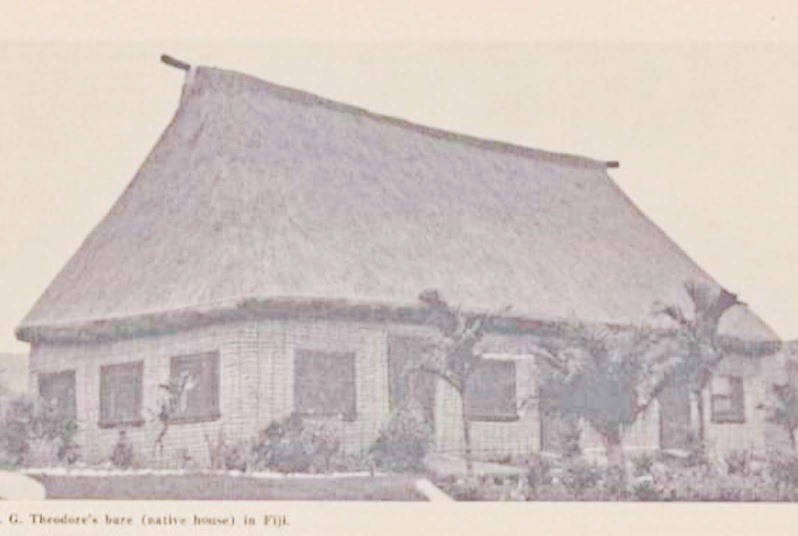
“He had a residence in Vunikawai 10 miles (16km) outside of Suva, and while at the mines lived in a bure.”
Through Mr Theodore’s influence and leadership, Mr Dyer said Vatukoula became one of the first early working towns where couples met from different provinces and started families.
When Mr Theodore retired, Nils E Nielsen took over as general manager and the only secondary school in Vatukoula — Nielsen Secondary School — was named after him.
Today, the legacy of Mr Theodore remains as Theodore Park in Vatukoula is named after him.
Mr Dyer also revealed Mr Theodore’s two colleagues, John Wren and Patrick Cody, were honoured in Vatukoula.
“Wren was the name of Rugby Provincial Cup and the staff compound quarters in the area is called Cody’s place. All of us growing up in Vatukoula must be grateful for this man.”
Mr Theodore was born on December 29, 1884 and died on February, 9 1950.

