
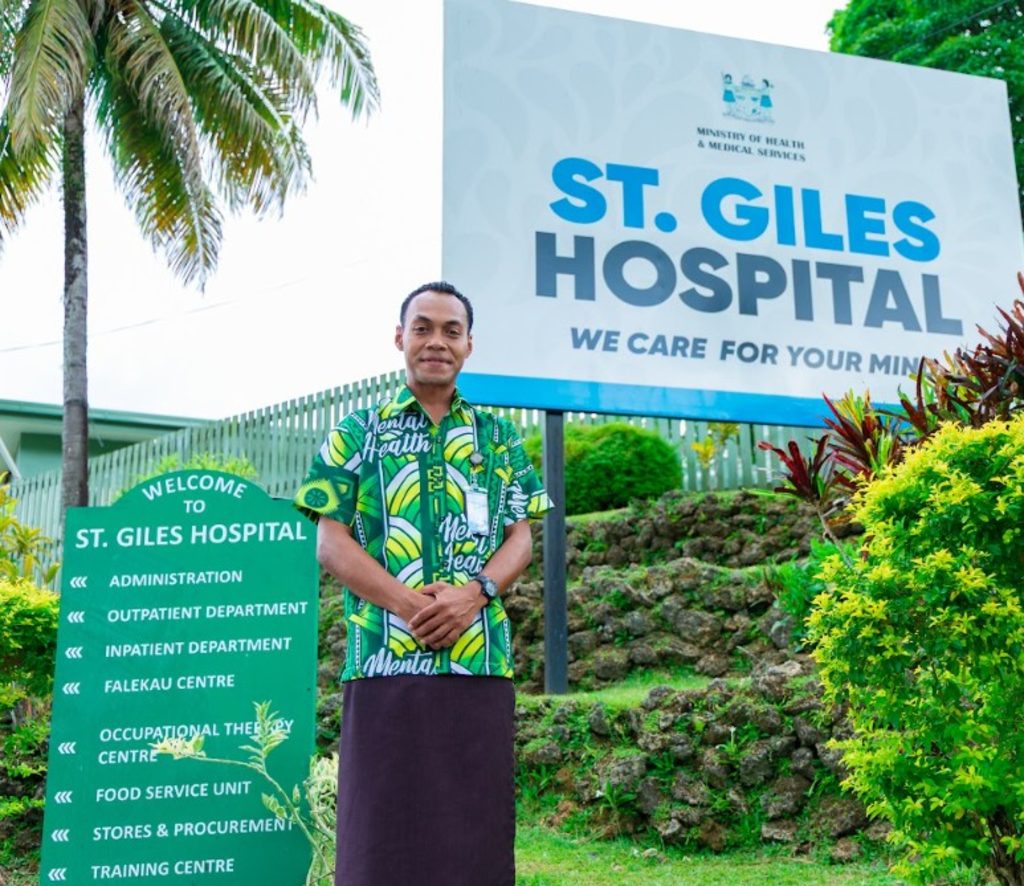
EVERY day at Fiji’s only psychiatric hospital, care and dignity guide the work of Titoko Koroirogo, a trained professional nurse in mental health. These principles shape how mental health care is delivered and how patients are treated, both inside and beyond the hospital.
Originally from Moala in Lau, Titoko has spent eight years working as a mental health nurse, a field still burdened by misunderstanding and silence. Now Nurse Unit Manager of the men’s ward at St Giles Hospital, he leads daily clinical operations in one of the country’s most demanding health settings.
“I enjoy this work. I am more of a clinical person,” Titoko said. “I love taking care of patients daily as they progress.”
Building skills to strengthen care
In 2024, Titoko received an Australia Awards Pacific Scholarship to complete a Postgraduate Diploma in Mental Health Nursing at Fiji National University, graduating as gold medalist and Outstanding Student of his cohort.
“The experience gave me in–depth knowledge and stronger clinical skills that helped me become a better nurse,” Titoko said.
After completing his studies, he returned as Acting Clinical Nurse Educator, delivering training on evidence–based assessments and managing complex mental health conditions, including suicide prevention, managing aggressive behaviour, and recognising early warning signs.
Titoko credits the Australia Awards qualification and experience for strengthening his confidence and leadership as a clinical nurse.
Beyond the hospital walls
For Titoko, improving mental health outcomes means working beyond the ward. He works with schools, youth groups, communities, and civil servants to promote awareness and encourage open conversations about mental wellbeing.
“Mental health and wellbeing are often neglected,” he said. “But it is one of the areas that needs the most attention.”
Between January and August 2025, Fiji recorded 63 deaths by suicide, a figure Titoko described as deeply concerning.
“We are trying to break the stigma associated with mental health,” he said. “It’s about helping people recognise warning signs, especially when it comes to suicide prevention.”
Supporting system reform
Alongside clinical care and community outreach, Titoko is contributing to broader reform efforts. He has participated in consultations on the Mental Health Act and Nursing Act and supports emergency response planning to better integrate mental health considerations.
These efforts reflect a growing recognition that mental health is not only a clinical issue, but a national priority.
Investing in people
Titoko is among the many Australia Awards alumni in Fiji working in health-related fields, supported by the Australian Government to strengthen Fiji’s national capacity under the Fiji–Australia Vuvale Partnership.
Looking ahead, he hopes to continue his studies, mentor future mental health nurses, and eventually pursue an academic career.
“Learning enables you to better serve others,” Titoko said. “And that is something you will never regret.”
Evidence-based skills are shaping Fiji’s public service
Better decisions in government start with better evidence. Across Fiji’s public service, a growing focus on monitoring and evaluation is helping ensure programs deliver results for the people they serve.
For Sheenal Singh, a National Health Information Officer at the Ministry of Health and Medical Services, the Monitoring and Evaluation (M&E) short course was a turning point.
“This course helped me move beyond simply tracking activities to understanding whether our work is actually making a difference to people’s lives,” Sheenal said.
From Course to Impact
In 2025, 19 civil servants from 17 government agencies completed the inaugural Australia Awards Short Course in Monitoring and Evaluation (M&E), delivered by the University of New England in response to priorities from Fiji’s 2023 National Economic Summit.
Delivered over six months in Fiji and Australia, the course built practical skills in evaluation design, data analysis, and integrating gender equality, disability, and social inclusion (GEDSI) into program planning.
For Sheenal, the training strengthened her ability to produce credible evaluations and present clear evidence to decision makers, helping ensure programs deliver real and lasting impact.
Learning From Practice
A key feature of the course was exposure to Australia’s strong evaluation culture. Visits to Parliament House and Treasury in Canberra demonstrated how evidence informs policy, strengthens accountability, and supports transparent governance.
Sheenal also connected with professional networks, including the Australian Evaluation Society, highlighting the value of collaboration and knowledge-sharing communities in improving public sector practice.
Turning skills into results
Since completing the course, Sheenal has applied her new skills within the Ministry of Health and Medical Services. She contributed to the Ministry’s first evaluation of a previous Strategic Plan, including the MHMS-led review that informed the Fiji Health Transformation Summit in December 2025.
“I’m now producing better evaluation reports that inform both strategic and operational planning,” Sheenal said. “I’m also sharing these skills through mentoring and workshops with Divisional Health Information Officers, helping to build a stronger culture of monitoring and evaluation across the Ministry.”
Investing in capability
As part of Australia’s global scholarships and short courses program, Australia Awards supports Fijians to build knowledge, skills, and leadership. These opportunities foster strong people-to-people links and contribute to Fiji’s national development priorities under the Fiji–Australia Vuvale Partnership.
Planting seeds of success: Saukuru shapes future through agriculture
What started as a study opportunity in Australia, is now shaping how students in Ovalau learn, grow, and prepare for life after school. Alosio Momo Saukuru, the Principal of St John’s College in Levuka, is using agriculture to equip the next generation of Fijians with practical life skills, food security, and economic independence. That vision began in 2012, when Alosio received an Australia Awards Scholarship to pursue a Master of Agricultural Studies, specialising in horticulture at the University of Queensland. The experience broadened his thinking about how practical skills can be woven into everyday learning.
“Without that exposure, my horizon would have been limited,” Alosio said. “The things we are doing now at St John’s College were only possible because of that experience.”
Learning by doing
After returning to Fiji, Alosio was appointed as Principal of St John’s College, a role he has now held for eight years. Under his leadership, agriculture has moved beyond the classroom and into daily school life.
Agricultural education at St John’s College goes beyond theory or textbooks – students at the college now operate a working school farm on three acres of land, growing vegetables and root crops that supply the school hostel, saving costs while improving nutrition. Surplus produce is sold at the local market through a partnership with the Ministry of Agriculture, generating income for the school. The farm is also a classroom where students plan production cycles, manage land, and learn to operate machinery, gaining discipline, teamwork, and responsibility along the way.
“Running a mini commercial farm at the school helps students return to their communities with a stronger commercial approach to production, which ultimately benefits the nation.”
Beyond classroom walls
For Alosio, agricultural education is more than a school initiative, because in rural and maritime communities like Ovalau, access to skills, employment, and food security is very important. By teaching students how to farm efficiently and with a commercial mindset, Alosio helps young people see agriculture as a viable pathway, not a last resort. The impact is already visible. One former student has gone on to become a successful commercial farmer on Ovalau, a clear sign that early exposure can translate into long-term opportunity.
“When students leave with these skills, the benefits don’t stop with them,” Alosio said. “They spread to families, communities, and the wider economy.”
A foundation that lasts
Alosio credits his time studying in Australia for giving him the confidence to try new ideas and lead change. He is one of around 1,800 Australia Awards Fiji alumni applying knowledge gained overseas to strengthen institutions and communities back home. As Fiji and Australia celebrate their enduring Vuvale Partnership, stories like Alosio’s highlight how long-term investment in people can create lasting impact where it matters most.
His message to young Fijians
“Find a purpose, pursue it with dedication, and see it through. That commitment will be your victory and when applied on a larger scale, it will become your legacy.”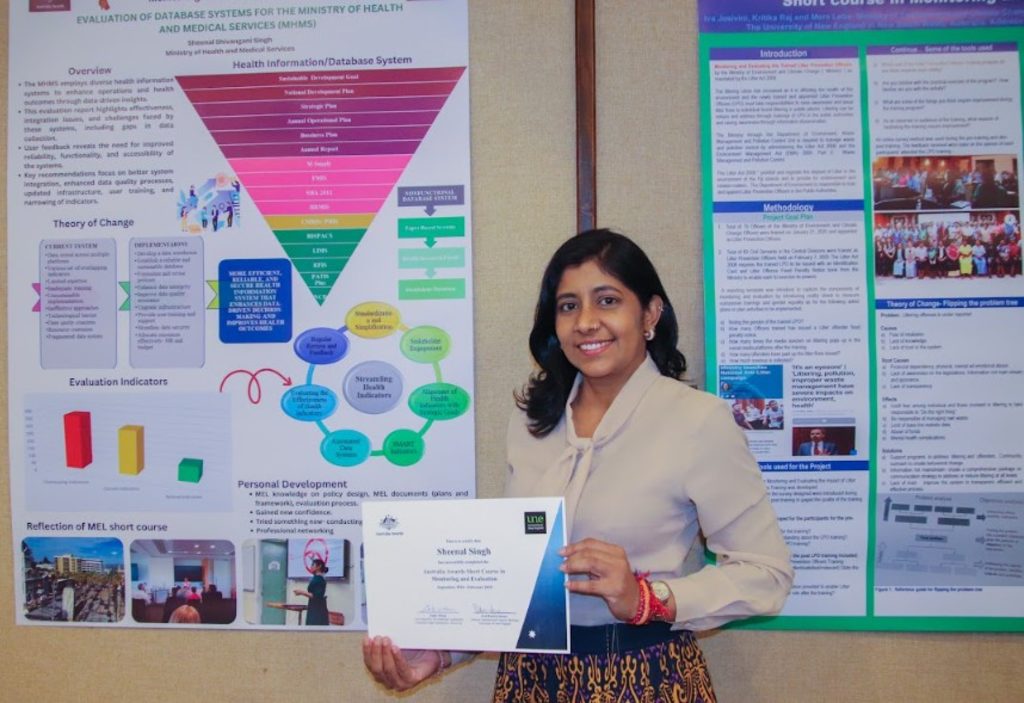
National Health Information Officer Sheenal Singh completed the Australia Awards Short Course in Monitoring and Evaluation in 2025.
Picture: SUPPLIED
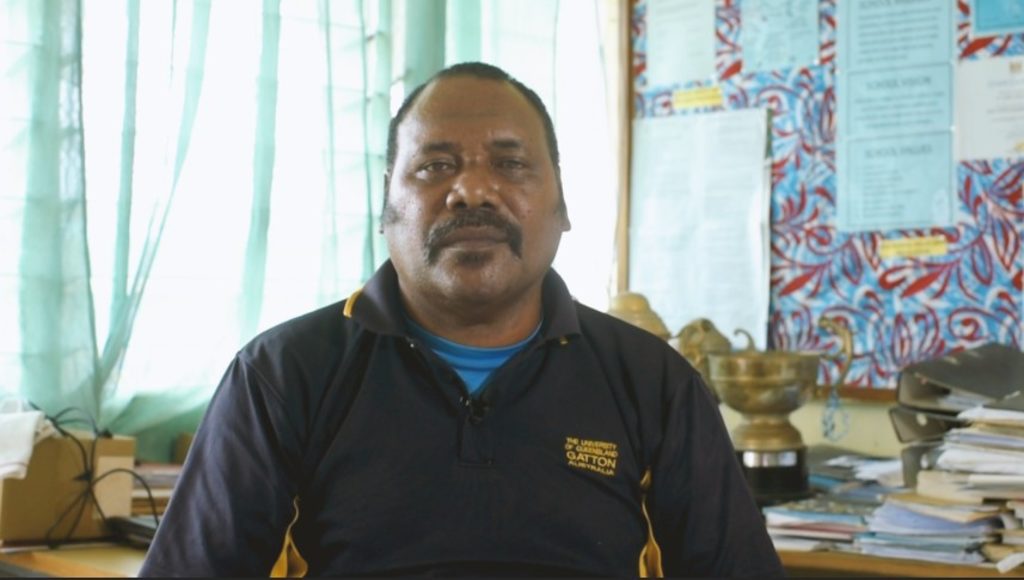
Alosio Saukuru. Picture: SUPPLIED

