
The Universal Periodic Review (UPR) is a unique process established by the United Nations Human Rights Council (HRC) in 2006. Its purpose is to assess the human rights records of all 193 UN member states. Fiji will be examined under the UPR in January 2025, the first time under the Coalition Government. The last time Fiji underwent an UPR examination was in November 2019. The UPR is considered a co-operative and state-driven process, aiming to ensure equal treatment for every country and to encourage the promotion and protection of human rights globally. Ahead of the UPR, four non-government organisations have made a submission to the United Nations to be considered at the UPR. They are CIVICUS: World Alliance for Citizen Participation, Pacific Islands Association of Non-Government Organisations (PIANGO), Fiji Council of Social Services (FCOSS) and Amnesty International. In their submission, the four organisations have examined the Government of Fiji’s compliance with its international human rights obligations to create and maintain a safe and enabling environment for civil society. They have specifically, analysed Fiji’s protection and promotion of the rights to freedoms of association, peaceful assembly and expression and unwarranted restrictions on human rights defenders (HRDs) and activists since its previous UPR examination in November 2019.
Freedom of association
The submission states most civil society organisations (CSOs) are registered under the Fiji Charitable Trusts Act and that the law requires that CSOs be formed only for “religious, educational, literary, scientific, or charitable purposes” in order to be incorporated as charitable trusts. Any organisation registered under the Charitable Trusts Act is automatically exempt from paying income tax. “In November 2021, the Registrar of Titles issued a notice to charitable organisations stating that those that do not submit their annual returns and a copy of their annual audited accounts would be named and shamed, with their information, containing names and addresses of trustees, board members and office holders, published in the news dailies, with 30 days to convince the Registrar of Titles that their organisation should not be deregistered,” states the submission. “Similar language to naming and shaming was also added to the Companies Act in 2020, which has an impact on CSOs registered under that act. This raises serious concerns around the right to privacy and due process of law. In practice, most CSOs are able to register and operate with minimum government interference.” The submission states according to CSOs, since the change of government in December 2022, the space has opened up for them to register and undertake their activities campaign, including organising debates, public forums, meetings, interviews, panel discussions, or publishing any material that is related to the election following the issuance of the writ of elections. “In a positive step by the current government, it passed the Employment Relations (Amendment) Bill 2023 to reform labour laws and improve the rights of workers. As a result of the change, workers in the essential services and industries now have freedom of association rights in line with other workers.”
Freedom of expression, media freedom and access to information
The submission states Fijian authorities have previously used sedition provisions in the Crimes Act, including section 66 (seditious intention) and section 67 (sedition offences) to target the media and opposition politicians. “These provisions are inconsistent and incompatible with international human rights standards. The Public Order (Amendment) Act 2012 also has a chilling effect on expression. Section 15 of the Act states that any person who ‘maliciously fabricates or knowingly spreads abroad or publishes, whether by writing or by word of mouth or otherwise, any false news or false report tending to create or foster public alarm, public anxiety or disaffection or to result in the detriment of the public’ is guilty of an offence and could face a one-year prison sentence,” states the submission. “The media also faced restrictions and attacks under the previous government. In August 2020, Bainimarama ordered the Fiji Broadcasting Corporation to stop a religious debate on its channel between the leader of a spiritual movement and local church groups, claiming it would confuse religious groups. In February 2022, former attorney-general Aiyaz Sayed-Khaiyum attacked media organisations after he was asked at a media conference if the Attorney-General and other ministers had failed to adhere to COVID-19 safety protocols during a tour of the Western Division,” states the submission . The submission states in one of his first acts as head of government in January 2023, Prime Minister Rabuka officially reversed the politically motivated travel ban against Ahluwalia. The ban against Padma Lal was also reversed.
Freedom of peaceful assembly
The submission states under the previous government, trade unions were often denied permits to march. The FTUC was denied a permit to march and hold a rally in Suva on International Labour Day on May 1, 2021, with no written reasons given. In November 2021, a peaceful climate march organised by young people ended abruptly after police officers stepped in to stop the rally in Suva.
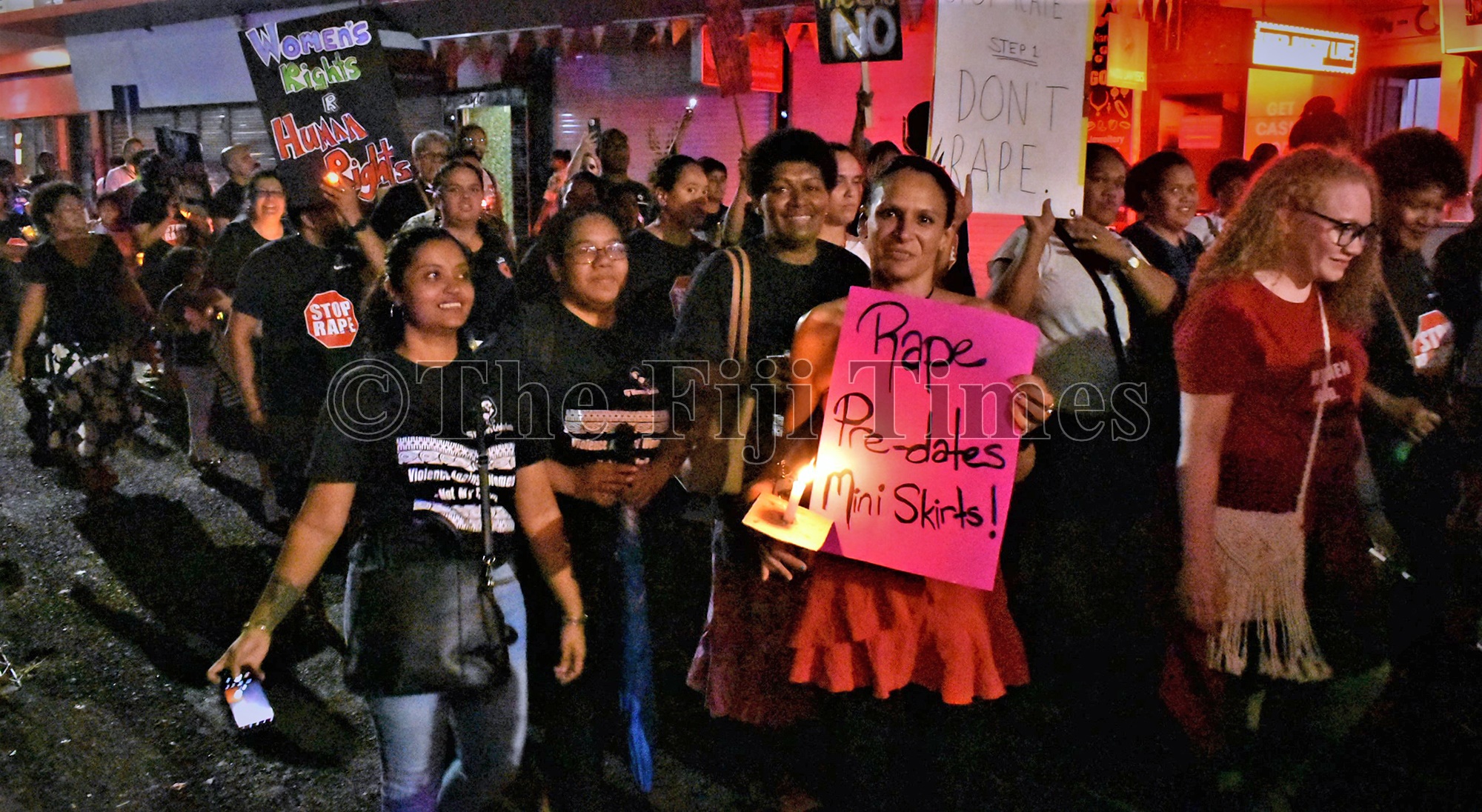
“The environment for protests has improved under the current government, but some groups continue to face challenges from the police. In March 2023, police attempted to block a Reclaim the Night march in support of ending violence against women. On 25 August 2023, police prevented members of the FijiFirst political party from joining a peaceful protest against the release by Japan of Fukushima nuclear wastewater into the Pacific Ocean. In November 2023, police cancelled a peaceful march planned in Suva by USP students to call for an end to genocide in Gaza. The government revoked their permit, citing national security concerns,” states the submission.
Key recommendations to the government of Fiji
- Take measures to foster a safe, respectful and enabling environment for civil society, including by removing legal and policy measures that unwarrantedly limit the right to freedom of association;
- Remove all undue restrictions on the ability of CSOs to register and operate under the Charitable Trusts Act;
- Review the 2014 Electoral Act so that any CSO may engage in, participate in or conduct any campaign, including by organising debates, public forums, meetings, interviews, panel discussions, or publishing material related to and election without impermissible restrictions;
- Provide civil society members, HRDs and journalists with a safe, enabling and secure environment in which to carry out their work;
- Ensure the right to freedom of expression and media freedom by bringing national legislation into line with international standards;
- Repeal the sedition provisions of the Crimes Act;
- Ensure that journalists and writers can work freely and without fear of retribution;
- Refrain from harassment or intimidation of people peacefully expressing views; and
- Halt all form of harassment and intimidation of peaceful protesters.

