
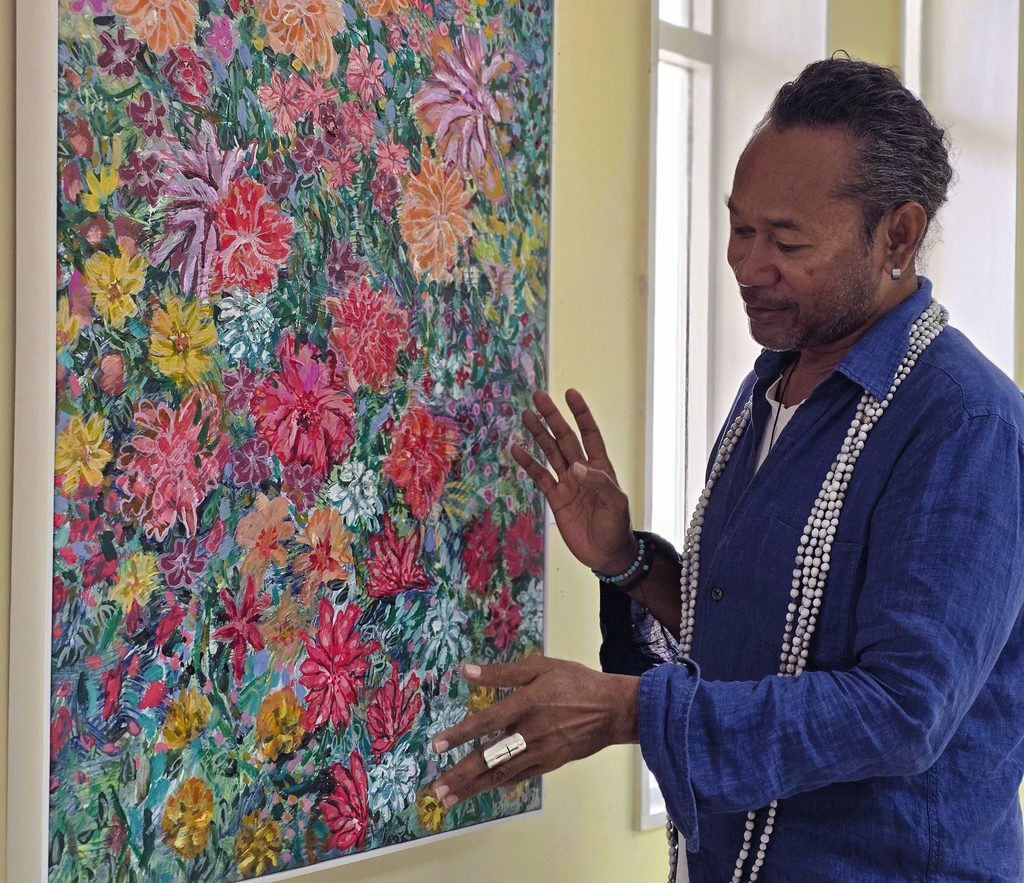
FOR nearly four decades, Lambert Ian Ho has quietly but powerfully shaped Fiji’s visual arts landscape, not only through his evocative paintings, but through a philosophy that places community, culture and compassion at the centre of creativity.
Of Chinese and iTaukei heritage, with roots in Kadavu and Ovalau, Lambert’s story is as richly layered as the works he produces.
Raised in Lautoka in a large family of 11 siblings, he grew up far removed from the formal art institutions that often define artistic careers.
His father worked as a carpenter at the Fiji Sugar Corporation, while his mother cared for the household, a firm foundation that would later influence both the discipline and emotional depth of his work.
Today, Lambert is one of Fiji’s pioneering contemporary artists, yet he remains, by his own admission, grounded in the everyday rhythms of life, family, community and the stories that unfold around him.
“I’ve been painting for almost four decades now,” he said.
“Fashion, jewellery, sculpture, visual art, I’ve explored different forms. But painting has always been central.”
Art as a vehicle for giving
Each year, Ho stages a solo exhibition, often showcasing up to 50 pieces.
His most recent exhibition, held at St Stephen’s Gallery in Suva, continued a long-standing personal tradition of using art as a vehicle for giving back.
Proceeds from his exhibitions have supported a wide range of causes over the years, from children’s charities and mental health initiatives to maritime schools and rural communities.
This year, as in previous exhibitions, he directed support to Father Law Home, a refuge that provides care for our senior citizens.
“It’s been wonderful giving back,” he said.
This ethos of generosity is not incidental to Ho’s work but rather integral, because for him, art is not merely about aesthetics or personal expression, but about impact.
It is a means of bridging gaps, uplifting others and creating opportunities, particularly for young people with untapped creative potential.
Nurturing the next generation
Across Fiji, Ho has conducted informal art classes in schools and communities, including in Nakasi, where children gather in public spaces to learn, experiment and discover their abilities.
Supported at times by local businesses donating art supplies, these grassroots efforts have helped nurture a new generation of artists.
“What’s lacking here in our education system and in our societies is art programmes,” he said.
“Dance, music, visual arts, traditional crafts, all of it. These are important spaces for young people.”
Lambert believes that creativity is not a luxury but a necessity and must be used as a tool for expression, resilience and even economic empowerment.
A canvas inspired by life
His own work reflects this expansive view of art.
Rejecting the confines of a single style, he embraces variation and spontaneity.
No two pieces look quite the same, a deliberate choice that keeps both artist and audience engaged.
“I get bored painting one style,” he shared.
“So, I just keep churning out pieces as I go.”
Yet beneath this stylistic diversity lies a consistent thread of having a deep engagement with the world around him.
His paintings draw inspiration from people, conversations, social dynamics and the environment, particularly the ocean, which features prominently in many of his works.
“Most of my art depicts what’s happening around us,” he explained.
“Society, the environment, climate change, these are things that impact us every day.”
Human connection is another recurring theme.
Faces and figures, especially those of women, appear frequently in his work, imbued with a softness and strength that reflect his personal influences.
“The women of Fiji inspire me,” he said.
“I always think of my mother when I paint women’s faces. The strength of a mother, the care she gives, that comes through.”
Even casual moments like a talanoa with friends or a shared meal, can find their way onto his canvas, transformed into visual narratives that capture both memory and emotion.
Art as message and mirror
While Lambert has largely avoided overt political commentary in his public work, he acknowledged a growing interest in exploring social issues more directly through art.
He believes visual storytelling could offer a powerful alternative perspective that invites reflection and dialogue.
“When you read something in the newspaper, it’s one way,” he said.
“But when you see it in art, it’s different. It makes you think. It becomes a conversation piece in your home.”
This belief in art’s transformative potential extends beyond galleries and private collections.
Lambert is a strong advocate for public art, particularly murals, which he sees as a way to revitalise urban spaces and foster community ownership.
High above a well-known Suva landmark, a mural he co-created stands as a testament to this vision, a splash of colour in an otherwise grey cityscape.
But for this pioneering artist, it is only the beginning.
“There are so many walls in this city that could be colourful,” he said.
“We just need support from councils, from building owners and we can transform these spaces.”
More importantly, he emphasised the role of local communities in such projects. By involving young people in creating murals, he believed a sense of pride and responsibility is cultivated.
“They won’t vandalise it because it’s their work and because they own that space,” he explained.
Advice to aspiring artists
As an artist who has navigated the challenges of sustaining a creative career, Lambert was candid in his advice to emerging painters.
Talent alone, he stressed, is not enough, discipline, persistence and human connection are equally vital.
“You need to treat it like a job,” he said.
“Wake up early, work hard. And make connections, in your community, your church, your vanua.”
He also pointed to the importance of support networks, highlighting the role of organisations such as the Fiji Arts Council in nurturing artistic talent.
Across the country, he noted, there are hundreds of artists, many self-taught,who are eager to mentor and guide the next generation.
“There’s so much talent in Fiji,” he said.
“People just need the opportunity.”
Unlocking the creative economy
That opportunity, however, remains one of the sector’s greatest challenges.
Despite the global success of creative industries and the achievements of Fijian performers, VOU, on international stages, Lambert believes the arts continue to be undervalued at a national level.
“The creative industries bring in billions worldwide,” he said.
“Dance, music, visual arts, this is a serious industry.”
He pointed to the need for greater investment in infrastructure, training and international exposure, envisioning a future where Fijian artists regularly participate in major global exhibitions and events.
“We have the talent; we just need the resources” he said.
New galleries are emerging, platforms are expanding, and slowly, the foundations for a more vibrant creative economy are being laid.
For now, he continues to do what he has always done, paint, teach and give back.
In every brushstroke, there is a quiet determination to not only create beauty, but to leave behind something meaningful for those who will follow.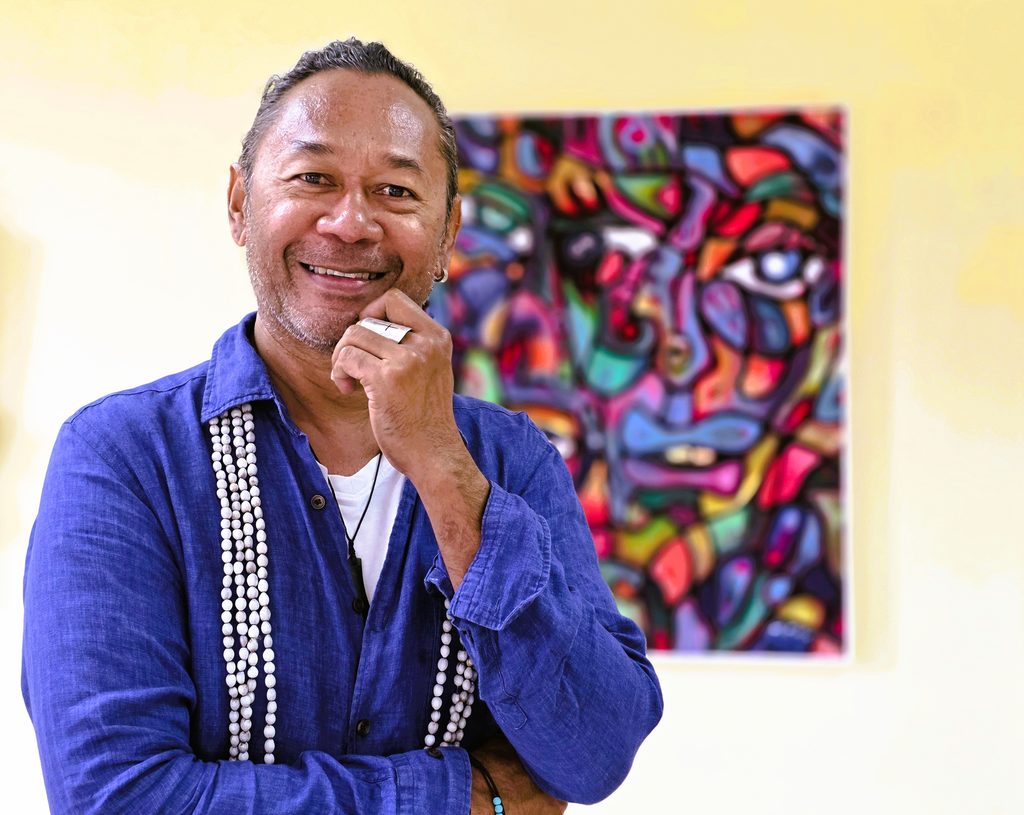
Lambert Ho stands before one of his latest artworks during his recent exhibition in Suva, reflecting his deep connection to community, culture and the environment through nearly four decades of artistic expression. Picture: ALIFERETI SAKIASI
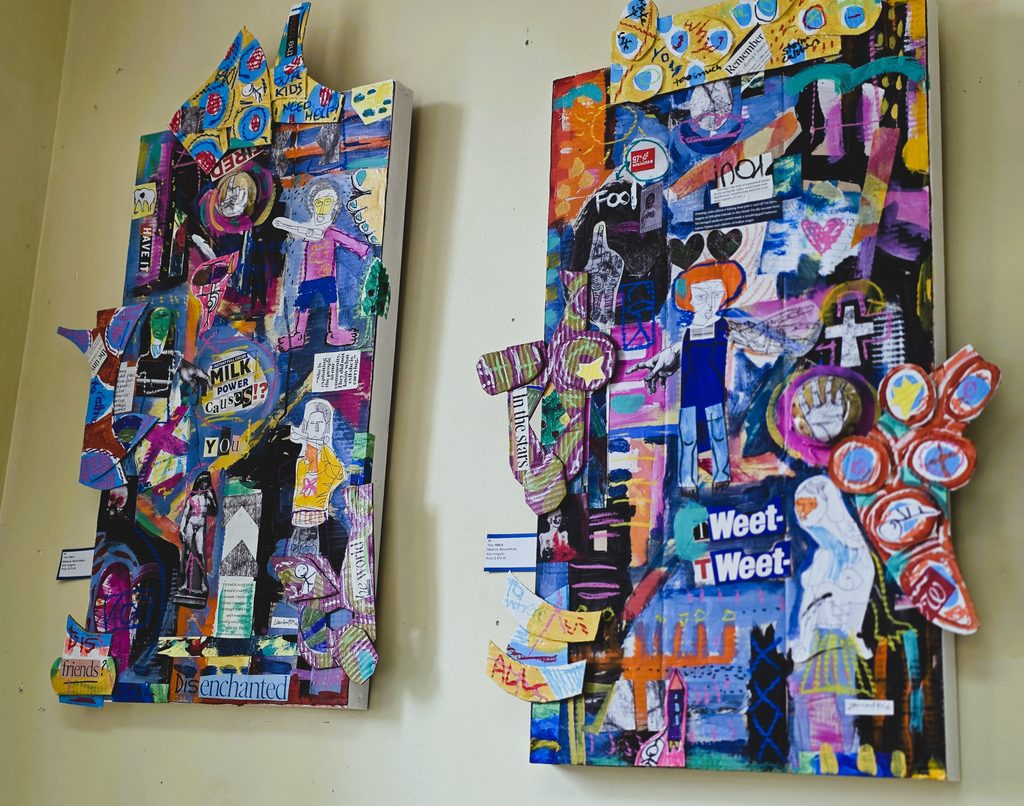
A montage piece by Lambert which is a classic illustration of his diversity and depth.
Picture: ALIFERETI SAKIASI

