

For much of his life, Atueta Rabuka has been drawing, thinking, questioning and quietly pushing against the margins of what Fiji traditionally considers a “real” career.
An emerging visual artist and poet, Mr Rabuka belongs to a growing generation of creatives who see art not as a hobby or pastime, but as a potential industry capable of sustaining livelihoods, shaping our national identity, and contributing meaningfully to the national economy.
Yet, he explained that the road has never been smooth.
At the heart of Mr Rabuka’s thinking is a belief that Fiji still carries a deeply entrenched, colonial-era mindset which regards art as decorative, secondary and economically insignificant.
The first major obstacle, he said, is the perspective that art is one useless thing to do.
That perception, he argued, continues to shape how families, schools, universities and even policymakers approach the arts today .
Valuing the ‘creative economy’
Mr Rabuka noted that the conversation overseas has already shifted. Countries such as New Zealand have quantified the contribution of what is now commonly referred to as the “creative economy”, placing it alongside agriculture, tourism and manufacturing as a serious economic driver.
In Fiji, however, he believes this recognition remains overdue.
“The creative industry involves everything,” he said.
Mr Rabuka pointing out that design, music, film, photography and visual art are embedded in daily life, from road signs and public health pamphlets to advertising, album covers and commercial jingles.
Each element requires skilled labour, yet the people behind them are rarely acknowledged as professionals.
One of the fundamental problems is that art in Fiji is often flattened into a single category, frequently conflated with craft.
While weaving, net-making and traditional skills are valuable in their own right, Mr Rabuka believes failing to recognise the diversity within the creative sector prevents it from being treated as a serious industry.
He compares this to agriculture. Fiji does not simply refer to “farming” as one activity; it distinguishes between crops, livestock, soil science, fertiliser use and yield management.
That same attention to detail is missing when it comes to art.
“If we took art seriously we would go into the minute details, graphic design, printing, videography, tattooing, right down to the materials, the processes and the science behind them” .
Education as the starting point
For Mr Rabuka, meaningful change begins with education. He believes art should be treated as a continuous discipline, taught from primary school through to tertiary level, rather than an optional extra or afterthought.
Students overseas grow up with access to art and music classes throughout their schooling. These experiences not only build skill, but also help young people understand the labour, discipline and creativity behind the work they consume.
“When you know what it takes to create a song or a drawing, you appreciate it more.”
That appreciation, he believes, is essential if Fiji is to nurture a generation that respects artists, pays for creative work and understands its value beyond entertainment.
Lessons from a stolen design
Mr Rabuka’s views on protection and ownership have been shaped by personal experience. At just 15 years old, while still in high school, he began designing T-shirts.
Naïve and unfamiliar with intellectual property laws, he handed his designs to a printing company, only to later discover they had been reproduced without his consent. His artwork appeared on stickers, taxis, buses and flags, far beyond the original 100 T-shirts he had commissioned.
At the time, he admitted, he felt more pride than anger. It was only later when reality set in that someone else had profited significantly from his work, while he had no legal recourse.
“I hadn’t copyrighted anything. I didn’t know how. So, it was up for anybody to take.”
The experience became a hard lesson that exposed what Mr Rabuka described as Fiji’s ‘copy culture’, where successful ideas are quickly replicated without credit or compensation.
He stressed that this problem persists largely because artists are unaware of their rights, while those who exploit them assume there will be no consequences.
Again, he returned to the agricultural analogy. Theft in farming carries penalties and legal recognition, while theft in art is still treated casually. Until creative work is widely understood as someone’s “bread and butter”, the imbalance will continue.
AI – tool or threat?
Few topics provoke as much reflection from Mr Rabuka as artificial intelligence.
Having followed its development closely, he views AI as both a powerful tool and a profound ethical challenge. Used correctly, he believes AI can accelerate parts of the creative process, generating references, suggesting colour palettes or helping musicians explore chord progressions.
In his own work, he sees potential in using AI to save time without replacing the human hand or mind.
The danger, however, lies in creators presenting AI-generated work as entirely their own.
To explain this, Mr Rabuka turned to sport.
He likened a trained artist to an Olympic sprinter who spends years preparing for a 100-metre race.
A remixer or reinterpretive artist might be running only part of that distance, still applying skill and effort.
But someone who relies entirely on AI is, in his words, “telling a robot to run the race for him and then claiming the gold medal”.
For Mr Rabuka, that distinction matters because art must involve sacrifice, intention and human experience, qualities no machine can replicate. While he is sceptical about the feasibility of regulating AI through legislation alone, he believes awareness and ethics must guide its use.
As with many of Fiji’s creative challenges, he sees education, rather than enforcement as the most realistic starting point.
Cards, culture and identity
Mr Rabuka’s visual style is instantly recognisable, drawing heavily on traditional iTaukei imagery like war clubs, attire and cultural symbols, reimagined through contemporary design.
One of his most notable projects began almost accidentally, a single playing card illustration intended as a tattoo. The design, a Fijian reinterpretation of the Queen of Spades, struck a chord.
Requests followed in for other alternative characters and expanded concepts. What began as a standalone idea is evolving into a full deck, infused with local identity but firmly within a universal visual language.
“People see it and instantly know it’s a card, then they see the Fijian element.”
Beyond aesthetics, Mr Rabuka sees the project as a pathway to sustainability. A deck of cards, once copyrighted and produced, can generate passive income, sold as souvenirs, adapted into new games or used as a platform for storytelling about ancient Fiji.
“It takes me three days to draw one,” he revealed. So, the goal is to reach a point where at least one loaf of bread a week is promised.”
Advice for the next generation
Mr Rabuka’s advice for young artists dreaming of a creative career is to first and foremost prioritise education, not because art lacks value, but because knowledge, especially technological literacy, strengthens creative independence.
He encourages consistency in honing unique skills.
“Never stop drawing, even 30 minutes a day can make a difference.”
In fact, he believes the gap between someone who “can draw” and someone who cannot is often no more than two weeks of disciplined practice, as talent matters less than persistence.
Equally important is whose advice young artists listen to. Mr Rabuka cautions against following guidance from people unfamiliar with creative work, noting that poor advice once led him down unnecessary detours.
Instead, he urges emerging artists to seek mentors who understand both creativity and its realities, those already walking the path they hope to follow.
Mr Rabuka is realistic about the challenges facing artists in Fiji today. He acknowledged that change may come too late for some in his generation.
Still, he remains committed to “planting seeds,” sharing lessons, raising awareness and helping those who come after him navigate a difficult landscape. For him, art is not merely expression, it is labour, identity and survival and until Fiji fully recognises that truth, artists like Atueta Rabuka will continue to draw.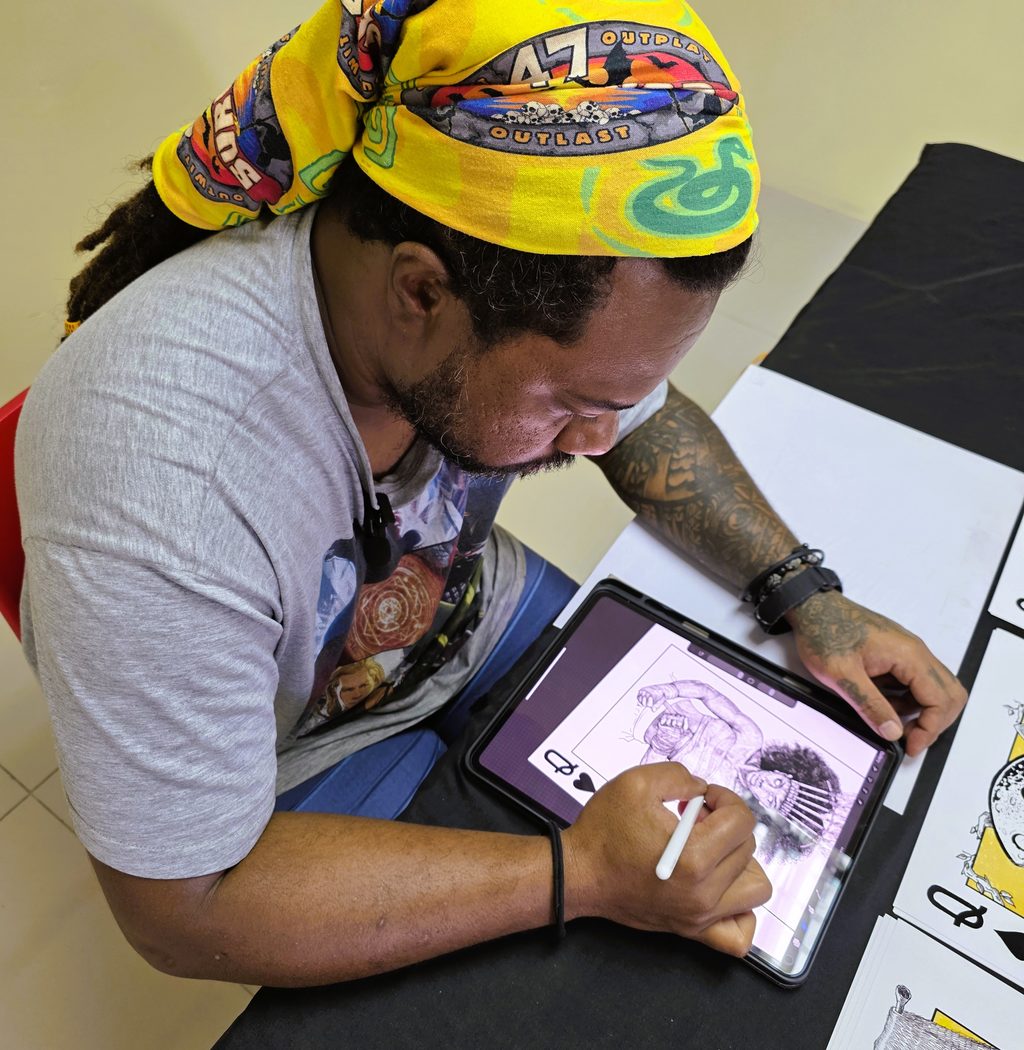
Mr Rabuka works on his upcoming piece – the Queen of Hearts.
Picture: ALIFERETI SAKIASI
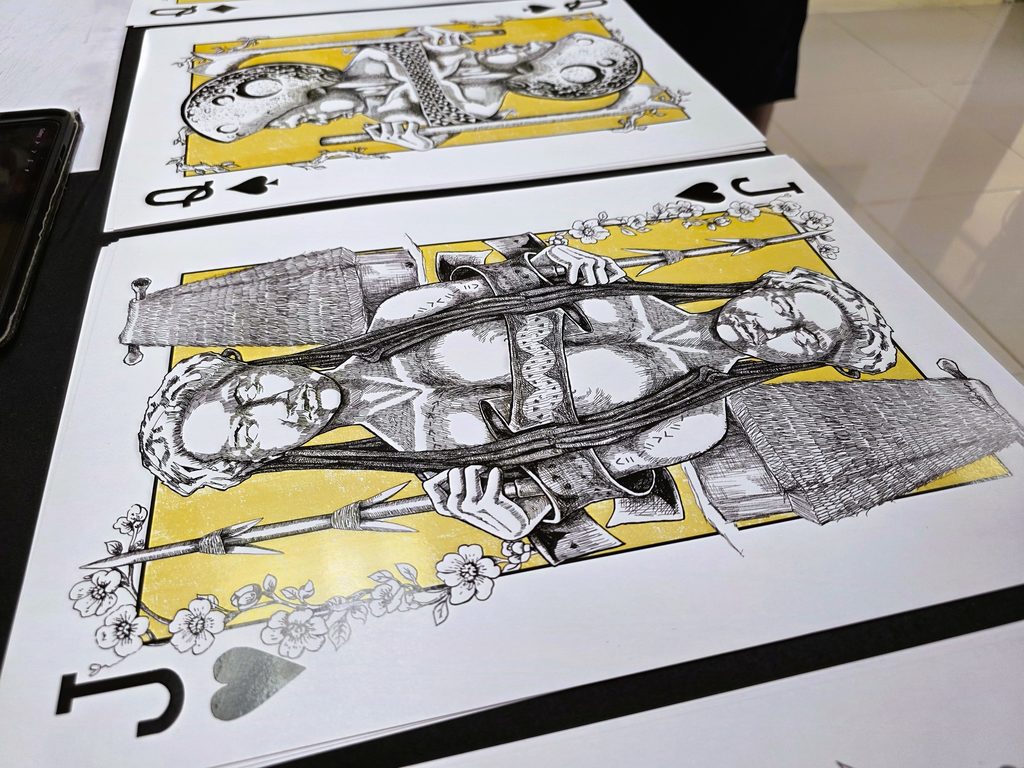
Atueta Rabuka’s Jack of Hearts and Queen of Spades designs. Picture: ALIFERETI SAKIASI
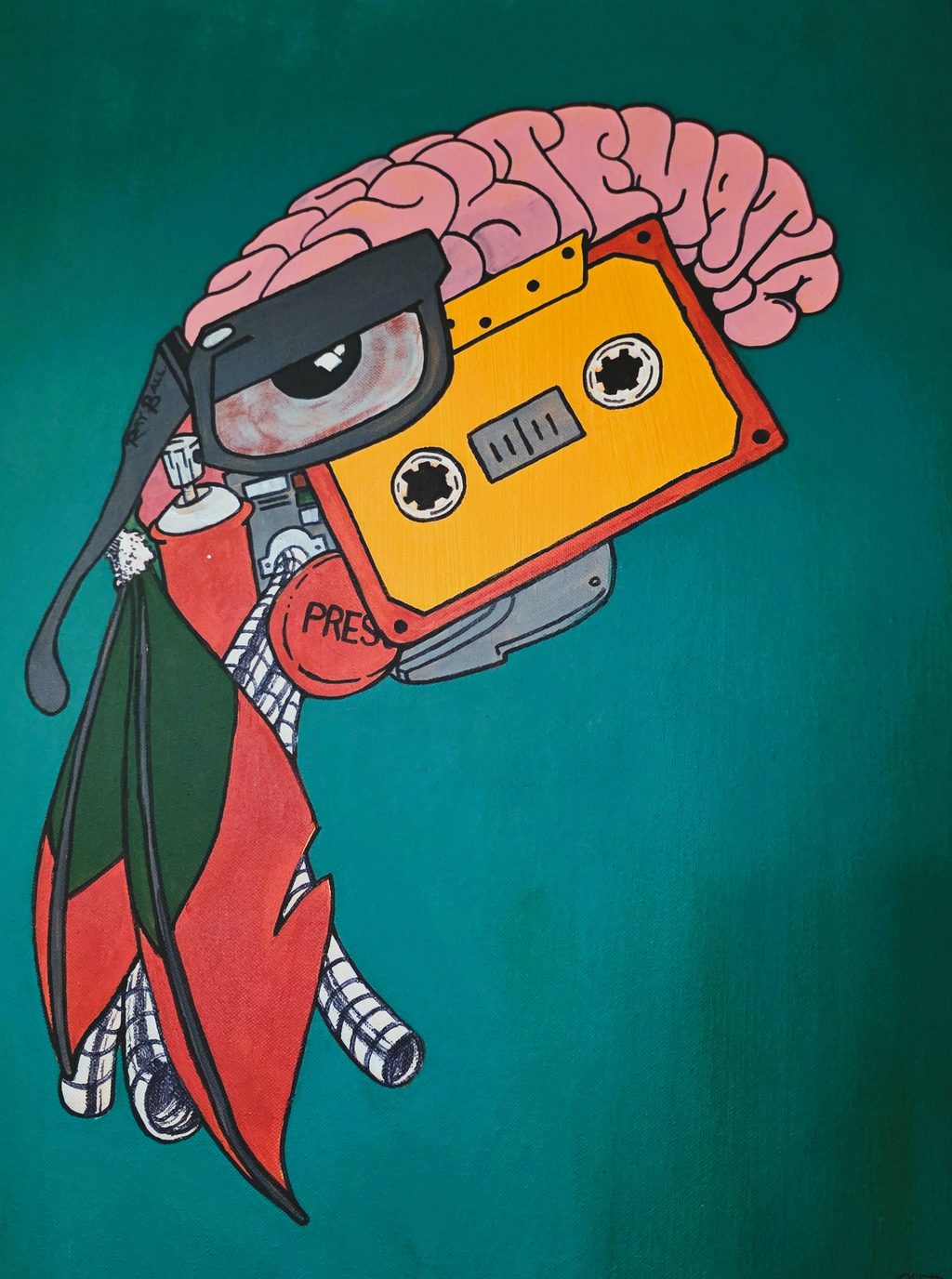
His piece titled “Narratives” on display at the Fiji Arts Council gallery in Suva. Picture: ALIFERETI SAKIASI

Mr Rabuka is a gifted poet as well as painter. Picture: ALIFERETI SAKIASI

