
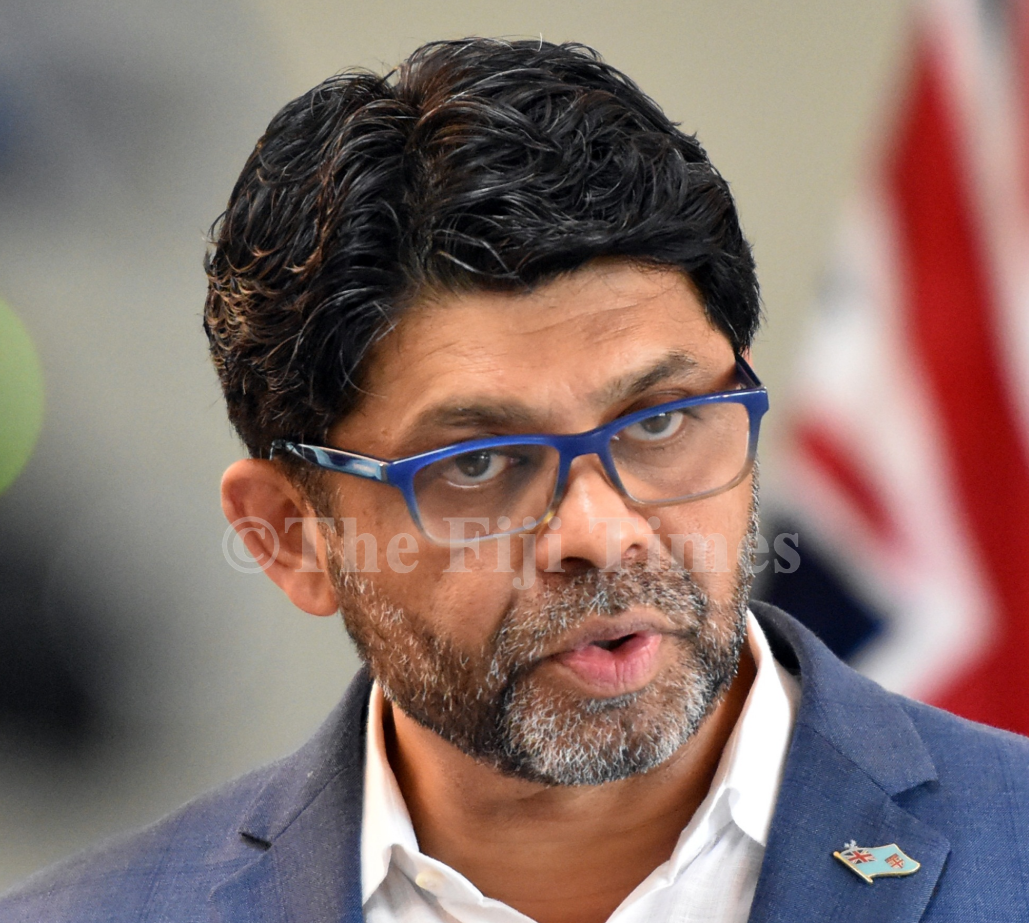
ANY constitutional issues in the country, including controversies involving institutions like FICAC, should be addressed strictly in accordance with the Constitution and the rule of law, says former Attorney General Aiyaz Sayed-Khaiyum.
This was Mr Sayed-Khaiyum’s stance when asked to comment on the President’s constitutional obligations when acting on the advice of the Judicial Services Commission (JSC), particularly in relation to the appointment or suspension of the Commissioner of FICAC.
This newspaper had sought his legal interpretation of whether the President is bound to act on the advice of the JSC without discretion.
While Mr Sayed-Khaiyum did not explicitly comment on the drafters’ intent regarding the limits of the President’s powers, he believes that both the JSC and the Office of the President would have sought legal advice on the matter.
“It would not be amiss to say that both the Judicial Services Commission and His Excellency the President’s Office would have obtained legal advice,” Mr Sayed-Khaiyum said.
“And that any constitutional matter at hand should be resolved giving primacy only to constitutionalism and the rule of law.”
This newspaper also asked whether the President is legally bound to accept and implement advice from the Judicial Services Commission without discretion; whether a failure to act on properly tendered advice would amount to a breach of constitutional duty; whether any residual or implied discretion exists to delay, question or decline such advice; whether the same constitutional principles apply in the case of the Commissioner of FICAC; how the phrase “on the advice of” should be interpreted within Fiji’s constitutional framework; and whether it was the intention of the drafters for the President’s role in these circumstances to be purely formal and procedural.
Journalists from this newspaper also visited Chief Registrar Tomasi Bainivalu at his office yesterday but were ignored.

