
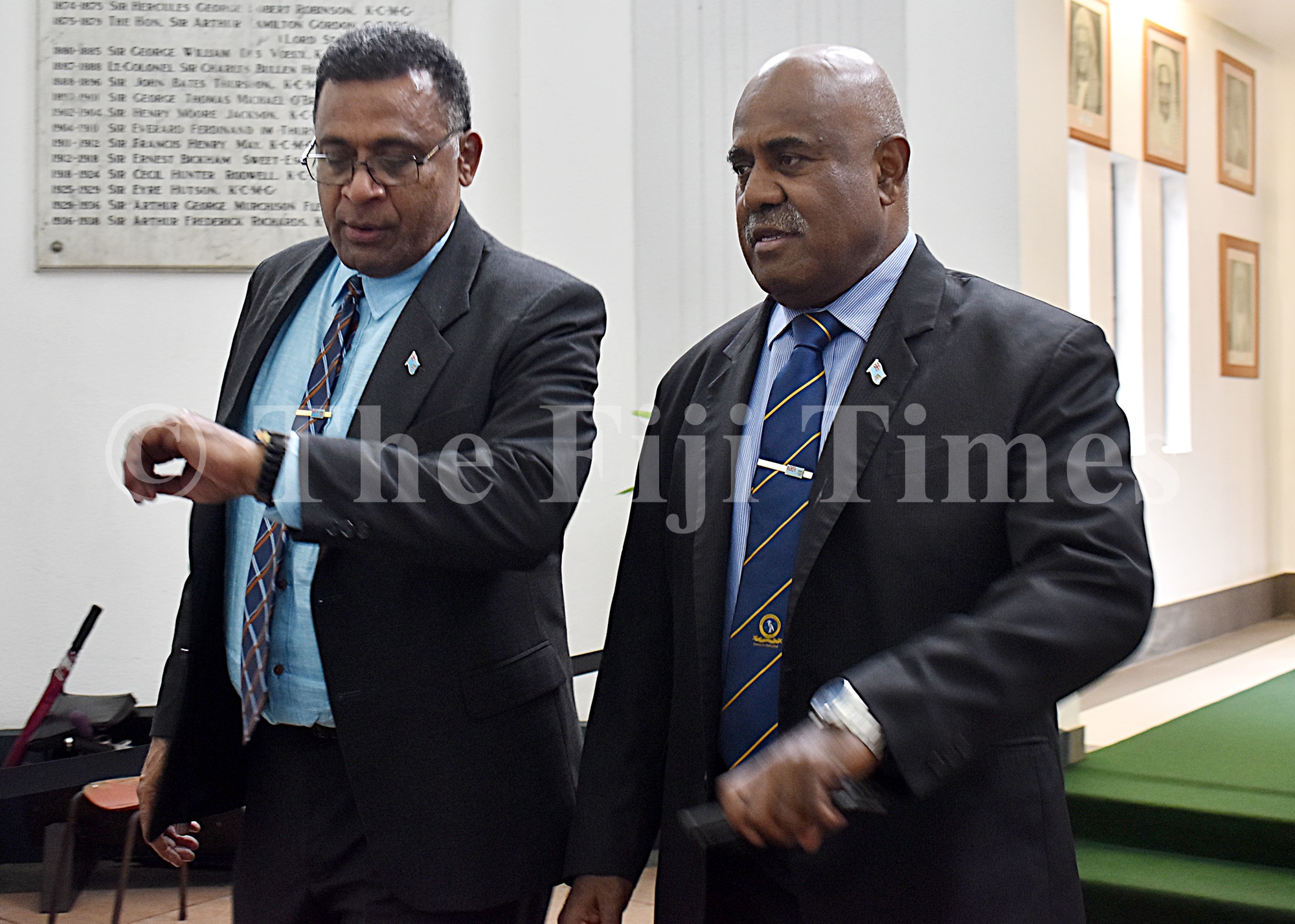
During the reign of the FijiFirst government, the civil service was a workforce for “yes people” who did not question policies for fear of being sacked, according to the Assistant Minister in the Prime Minister’s office, Sakiasi Tubuna.
Mr Tubuna said positive criticism was not encouraged during the reign of the Bainimarama government and “in summary, it was their way or the highway”.
Mr Tubuna told the parliamentary debate on the National Budget that “those of us who worked through the ranks of government know for a fact how civil servants were manipulated by the previous government”.
“In fact, there was a random joke about it,” he said.
“Those who dared to provide a critical analysis of the status quo risked reaching 55 prematurely.
“Many government workplaces became toxic where civil servants were reprimanded if seen in the company of citizens who did not publicly support government policy.”
Mr Tubuna said it was a known fact that many would avoid fraternising with family members, colleagues, and friends just to avoid being accused of disloyalty to the government.
He said that the FijiFirst government continually bragged about reforming the civil service to be more world-class and international, but the results were far from it.
“They introduced a policy initiative such as the open merit recruitment system (OMRS) to reform the recruitment system in the civil service.
“Indeed, the size of the civil service during their term increased from 27,000 to 35,000. Initially, the cost of the civil service was only $700 million. When FijiFirst ended its term, the cost of maintaining the civil service was $1.26 billion.
“Where is the efficiency that they talked about? We have not witnessed any evidence of this.”
Mr Tubuna said in an attempt to control everything, the FijiFirst government made self-serving changes to the civil service structure which resulted in a one-man rule that lacked higher levels of scrutiny before recommendations were tabled for consideration.

