
(Reuters) – Amazon.com Inc (AMZN.O) on Thursday reported its first profit miss in two years and said income would slump in the current quarter, as the online retailer ramps up spending on one-day delivery to spark sales growth.
Shares fell more than 2% in after-hours trade.
Seattle-based Amazon has drawn more than 100 million paid subscribers to its loyalty club Prime by releasing original TV shows, equipping more gadgets with its voice assistant Alexa and offering quick shipping for countless goods, including groceries from its subsidiary Whole Foods Market.
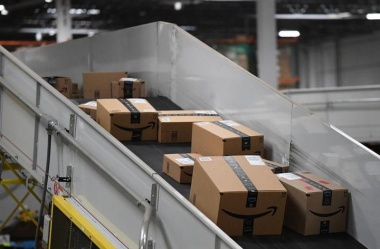
Now, it is investing heavily to halve delivery times to one day for Prime members, in an effort to stay ahead of rivals such as Walmart Inc (WMT.N) that have marketed two-day shipping with no subscription fees. Jeff Bezos, Amazon’s chief executive, said in a news release that the company’s sales growth was accelerating, citing one-day delivery.
The cost of that program slightly exceeded the $800 million Amazon had forecast it would spend in the second quarter, Chief Financial Officer Brian Olsavsky said on a call with reporters.
“Right now we are seeing an increasing and ramping cost penalty, and that’s what’s built into the Q3 guidance,” Olsavsky said, adding that the company would continue to roll out one-day delivery in North America and Europe in the coming quarters.
Revenue for the world’s largest online retailer jumped 20% to $63.4 billion in the just-ended second quarter, Amazon said. Analysts were expecting $62.5 billion, according to IBES data from Refinitiv.
The money Amazon is sinking into delivery reflects how it is not immune to competition, said Neil Saunders, managing director at research firm GlobalData.
“It is a necessary evil,” Saunders said. “Amazon exists in a world where a lot of retailers have the advantage of allowing customers to pick things up the same day in stores,” with far larger brick-and-mortar footprints than Amazon’s subsidiary Whole Foods has.
The U.S. Justice Department said Tuesday it would look into whether Big Tech engaged in any anticompetitive practices, including in online retail.
Olsavsky declined to discuss the matter.

