Fiji’s agricultural sector has achieved its strongest export performance in more than a decade, with fresh and frozen agricultural exports excluding sugar reaching a record $187.2 million in 2025.
Minister for Agriculture, Waterways and Sugar Industry Tomasi Tunabuna announced the milestone as the 2025/2026 financial year draws to a close, describing it as a historic achievement for the sector.
The export value represents a 17.1 percent increase from 2024 and is the highest annual export figure recorded since 2013.
Tunabuna credited the success to the collective efforts of farmers, exporters, processors, distributors, freight forwarders and industry stakeholders across the country.
“This milestone belongs to our farmers, exporters, processors, distributors, freight forwarders and all those working tirelessly to ensure Fijian agricultural products reach international markets,” he said.
“Their dedication continues to strengthen our economy, create employment opportunities and improve livelihoods throughout our communities.”
Export volumes also increased by 3.7 percent to 16,720 tonnes, while imports of fresh and frozen agricultural products declined by 1.8 percent, reflecting progress towards greater domestic production and food security.
The agricultural trade deficit narrowed significantly from $375.6 million in 2024 to $338.8 million in 2025.
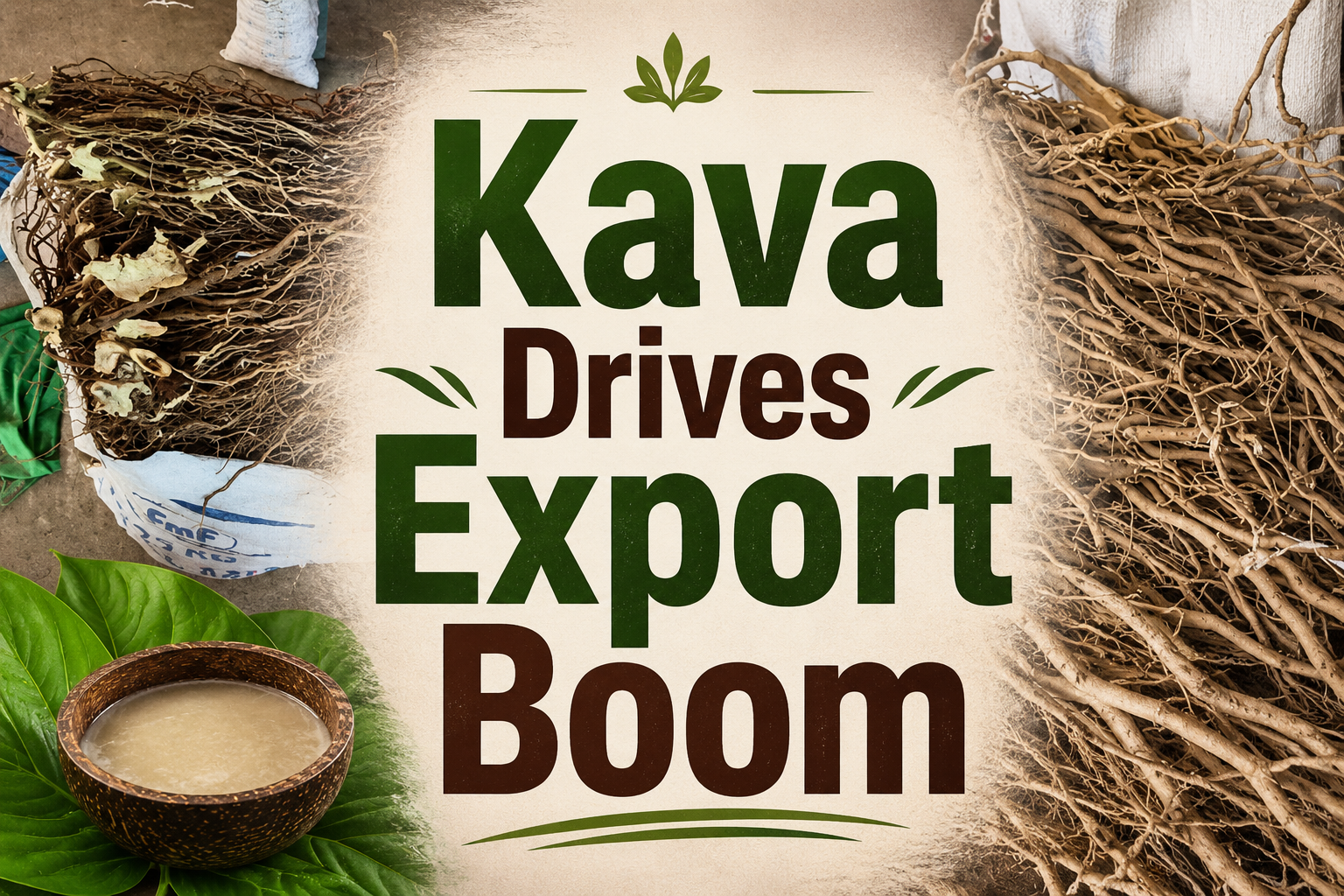
Kava remained Fiji’s top agricultural export commodity, generating $79.1 million and accounting for 42.3 percent of total agricultural export earnings.
One of the standout developments during the year was the rapid growth of exports to China, which rose from $4.3 million in 2024 to $17.5 million in 2025, driven largely by demand for Fijian kava.
Tunabuna said strong performances in commodities such as kava, turmeric and eggs, combined with improved access to markets including the United States, Australia, New Zealand and China, had underpinned the sector’s growth.
While celebrating the achievement, the Minister said more work remains to reduce Fiji’s dependence on imported food products.
“Although we celebrate this achievement, we must remain focused on reducing our dependence on imported dairy products, meat, cereals and other staple foods,” he said.
“Strengthening local production, expanding livestock development, supporting value-added processing and investing in export-oriented agriculture will remain central to our strategy.”
When value-added agricultural exports are included, Fiji’s total agricultural export earnings are estimated to have reached $356.2 million in 2025.
Tunabuna said the results demonstrate continued progress towards Fiji’s goal of significantly expanding agricultural exports by 2030.
“Every dollar earned through agricultural exports generates benefits that extend beyond the farm gate,” he said.
“Increased export earnings support economic growth, create jobs, strengthen rural communities and contribute to national development through improved infrastructure, education and public services.”