
BY any measure, Loata Delana Turagavuli’s mark in Fiji athletics history is extraordinary.
A record set in 1981, a 5.30-metre leap in the Junior Girls Long Jump at the Fiji Finals, remains untouched 45 years on, making her the oldest standing record holder in the history of the Coca-Cola Games.
Now 60, the former Suva Grammar School, Assemblies of God (AOG) and Ra High School student lives a quiet life in her home village of Muana-I-Ra, Vutia, Rewa, with her husband.
But her name continues to echo across Fiji’s athletics fraternity every time young athletes step onto the tracks and field at the HFC Bank Stadium, chasing glory and records.
Early life shaped in Draiba
Turagavuli traces her roots to humble beginnings at the Draiba government quarters in Suva, where the Great Council of Chiefs complex now stands.
Those formative years, she says, helped shape her character and discipline.
She attended Veiuto Primary School from 1970 before progressing to Suva Grammar School, where her sporting journey began to take shape.
Her secondary education later included stints at AOG and Ra High School, each contributing to her development both as a student and an athlete.
Beyond the track, she is a proud mother of five, three daughters and two sons, also a grandmother of 12 and great-grandmother of three, with another on the way.
Family has always been central to her life.
The spark of competition
Athletics, Turagavuli recalled, was never forced upon her and was rather instinctive.
“I had a natural passion for sport, and I simply did not like losing,” she said.
That competitive edge would become the foundation of her success.
At Veiuto Primary School, her early days at Buckhurst Park introduced her to structured sport. But it was under the guidance of coach Mr Mocelutu, then a lecturer at the University of the South Pacific, that her raw ability began to take shape.
He introduced her to the technical side of running and jumping, sprint mechanics, bend running, start positioning and rhythm.
More importantly, he instilled belief.
“He told me I had potential, but also a long way to go,” she recalled.
“That encouragement built my confidence.”
First steps onto the national stage
Turagavuli first appeared at the Fiji Finals in 1978, when the event was still simply known as the Fiji Finals.
Even then, it was the pinnacle of school athletics in the country.
She competed across multiple disciplines, the 100 metres, 200 metres and long jump, later adding the 400 metres.
While versatile, it was clear early on where her strength lay.
The 200 metres and long jump became her signature events, whereas the 100 metres, she admitted, was more challenging due to her slower starts, but she compensated with strong acceleration phases.
“I was not a fast starter, but once I hit about 25 metres, I would build momentum,” she explained.
Coaches quickly recognised this and steered her towards events that maximised her strengths.
From school meets to record books
Success came early.
By Form 1 now Year 7, she was already collecting medals and regularly placing first or second in competitions.
Her performances at Suva Zone Two and other meets soon translated into records.
She went on to set marks in the 200 metres, 400 metres and long jump across different levels, including junior, intermediate and senior categories at the Fiji Finals.
Not all records stood indefinitely.
One intermediate long jump record, she recalled, was the subject of debate, with reporters and officials suggesting the measuring tape used may have been one metre short.
Regardless, the record stood for 13 years before being broken.
But it is her junior girls’ long jump record of 5.30 metres in 1981 that has endured, outlasting generations of athletes and technological change.
Schools that shaped a champion
Her journey through three institutions, Suva Grammar School, AOG and Ra High School have provided varied experiences but a consistent platform for excellence.
Suva Grammar laid her foundation over four years.
AOG refined her discipline for a year, while Ra High School marked the final chapter of her school athletics career.
Across all three, she not only competed but set records, cementing her reputation as one of the most versatile schoolgirl athletes of her time.
The peak of performance
By 1981 and 1982, Turagavuli shared that she had reached her athletic peak.
“That was when everything came together, training, mindset and performance,” she said.
“I felt strongest and most confident.”
Her training during this period was intense and highly structured.
She trained daily, balancing school sessions with external athletics club programmes and worked under prominent coaches including Samu Yavala, Albert Miller and Mr Kabakoro.
Twice-weekly weight training sessions complemented sprint and jump work, while Mondays, often following competition weekends, were notoriously demanding.
She even trained alongside elite male athletes, including Joe Rodan Snr, one of Fiji’s fastest sprinters.
On one occasion, she recalls being only a few strides behind him during a session, a moment that reinforced her belief in her own ability.
Lessons from a champion
For today’s young athletes, Turagavuli’s message is anchored in discipline and self-awareness.
“Discipline is very important. You must be committed and willing to work hard,” she said.
She stressed the importance of listening to coaches, mastering technique, and understanding that athletics is more than raw speed.
“It is precision, technique, diet, rest and recovery,” she said.
“You must know your body and when you are at your peak.”
Equally important, she added, is respect for parents, consistency in training, and the humility to understand both strengths and limits.
“Success comes through discipline and consistency,” she said.
“And knowing when to push and when to hold back.”
More than four decades later, Loata Turagavuli’s 1981 leap continues to stand as a benchmark in Fiji school athletics and is a steadfast reminder of an era when raw talent, discipline and determination combined to produce history.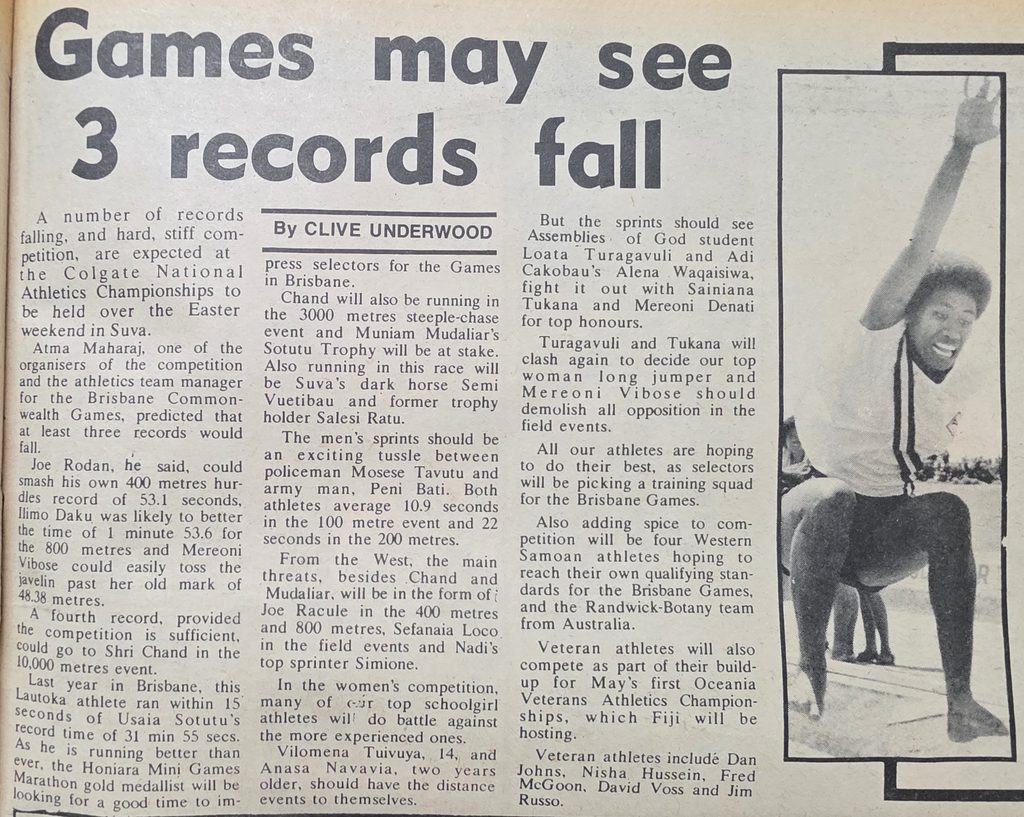
Above: A The Fiji Times article from March 1982 which mentions Loata’s record in the junior girls long jump set in 1981. Picture: FT FILE
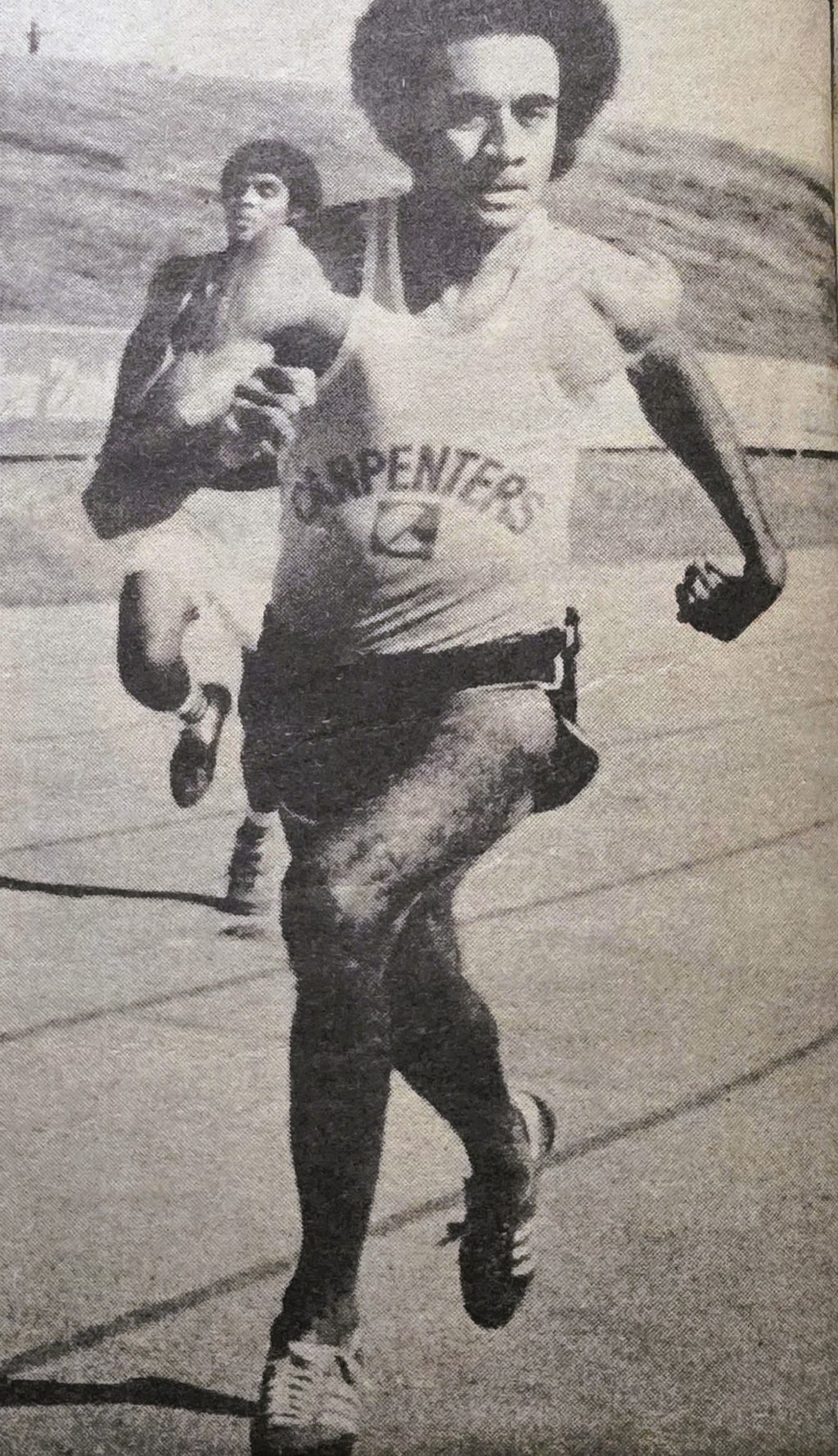
Left: During her peak training years, Loata Turagavuli trained alongside sprinting great Joe Rodan Snr and held her own in sessions, a testament to the intensity of her preparation and the calibre of athletes she trained with in Fiji’s golden era of school athletics. Picture: FT FILE