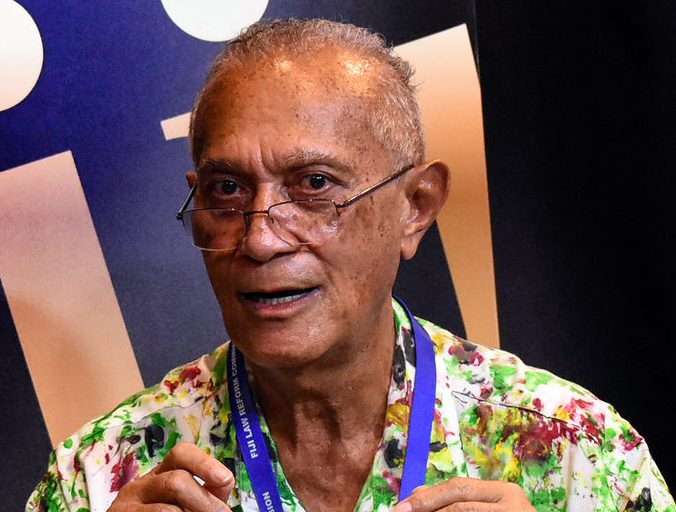
The University of the South Pacific’s head of the Journalism Program, Dr Shailendra Singh, has highlighted the critical importance of data in strengthening public interest journalism and driving meaningful change in the Pacific.
He was a panellist at the Transparency International Pacific regional stakeholder dialogue held at the Holiday Inn in Suva last week.
Dr Singh emphasised that governments must pass access to information legislation to make data more accessible —not just to journalists, but to the wider public.
He said this was fundamental to strengthening transparency, accountability and civic participation
Dr Singh spoke from a Pacific media perspective.
He noted that if data was important for integrity work, then Pacific media were indispensable because they were the major transporters of data and information to the masses.
Dr Singh highlighted that in journalism, data not only matters, but it is central to media’s public interest role in bringing about change.
He said that major change was only possible through news that is impactful, and in this regard, news with factual data is stronger than news without such data.
This exemplifies evidence-based reporting, which enhances public trust in journalism.
Elaborating on his presentation with The Fiji Times, Dr Singh reiterated that data should be part and parcel of journalism.
He noted, however, that data is ineffective if it is indecipherable. This is where media is critical in deciphering data.
“In other words, we should not just dump raw data on the public. We need to present it in a form that people can relate to and act on.”
Dr Singh stated that media should be a ‘decipherer’ of data to make it meaningful.
“By using data correctly, media can unleash people power while strengthening civic engagement. In this regard, media bring two potent powers together — the power of the people and the power of information,” he said.
According to Dr Singh, for media to be effective there are some challenges to overcome. These include access to data, understanding it, and presenting it.
He said getting access to data in a timely fashion remained a struggle and that access to information legislation could address this problem.
This legislation was important because it provided access to everyone, not just journalists, which can be powerful in the social media and citizen journalism era.
Understanding data posed a challenge when it is too technical or complex. Because many journalists do not have the time or the training to fully unpack it, critical data is either underused, unused or misinterpreted.
With regards to the third issue, the challenge is how to present data to move people from passivity into action.
“Many a time, raw data simply doesn’t connect,” said Dr Singh.
“You can publish statistics, but it can be emotionless for everyday people. “What makes data powerful is when people can see how it affects them, and it rouses them into action to address the problem or correct the situation.
“Journalists are therefore required to humanise the data,” said Dr Singh.
He concluded that data can be used to achieve a wonderful outcome, but only if a few things align: People need to be able to access data and understand it, and the data should be relevant and relatable.