
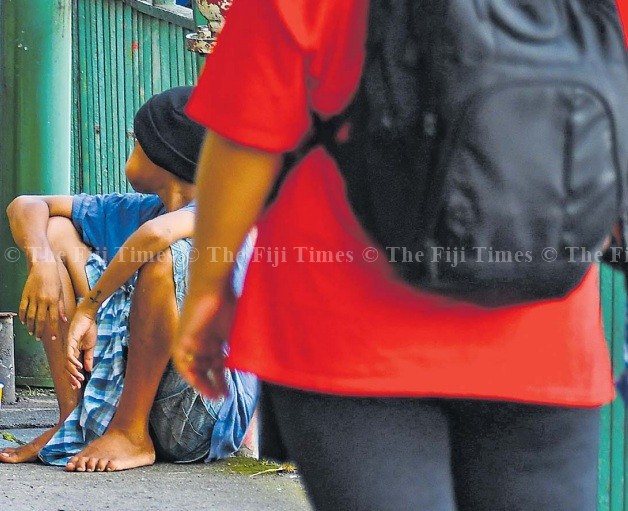
For many children, the road to trouble does not begin with a crime. It begins with a broken home. It begins with neglect, trauma, addiction, poverty, or simply having nowhere safe to turn. By the time some of these children come to the attention of authorities, they are already living on the margins – exposed to drugs, substance abuse, street life and circumstances that push them further away from education, family and opportunity. Now Fiji is attempting to change that path. A new rehabilitation centre for vulnerable children is being established with the hope of reaching young people before they enter the criminal justice system – creating a space where they can receive support, healing and a chance to rebuild their lives. For Minister for Women, Children and Social Protection Sashi Kiran, the centre represents a shift in how Fiji responds to vulnerable children. “These are two different issues, those who get in conflict with law, we bring them into a juvenile centre. And we work with them from there,” she said. The minister stressed that the facility was not a juvenile centre, but a preventive intervention aimed at supporting vulnerable children before they reached the point of conflict with the law. The new facility, she said, is about reaching children before they reach that point. “What we are building now is we are hoping children do not get in conflict with law.”
Before the crime comes the crisis
Behind many children found on the streets are stories that rarely make headlines. Some are exposed to drug use within their homes. Some come from broken families. Others carry trauma from experiences they have never had the opportunity to process. “A lot of our children are on the streets. They may do petty crime, they generally get involved in illicit substance abuse and glue sniffing, and that is our challenge.” Over recent years, the ministry has worked with partners to remove children from unsafe environments and reconnect them with education and skills training. However, lessons from those programs revealed a major gap. The children needed more than a temporary intervention. “We realised without rehabilitation, they just fall off or their bad habits influence others as well.” The first groups of children taken in through earlier initiatives were placed into vocational schools, ministry programs and government training facilities. But without structured rehabilitation, many struggled to remain on that pathway. “That is why we learned from that -— then we’ve been working with the partners.”
A gap Fiji must fill
Faith-based organisations and community groups have played an important role in supporting vulnerable children. However, Ms Kiran said many organisations did not have the resources or structure required to deal with the increasingly complex needs of children coming into care. “Many faith organisations are doing wonderful work. But we don’t have structured rehabilitation programs.” The children arriving at these services are not all facing the same challenges. Some struggle with substance addiction. Others have serious health conditions. Some carry deep emotional scars from experiences within their own homes. “Somebody may be addicted to glue, or somebody may be addicted to something harder.” “Some have very bad health conditions because of HIV, and some are very traumatised because of what happened at home,” she added. The new centre is intended to provide a more coordinated response — combining counselling, health support, education pathways, vocational opportunities and family reintegration.
More than a roof over their heads
The facility will not be designed as a long-term institution. Instead, it will operate as a transitional centre where children can receive focused support before returning to their communities. “This will only be a transitional centre. Hopefully, depending on their need, could be six weeks, could be three months, could be six months, depending on the need, they will go through rehabilitation.” The aim is to create stability before children return to schools, training programmes or their families. She said previous experiences showed that sending children straight back into communities without adequate support often resulted in setbacks. “If we have a place where we can work with them in the evenings and then still put them in schools, in pathway classes, in vocational, hopefully this becomes that safe haven for them.” The centre will also focus on health management, particularly for children who struggle to continue treatment once they return to unstable environments. “Quite a few who have been sick, when they go back on the streets, they don’t take treatment. So hopefully we can manage their health, manage their emotional and mental situation.”
The hidden link: drugs, HIV and young lives
The rehabilitation centre comes at a time when Fiji is facing growing concerns over youth vulnerability, including the impacts of drug use and HIV. Minister for Health and Medical Services Dr Ratu Atonio Lalabalavu said the project was significant because of the challenges now affecting young people. “For us in the ministry it will work in our benefit – most of the time we are on the receiving end of this drug crisis,” he said. He said rising concerns around drugs and HIV among younger generations highlighted the need for stronger cooperation between ministries. “The data has shown us that drugs, HIV, are affecting the younger generation in a proportion more than what we have seen compared to the last study.” However, he stressed that rehabilitation was not only a medical issue. “Rehabilitation facility, it’s not just about doctors and nurses. It’s about creating a supportive environment for those that will utilise it.” Health professionals would play a role where clinical support was required, while wider assistance would be coordinated through existing health facilities and government agencies.
Finding families again
One of the key parts of the programme will be rebuilding relationships. Ms Kiran said children living on the streets were not necessarily without families. “Every child in Fiji has a family. They’re not homeless, but the circumstances are such that they maybe have fallen off with their families.” The ministry will work with both children and families to address the issues that led to separation. This includes helping parents and caregivers understand how to respond to children affected by addiction, trauma and behavioural challenges. “With drug use, we see that a lot of families really don’t know how to handle their children. So, we work with families as well as the children to make sure that these children have a hopeful future.”
A chance before it is too late
The new centre will initially accommodate 24 children and will focus on adolescent boys, while additional support is also being developed for vulnerable girls. Ms Kiran said the children admitted would not be those referred through the courts. “These would not be juvenile. So, these will not be children in conflict with law, necessarily.” Instead, the facility will focus on children found in vulnerable situations – including those affected by family breakdown, neglect and substance abuse. The ministry is also working with organisations such as the Salvation Army, which has provided accommodation and support services for vulnerable boys and girls. The goal is not simply to remove children from the streets. It is to prevent them from returning. “We have seen many children who’ve come in and have become great human beings, very successful in their education,” Ms Kiran said. “Sometimes some things happen and there is a slip, so it’s a broken family, sometimes they fall off, and if we don’t pick them at the right time and provide the right support, they will end up where they shouldn’t.” For Fiji, the challenge is becoming increasingly urgent. “Our prisons are getting full; our children are getting addicted.” The rehabilitation centre is one part of a wider effort to intervene earlier – before a child’s mistake becomes a lifetime sentence. Because behind every vulnerable child is not just a problem to solve. There is a life to save.

