
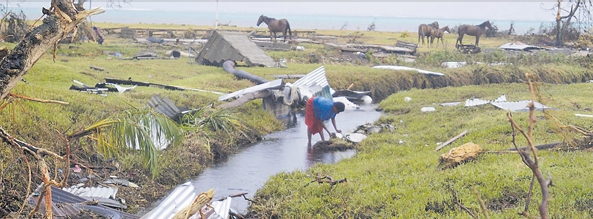
The memory of landing in Sinuvaca on Koro Island 10 years on, still sits heavy — a moment that laid bare the human cost of Tropical Cyclone Winston.
It was February 23, 2016, when I arrived with colleague Jese Tuisinu from Fiji Television Ltd and Jona Konataci from The Fiji Times.
From the sky, the village looked like it had been snapped apart and scattered, homes reduced to what looked like matchsticks. The reality hit harder when we touched down. People ran towards the helicopter, hope in their eyes, expecting food, water, anything from the mainland.
I had spent 12 hours preparing for that flight after the long drive from Suva to Nadi. After our first attempt to reach the island failed, I remember telling my boss: “Send me.”
The pilot warned we had less than an hour on the ground before fading light and incoming rain forced us out.
So, my first question, standing among children in damp clothes, was simple: Did someone die? I drew from my training — in any disaster, first ascertain whether someone has died.
Everything they owned had been swallowed by waves or soaked by rain. And yet, there were still smiles. That quiet strength is something you never forget.
The hardest interviews of my career happened that day.
Village elder Mosese Kikau Daulakeba, then 60, spoke alongside the grieving parents of 10-month-old Apisai Vulaono — Alifereti Samu and Mereani Biaukula.
I bit my lip as I listened to their story, only to also be told that a woman elder had died in the rush of high waves.
Through tears, Mr Daulakeba described waves crashing one after another — the father clutching his child, only realising too late that the sea had taken him from his arms.
A decade later, the memory of that day remains a stark reminder of the loss, resilience and strength that followed one of the most destructive storms ever to hit Fiji.

