AS we celebrate Freedom 250, we honor the founding ideals of liberty and open competition that define the American character.
This historic milestone is a celebration of our enduring heritage and a powerful commitment to building strong partnerships for centuries to come.
True diplomacy thrives through direct connection, and over the past year, the U.S. Embassy has proudly advanced the U.S.-Fiji relationship through the universal bond of sports.
Through the “Decade of Sport,” America is showcasing our experience in and passion for sports by hosting mega-sporting events: this year’s FIFA World Cup, the 2028 Summer Games in Los Angeles, and the Rugby World Cup (men’s in 2031 and women’s in 2033).
We brought this distinct spirit to Fiji by hosting our first public Super Bowl live screening, drawing over 200 enthusiastic fans to watch the Seattle Seahawks battle the New England Patriots.
Building on this momentum, the National Football League (NFL) completed its historic first outreach trip to the Pacific, conducting flag football clinics for thousands of Fijian children and kicking off an effort to create new opportunities for young Fijian athletes to compete globally.
We are working to build excitement ahead of the next Summer Olympic and Paralympic Games, which will be in Los Angeles in 2028 (LA28).
I was honored to award medals to inspiring young competitors at this year’s Coca-Cola Games, urging them to chase their Olympic dreams.
In tandem with the Fiji Association of Sports and National Olympic Committee, we celebrated International Olympic Day to ignite local excitement for LA28.
These sports programs champion fair play and protect the integrity of competition, specifically ensuring that women and girls can participate in safe, fair contests.
We were inspired by the girls under-15 team that became the first-ever Fiji-based team to compete in an international flag football tournament in March. By investing in Fiji’s youth today, we are strengthening a proud partnership built on mutual respect and shared freedom for the next 250 years.
Securing Our Blue Pacific: Partnership in Maritime Security on the Korean War Veteran’s Memorial in Washington, DC, there is a phrase known well to all Americans – “freedom is not free.” Freedom 250 is an opportunity to remember the cost borne by our predecessors for the freedoms we enjoy today.
It is also an opportunity to recommit securing that freedom for future generations. The relationship between the United States and Fiji exemplifies this commitment. It is a partnership between two fundamentally maritime nations united by the ocean that connects us.
Both our nations are shaped by the sea. Fiji, an archipelago of over 300 islands, depends on maritime security for its sovereignty, prosperity, and cultural heritage.
The United States, with over 1.5 million Americans living in our Pacific territories and Hawai’i, and another 129 million living in coastal communities on the mainland, shares this maritime identity. Our economies, our security, and our way of life are inseparable from the ocean.
We face common threats: illegal fishing that depletes our resources, drug trafficking that poisons our communities, and transnational crime that challenges our sovereignty.
Our security cooperation addresses these shared challenges. Through the delivery of Rigid Hull Inflatable Boats, a boat ramp, and advanced maritime domain awareness systems like Sea Vision, we are building capacity to protect our people and our waters.
This partnership extends beyond equipment. We are investing in Fiji’s maritime institutions, training personnel, and developing sustainable systems that will serve Fiji for generations.
The epitome of this shared trust is anchored in U.S. Coast Ship rider Operations, with Fijian law enforcement and military personnel patrolling within Fiji’s Exclusive Economic Zone waters aboard U.S. Coast Guard vessels. Maritime nations must stand together. The ocean connects us, and together we are building the foundation for the next 250 years of security, prosperity, and freedom in our Blue Pacific home.
Protecting American and Pacific Lives from Common Threats Make no mistake: the United States continues to be the world’s leader in global health and humanitarian assistance, despite narratives to the contrary.
The United States stands by our Pacific neighbors to ensure readiness for the next outbreak, typhoon, tsunami, or other major threat.
U.S. foreign assistance programs seek to maximize impact, efficiency, and accountability – and today, we are more engaged than ever here in Fiji and around the Pacific.
America First Foreign Assistance is designed to foster self-reliance and independence. Our efforts to bolster health and natural disaster response capacity in Fiji and across the Pacific exemplify this approach.
The Unites States will bring Fiji’s laboratories up to international standards and detect disease outbreaks within seven days of the first case. This will save precious time over sending samples to overseas labs.
Quicker detection and response will save lives, not only in Fiji, but across the Pacific as well.
And when outbreaks happen, the United States stands ready to help. In Kiribati, we are providing critical health assistance to strengthen risk communication and outbreak response capacity.
This U.S. assistance delivers essential disinfectants and health supplies, promotes water safety and hygiene, and protects the people of Kiribati and the United States from further outbreaks of deadly rotavirus. In cyclones, tsunamis, floods, and droughts, early detection and effective emergency planning is critical.
We have introduced low-cost, innovative weather stations in Fiji and across the Pacific, including 3D-Printed Automated Weather Stations developed in American universities that are easily maintained and cost only $500 USD per unit.
They provide reliable, high quality weather data that strengthens early warning systems to protect lives and property. Our Tsunami Ready program works with communities across the Pacific to improve early warning systems, develop emergency response plans, and conduct drills to ensure communities are ready should a tsunami strike.
We hope that no disaster ever strikes Fiji, but if it were to happen, the United States would stand by our partner in responding to a crisis, as well, if our help was needed. Our efforts in health security and disaster readiness are examples of how America continues to stand by our Pacific neighbors – making all of us safer from infectious diseases, promoting readiness to avoid tragedy in the face of extreme weather, and protecting our shared prosperity.
Building Prosperity Together The United States and Fiji share a commitment to economic prosperity and innovation.
Today, the United States is one of Fiji’s largest trading partners, with two-way trade totaling over half a billion Fijian dollars annually.
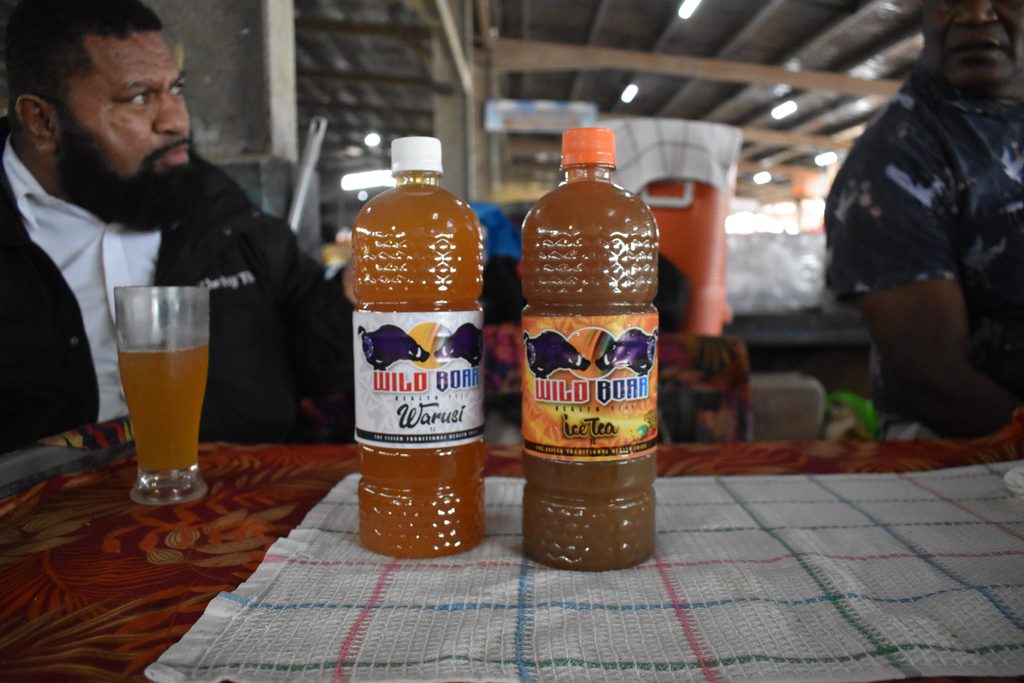
Over 100,000 Americans visit Fiji annually to enjoy Fiji’s beauty and hospitality personally. Whether through popular American TV shows filmed in Fiji or the growing popularity of kava in the United States, Americans today now have more exposure to Fiji’s beauty and culture than in the past.
These trade and cultural connections build on decades of commercial partnership and exchange on products ranging from bottled water to Boeing airplanes.
The United States and Fiji are jointly developing a Millennium Challenge Corporation (MCC) Compact. Economists with MCC have undertaken talanoas with hundreds of individuals across business, civil society, and government to discuss how to boost economic growth in Fiji and ensure that growth improves the lives of all Fijians.
The MCC Compact will focus on improving Fiji’s ports and shipping, as well as its ease of doing business, and will unlock significant investment in critical infrastructure. Deputy Secretary of State Christopher Landau, in an historic February 2026 visit to sign a funding agreement for the MCC Compact, emphasized, “This is more than an agreement – it’s a catalyst for prosperity.
By working with Fiji, we aim to design a Compact that drives investment in Fiji, opens new markets for American companies, and strengthens the foundation for a free and open Indo-Pacific.” Joint U.S.-Fijian trade, investment, and compact development work will continue to enhance Fiji’s competitiveness in the global economy, creating jobs, driving economic growth, and strengthening the bonds between our peoples.
As it has since 1776, the United States remains a trusted, dynamic partner ready to lead for the next 250 years and beyond – building prosperity with Fiji based on liberty, opportunity, and shared success.
100 Ways the Peace Corps Forges
U.S.-Fiji Bonds
Last year, the Peace Corps welcomed our 100th group of volunteers since we began our partnership with Fiji in 1968. This historic class joined the more than 3,000 volunteers from across the United States who have collaborated with communities across Fiji in addressing their most urgent priorities.
Through our partnership with the Ministry of iTaukei Affairs, volunteers implement Community Economic Empowerment Projects that support economic development in rural and maritime communities across Fiji.
Twenty-four Peace Corps Volunteers are serving in Fiji today, bringing with them enthusiasm and the entrepreneurial spirit for which Americans are famous. Volunteers learn the language and culture, forging strong relationships with their host communities.
Ask any of today’s government and community leaders about their experiences with Peace Corps Volunteers and many will fondly recall stories of former teachers, coaches, peers, and friends. What does this collaboration look like today? Consider these examples from some of our currently serving volunteers: Liam from New York worked with youth in Bua Province to set up a solar-powered refrigerator to earn income selling cool drinks on hot summer days.
Patrick from Nebraska is working with his community in Naitasiri to improve water security for their village. Dashell from Washington state is working with her women’s group in Serua Province to revive a once-thriving bread baking business. And Christopher from Texas is literally connecting communities in Bua Province with a river bridge that his community is building.
When volunteers leave Fiji after two years of service, they will have made friendships and created memories with Fiji’s next generation of government and community leaders.
Both the American Volunteers and their Fijian counterparts will have learned so much from each other, creating lifelong bonds between our peoples.
In 2027, Peace Corps aspires to partner with even more communities in Fiji by returning to remote island communities where we have been unable to place a volunteer since the COVID pandemic.
And we look forward to collaborating with our partners in the Government of Fiji to address the most urgent priorities in this dynamic and fast-changing society.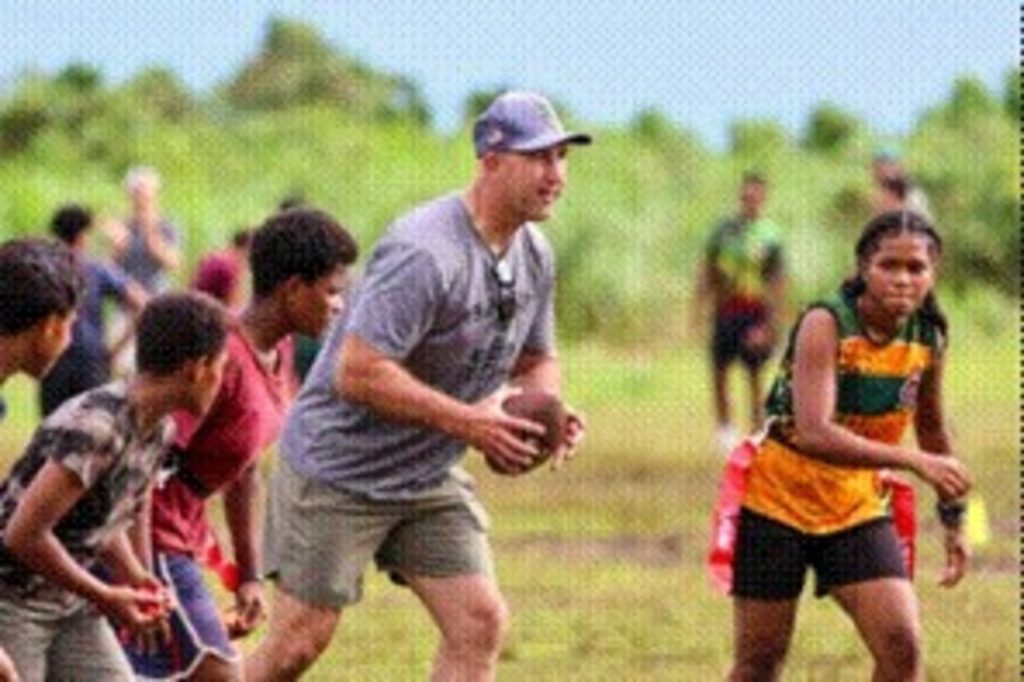
Nasinu Secondary School students playing Flag Football during a visit by U.S. Coast Guard members.
Pictures: U.S. Embassy Suva.
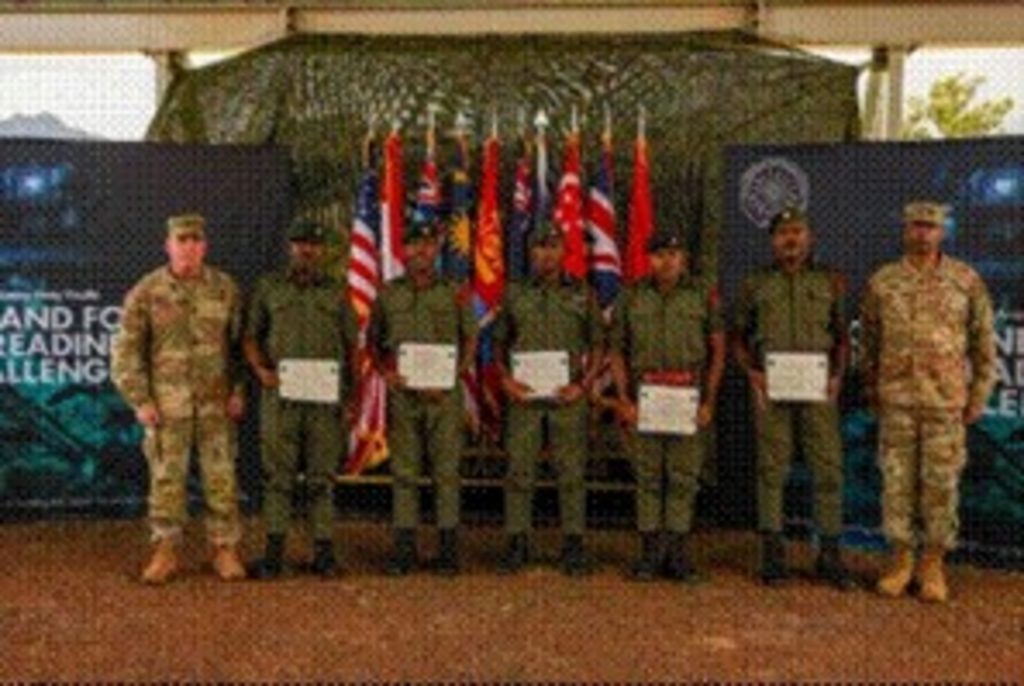
The Republic of Fiji Military Forces team that participated in the U.S. Army Pacific’s inaugural Pacific Land Forces Team Readiness Challenge this year.
Picture: U.S Army Pacific
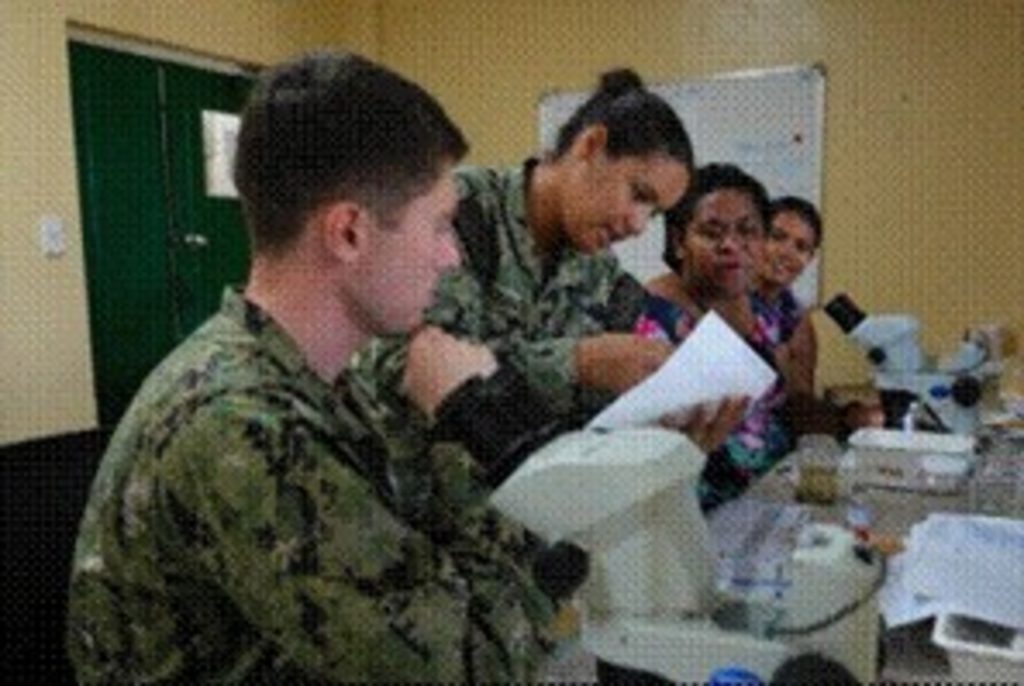
U.S. Navy Sailors, with the Pacific Partnership 2025 team, review mosquito larvae sample charts with Fijian health professionals at the Fiji Centre for Disease Control, during Pacific Partnership 2025 in Suva.