
IN an era where global competitiveness hinges on speed, transparency, and innovation, Fiji is leading the charge to transform trade facilitation across the Pacific.
By hosting the World Bank Group’s landmark workshop in Nadi, Fiji reaffirmed its commitment through the Fiji Revenue and Customs Service (FRCS) to spearhead digital solutions that will redefine how Pacific nations engage in international trade.
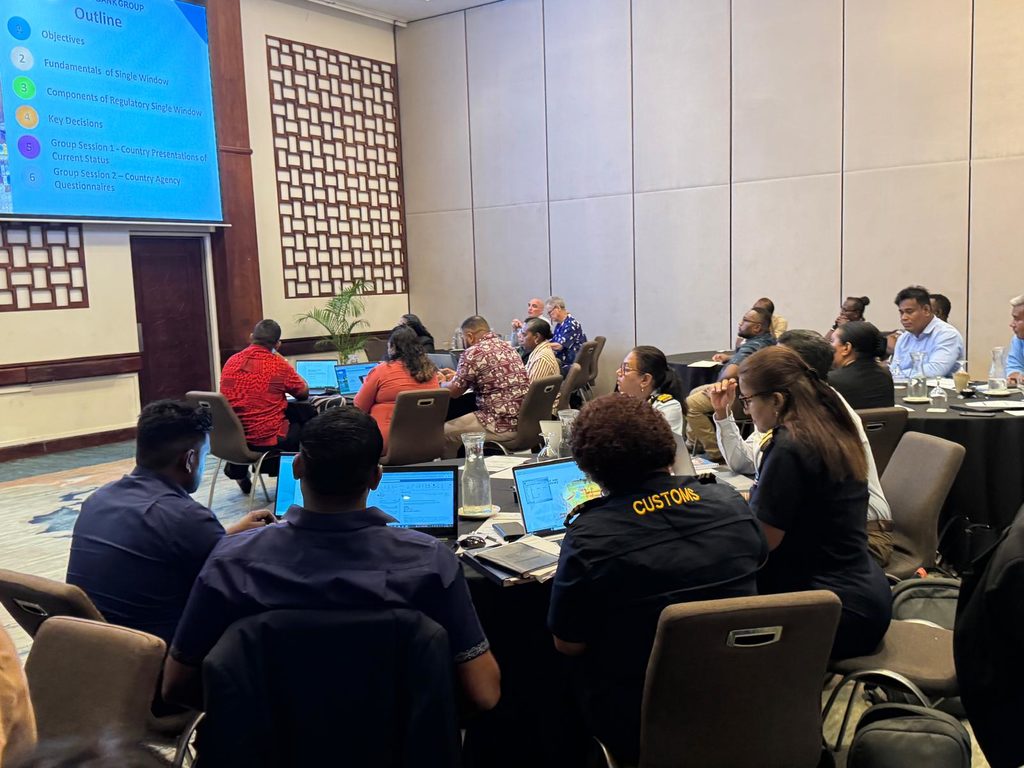
In November the World Bank Group (WBG) convened a pivotal regional workshop under the theme “Accelerating Trade Facilitation in the Pacific.”
The gathering marked a significant milestone in the region’s journey toward modernising trade processes through the implementation of the National Single Window (NSW) Project, a World Bank–financed initiative designed to streamline trade documentation and clearance across borders.
The workshop convened delegations from six Pacific nations actively engaged in the NSW project: Fiji, Kiribati, Solomon Islands, Tonga, Tuvalu, and Vanuatu.
Each country was represented by senior officials from Customs Administrations, Biosecurity agencies, and Trade departments, ensuring a holistic approach to trade facilitation.
This diverse participation highlighted the critical role of cross-sectoral collaboration in building a unified digital trade ecosystem for the Pacific.
At the heart of the discussions was the National Single Window (NSW) Project, a transformative, World Bank, financed initiative aimed at streamlining trade documentation and clearance procedures.
By digitising border processes, the NSW will enable faster, more transparent, and cost-effective trade, positioning Pacific economies for greater competitiveness in global markets.
Key themes and strategic priorities
Over two intensive days, participants explored the foundational pillars for successful NSW implementation, including;
m Shared Vision and Strategic Direction – Establishing a regional roadmap to enhance efficiency, transparency, and competitiveness;
m Governance Framework – Defining institutional roles and oversight mechanisms for accountability and sustainability;
m Financial Model – Developing cost-sharing strategies and ensuring long-term viability;
m Operational Design – Crafting workflows and technical integration for seamless trade processes; and
m Legal Harmonisation – Aligning national legislation to provide a robust legal foundation for NSW operations.
These discussions reinforced the complexity and significance of digitising border procedures which is a bold step toward modernizing trade in the Pacific.
Outcomes and regional impact
The workshop delivered tangible outcomes;
m Regional Alignment on NSW vision and governance;
m Knowledge Sharing among countries, fostering mutual learning and best practices; and
m Foundation for Harmonisation of systems and processes to reduce costs, improve transparency, and accelerate trade.
For small island economies, trade facilitation is more than a technical upgrade. It is a strategic imperative for economic growth, resilience, and global integration.
By embracing the NSW framework, Pacific nations are unlocking new opportunities for investment, strengthening compliance with international standards, and advancing sustainable development.
Fiji and FRCS at the forefront
Hosting this workshop in Fiji reflects the country’s pivotal role in shaping the future of Pacific trade.
FRCS’s leadership and commitment to modernization signal a strong national and regional resolve to build a more connected, efficient, and competitive trade environment.
The World Bank Group’s initiative was not merely a technical consultation, but it was a regional pledge to cooperation and progress.
As Fiji and its Pacific partners move forward with NSW implementation, the partnerships and insights forged in Nadi will serve as a cornerstone for a digitally empowered Pacific economy.

