
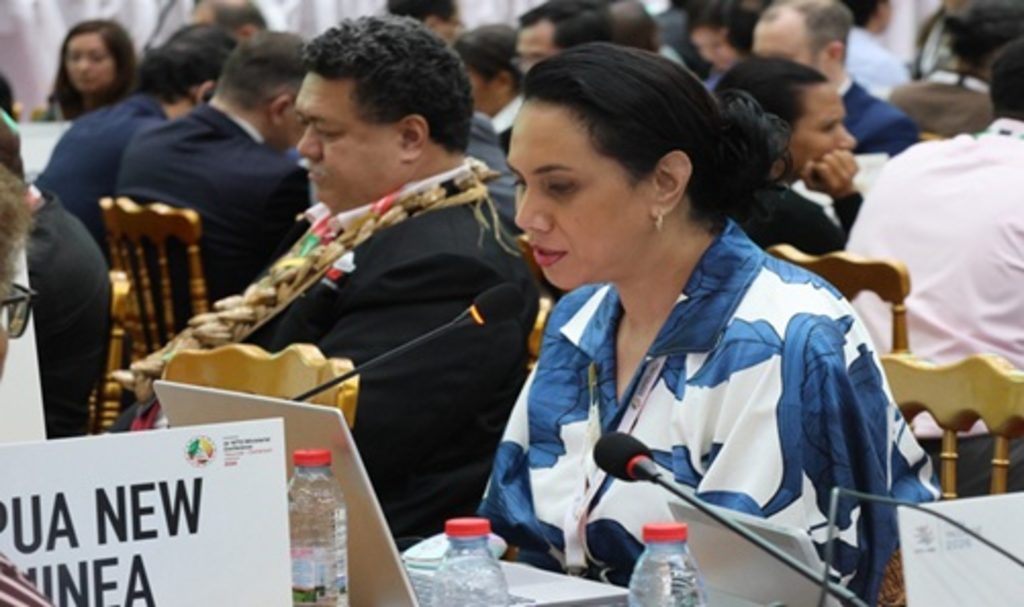
In my last article, I argued that the Pacific must be in the room, because absence in global trade negotiations inevitably translates into marginalisation for small states whose economic weight alone cannot command attention.
At the 14th World Trade Organization Ministerial Conference (MC14), the Pacific was in the room, together with 166 members — engaged, present, and participating across all major discussions, with delegations fully aware that the stakes extended far beyond the meeting, into the future credibility of the multilateral trading system itself. But there was no deal to influence.
Unlike the previous two Ministerial Conferences, the corridors outside the formal sessions were noticeably subdued, delegations moved between subdued bilaterals and small-group consultations with a clear understanding that the real negotiating ground had already been tested in Geneva, and that what remained in the room was not the construction of compromise, but the management of positions that had proven resistant to convergence. Ministers were present, but the negotiation itself had already run its course and was, in practical terms, already dead.
The official narrative speaks of progress, continued engagement, and work carried forward, yet the formal record tells a far more sobering story: MC14 concluded without a comprehensive ministerial package, without agreement on core negotiating pillars, and without closure on issues that had been under negotiation for years, including fisheries subsidies, agriculture and electronic commerce, as reflected in the WTO Director-General’s closing statement and post-conference summaries (WTO, 2026). This was not a near miss. It was a systemic failure to deliver that could become permanent.
The negotiation had already failed
The most important reality of MC14 is not what happened in Yaoundé, but what had already failed to happen in Geneva before ministers ever boarded their flights, as negotiating positions had hardened, convergence had stalled, and the space for meaningful compromise had narrowed to the point where the ministerial itself functioned less as a negotiating forum and more as a mechanism for managing divergence through small-group consultations, facilitator-led texts, and carefully controlled engagements.
This trajectory had been anticipated in pre-conference analysis, including by Jane Kelsey (2026), who warned that WTO negotiations were increasingly being shaped through restricted configurations and plurilateral pathways that risked sidelining broader membership engagement, and further analysis highlighting the growing reliance on facilitator-driven texts and procedural ambiguity that weakened genuinely member-driven negotiation processes.
When ministers arrived and found themselves managing entrenched positions rather than negotiating outcomes, those warnings proved not only accurate but understated.
Fisheries: From momentum to breakdown
The failure to conclude the second phase of fisheries subsidies negotiations represents one of the clearest indicators of systemic breakdown, particularly given that the Agreement on Fisheries Subsidies reached at MC12 in 2022 was widely regarded as a historic achievement, and that MC13 in Abu Dhabi had brought members to the threshold of completing disciplines on overcapacity and overfishing. Yet at MC14, that momentum dissipated.
Instead of closure, ministers were only able to agree to continue discussions toward MC15, with no substantive disciplines adopted and no binding outcome secured (WTO, 2026 Outcome Document). For the Pacific, this was as consequential as it was disappointing, given the well-documented urgency of addressing harmful subsidies that contribute to overfishing, as consistently highlighted in WTO analytical work and external assessments, including those by the OECD and UNCTAD.
This is particularly striking given that the Agreement on Fisheries Subsidies took three years to enter into force after MC12, and that Samoa’s ratification at MC14, while symbolically notable, ultimately stood as little more than a footnote against the conference’s inability to deliver the disciplines that matter most, particularly for the Pacific.
For Pacific Island states, whose economic, environmental, and food security interests are directly tied to sustainable fisheries, this is not a delay that can be absorbed within diplomatic timelines, but a material failure to discipline practices that disproportionately benefit large subsidising economies while leaving small coastal states exposed.
Across the Pacific, it is not uncommon to observe distant water fishing fleets operating just outside exclusive economic zones, with vessels waiting along the boundary lines before darting in and out, at times with transponders switched off, exploiting gaps in monitoring and enforcement that stronger multilateral disciplines were intended to address.
E-Commerce: The issue that broke the system
The most decisive breakdown at MC14 occurred in relation to the moratorium on customs duties on electronic transmissions, which had been in place since 1998 and had effectively underpinned the governance of digital trade for over two decades.
Negotiations failed to produce consensus on its extension, resulting in the expiration of the moratorium during the conference itself, as widely reported in international media, including Reuters (30 March 2026), with attempts to bridge positions — including proposals for time-bound extensions coupled with review mechanisms — proving insufficient to reconcile fundamentally divergent interests between developed economies seeking permanence and developing countries concerned about revenue loss, industrial policy space, and long-term digital sovereignty.
The European Commission subsequently acknowledged that the failure to resolve the e-commerce issue prevented the finalisation of the broader ministerial package (European Commission, 2026), effectively confirming that digital trade was not merely one issue among many, but the fault line along which the entire conference fractured.
For Pacific and other developing countries that are net importers of digital goods, the lapse of the moratorium may appear to preserve policy space, however, the absence of multilateral rules in this area also removes guardrails, best practices, and commonly accepted disciplines, creating the risk of fragmented or coercive bilateral outcomes, with disproportionate impact on smaller states.
This was reflected in the immediate response by United States, signalling through statements from the Office of the United States Trade Representative that alternative pathways, including plurilateral or bilateral arrangements, would be pursued if consensus could not be restored within the WTO framework (USTR, March 2026).
Agriculture: The silent failure
While less visible than the collapse on e-commerce, the absence of any meaningful progress on agriculture at MC14 represents a quieter but equally consequential failure.
For many developing countries, including those in the Pacific, agriculture remains central to food security, rural livelihoods, and economic resilience, yet negotiations on core issues such as domestic support, market access, and safeguards once again failed to advance in any substantive way.
This matters because the global agricultural trading system remains deeply uneven, with significant levels of support in major economies continuing to distort markets, while smaller and more vulnerable countries face increasing exposure to price volatility, supply disruptions, and climate-related shocks.
For the Pacific, this is not an abstract negotiating issue but a structural vulnerability. The inability to secure progress on agriculture leaves small island developing states navigating a global system in which they are both price takers and policy takers, without the disciplines or flexibilities needed to build resilient and sustainable food systems.
This is not something that will be fixed in the next negotiating cycle; it reflects a deeper imbalance in the system that continues to work against smaller and more vulnerable economies.
Reform: The rules are being rewritten
The WTO reform agenda, which had been positioned as an opportunity to restore confidence in the system, similarly failed to produce a consensus outcome, reflecting deeper and more structural disagreements about the future architecture of the multilateral trading system.
Recent USTR proposals on WTO reform (March 2026) go beyond procedural adjustments and instead challenge foundational elements of the system, including the continued applicability of special and differential treatment, the operation of most-favoured-nation principles, and the centrality of consensus-based decision-making, while explicitly advocating for greater flexibility in negotiating configurations, including the expansion of plurilateral approaches.
This position aligns with a growing body of analytical literature, including work by Wolff (Peterson Institute for International Economics, 2026), which suggests that the WTO is transitioning away from a universal, rules-based system toward a more fragmented model characterised by selective participation, differentiated obligations, and ‘variable geometry’ (a trade concept that means countries that are ready to move can do so, leaving others behind).
A parallel system is emerging
Post-MC14 developments reinforce the conclusion that the WTO is no longer the sole, and perhaps no longer the primary, venue for advancing global trade rules, as major economies increasingly explore alternative pathways for rule-making outside the multilateral framework, including digital trade agreements, supply chain arrangements, and issue-specific coalitions.
Reuters reporting (2026) indicates that the United States and like-minded partners are already considering such alternatives, while Peterson Institute for International Economics analysis underscores the extent to which plurilateral initiatives involving subsets of members have become the primary areas of forward movement in global trade governance. What is emerging is not reform in the traditional sense, but substitution.
The multilateral system remains formally intact, but increasingly hollowed out, as real rule-making migrates to parallel structures that operate beyond the reach of consensus-based governance. The centre is not adapting. It is being bypassed.
This trajectory is further reinforced by the continued advancement of Joint Statement Initiatives, which, while not formally integrated into the WTO’s multilateral framework, are increasingly functioning as de facto rule-making platforms among subsets of members, raising fundamental questions about the future role of consensus and the inclusiveness of global trade governance.
What this means for Fiji and the Pacific
For Fiji and other Pacific Island countries, the implications of MC14 are immediate, structural, and unavoidable.
The erosion of consensus-based decision-making weakens the ability of small states to influence outcomes within the multilateral system, while the shift toward plurilateral and bilateral arrangements risks concentrating rule-making power among larger economies whose priorities do not always align with those of small island developing states. At the same time, the failure to conclude negotiations on fisheries and agriculture directly affects sectors that are central to Pacific economies, including marine resources, food security, digital participation, and the broader question of how small economies integrate into global value chains.
As a small, open economy with a persistent structural trade deficit and high dependence on imports, Fiji relies on a predictable, rules-based system not only to secure market access, but to preserve policy space in areas such as tariffs, digital regulation, and industrial development.
The weakening of that system increases exposure to external shocks, supply chain disruptions, price hikes, and strategic uncertainty. The question, therefore, is no longer simply how to negotiate in Geneva.
It is how to operate in a world where rules are contested, outcomes are uncertain, and resilience must increasingly be built domestically through deliberate policy choices, economic diversification, and strategic engagement beyond the multilateral system.
The empty net
The image that best captures MC14 is not one of incremental progress or partial success, but of an empty net cast into waters that no longer yield a collective catch.
After years of negotiation, after months of preparation, and after days of ministerial engagement, the outcomes that mattered most were not secured: fisheries remained unresolved, digital trade collapsed, reform stalled, and the system, in its current form, failed to deliver. We did not catch less. We caught nothing.
The Pacific was in the room, exactly as it needed to be, but presence alone cannot compensate for a system that is no longer capable of producing outcomes. At MC14, that process did not hold, and the rules-based multilateral trading system is rapidly losing its certainty.
The question now is no longer whether the WTO can be fixed, but whether we are prepared for a world in which it no longer functions as the central pillar of global trade governance.
SHAHEEN ALI is the former permanent secretary for Trade, Co-operatives, Micro, Small and Medium Enterprises, and Communications. The views are his and not of this newspaper.
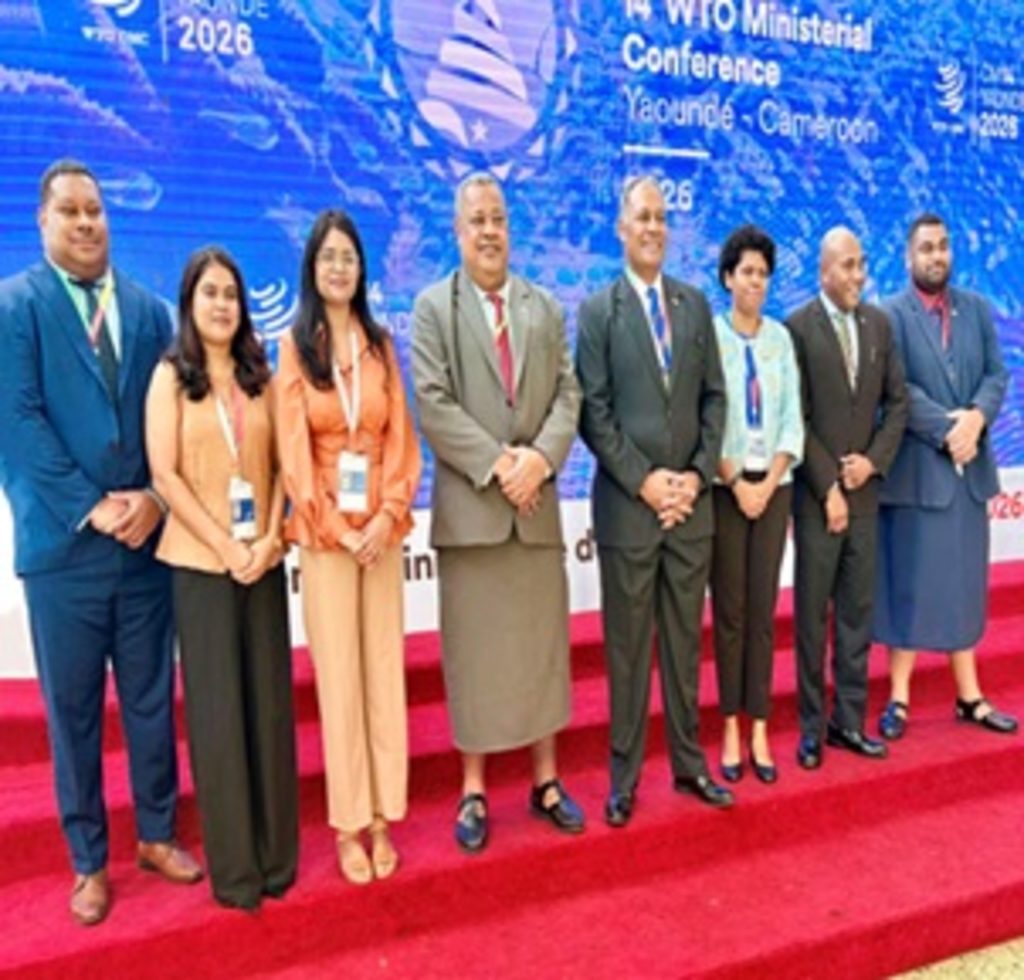
Fiji Delegation at the WTO Ministerial Conference (MC14) in Yaoundé, Cameroon. Source Ministry of Foreign Affairs and External Trade
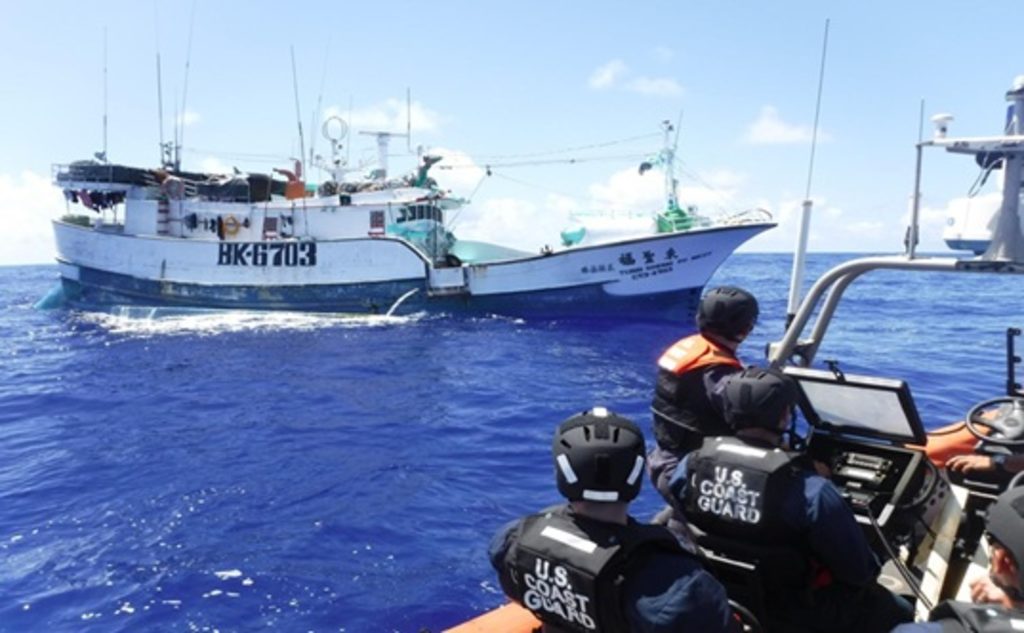
A boarding team from the United States Coast Guard Cutter Sequoia (WLB 215) approaches a Taiwanese fishing vessel in the Pacific Ocean, March 13, 2020, as part of joint efforts for Operation Rai Balang under the Forum Fisheries Agency. Picture: USCGC Sequoia
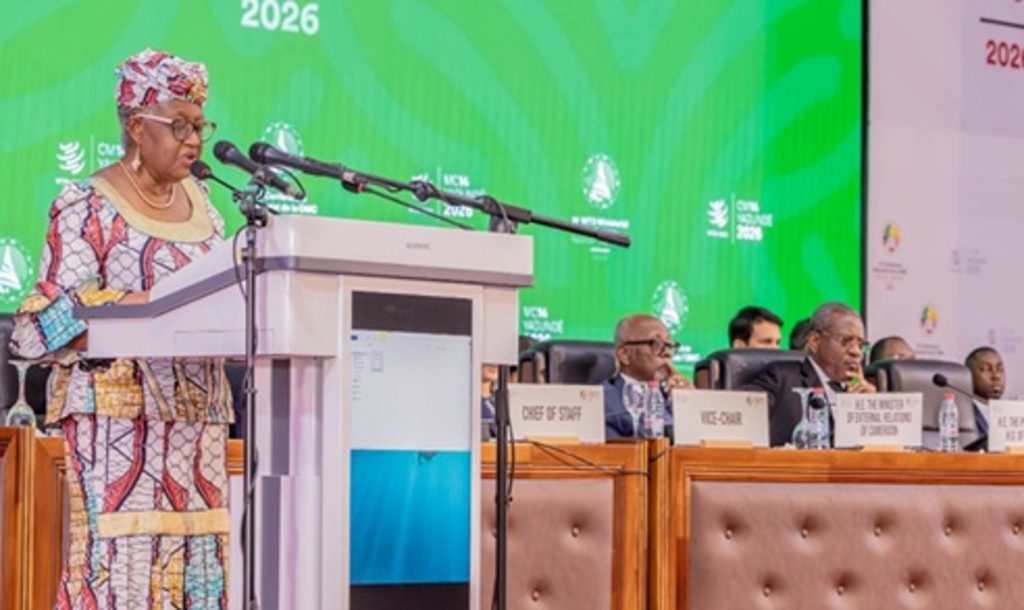
Director-General Ngozi Okonjo-Iweala at the opening of WTO’s 14th Ministerial Conference (MC14) in Yaoundé, Cameroon. Picture: WTO

S

