
Forty-three per cent of iTaukei believe only indigenous Fijians should hold high political office, while 60 per cent of Indo Fijians feel iTaukei dominance is holding the country back, a new social cohesion survey shows.
The findings, revealed at the National Social Cohesion Stakeholder Conference yesterday, come from the Social Cohesion and Reconciliation Index (SCORE), developed by the Centre for Sustainable Peace and Democratic Development (SeeD) in partnership with UNDP and USAID.
“On the surface, everyday interactions are largely peaceful,” SCORE researchers said.
“Trust is high: 85 per cent of iTaukei trust Indo Fijians, and 93 per cent of Indo Fijians trust iTaukei.
“Many respondents even said they would vote for candidates from the other community, and tolerance for ethnic diversity is strong.”
However, deeper tensions persist. SCORE’s “support for polarising narratives” indicator found that almost half of iTaukei think Indo Fijians do not respect the Fijian way of life, while half of Indo Fijians believe Fiji would be more developed if iTaukei did not dominate politics.
Common stereotypes also emerged, including perceptions that Indo Fijians are focused only on business, and that iTaukei depend too heavily on government support.
Researchers noted that polarisation is driven less by direct hostility and more by perceived scarcity, competition, and weak governance.
“Structural grievances are the main triggers of tension,” they said, pointing to resource competition and distrust in institutions as key drivers of political and social friction.
The survey, conducted in October last year with 1339 respondents nationwide, also highlighted strong willingness among both communities to share political space and engage in reconciliation, though underlying political disagreements remain a potential flashpoint.
SCORE’s insights will feed into Fiji’s National Security Strategy, which recognises social cohesion as a cornerstone of national stability.
Analysts said addressing structural grievances and fostering inclusive political dialogue is critical to preventing latent tensions from undermining Fiji’s peaceful coexistence.
PM: Path to unity never been straightforward
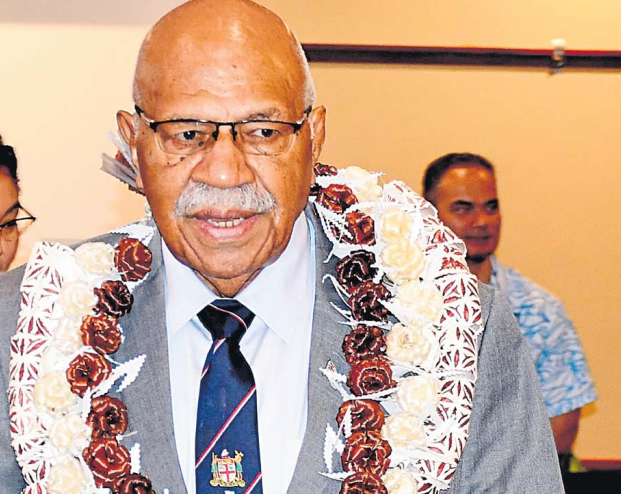
FIJI’S path to unity has never been straightforward, Prime Minister Sitiveni Rabuka said, as he called for stronger social cohesion during the National Social Cohesion Stakeholder Conference yesterday.
“Our fragile beginnings have never been a clear path to unity,” Mr Rabuka said, outlining the historical
challenges that have shaped the nation.
He said Government’s decision to revive Ratu Sir Lala Sukuna Day and Girmit Day reflects a broader
commitment to inclusivity and recognition.
“These holidays reflect our commitment to inclusivity and our recognition of the sacrifices and achievements of those who came before us,” he said.
The conference brought together representatives from government, civil society, faith-based organisations and development partners, including the United Nations.
Mr Rabuka said social cohesion was critical at a time of global uncertainty, pointing to challenges such as climate change and economic volatility.
He also highlighted the Pacific’s “Ocean of Peace” approach to security, grounded in To move forward, we
must reconcile…– Prime Minister Sitiveni Rabuka trust, dialogue and shared responsibility.
“The establishment of the Truth and Reconciliation Commission is a courageous step in our national journey.
“To move forward, we must reconcile the pain of our past with compassion and courage.”
Mr Rabuka urged all sectors to engage in open and inclusive dialogue, stressing that respect for diverse
voices underpins national stability.
“Our strength has always been in our diversity, our unity, and our shared commitment to the common good.”
He also acknowledged the support of development partners, noting that collaboration remains essential in
building a stable and inclusive Fiji for future generations.

