
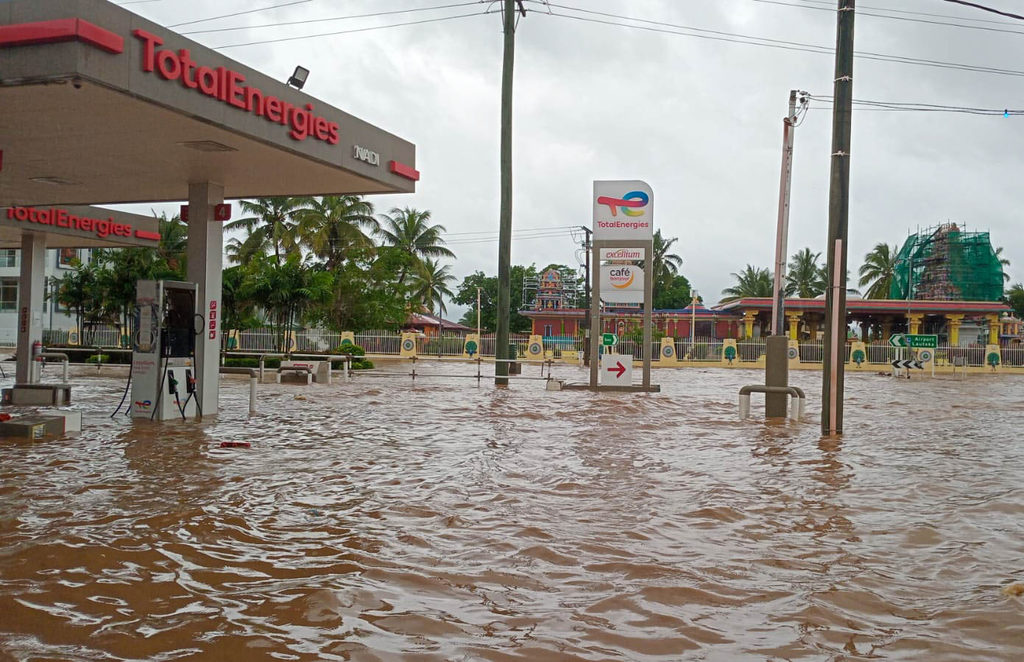
For more than two decades, rapid development in Nadi has transformed the town into one of Fiji’s busiest economic hubs. But beneath that growth lies a persistent and painful reality, flooding that has repeatedly devastated homes, businesses, and lives.
The floods of 2009 and 2012 remain etched in memory, submerging large parts of the Jetset Town and triggering widespread calls for a permanent solution. In the years that followed, plans were drawn, studies commissioned, and discussions held but little changed on the ground.
Now, after decades of delay, a breakthrough has finally arrived. Earlier this month, the Australian Government announced a $35million grant under the Fiji Climate Adaptation Program (FCAP), marking a major step forward for the long-awaited Nadi Flood Alleviation Project.
A plan decades in the making
The phrase “Nadi Flood Alleviation Project” has circulated for years, often raising hopes that were never fully realised.
Efforts intensified after the devastating floods of January and March 2012, when Government partnered with the Japanese Government through the Japan International Cooperation Agency (JICA) on The Project for the Planning of the Nadi River Flood Control Structures.
The initiative aimed to develop a Master Plan for managing flooding in the Nadi River Basin, alongside feasibility studies for urgent interventions.
When the report was released in 2014, it revealed the scale of destruction: damages from the 2012 floods alone were estimated at $US89million ($F200m).
It also pointed to an earlier JICA study conducted between 1996 and 1998, which examined four major rivers on Viti Levu (the Rewa, Sigatoka, Ba, and Nadi rivers) and proposed flood control measures.
Yet, despite these recommendations, little was implemented.
The 2014 report noted that “no actual measures had been undertaken” and highlighted how repeated floods in 2009 and twice in 2012 caused “tremendous damage” to Nadi Town and surrounding areas.
Turning plans into action
That long-standing gap between planning and implementation may finally be closing.
Through the FCAP, backed by the Australian Government and supported by the Australian Infrastructure Financing Facility for the Pacific, earlier studies and plans are now set to translate into real infrastructure and systems on the ground.
The four-year program, which begins in 2026, focuses not only on physical flood protection but also on improving early warning systems, governance, and community preparedness.
Speaking at the launch in Nadi on March 22, Australia’s High Commissioner to Fiji, Peter Roberts, highlighted the broader benefits of the initiative.
“While the program will deliver nationwide benefits it has commenced its activities in the Nadi basin by strengthening the systems that help manage water, deliver early warnings and support community preparedness,” he said.
“We know there is very important broader work that needs to be done to support Nadi from natural disaster and I have great ambition for the Australia Fiji partnership.”
Planned works include protective flood infrastructure, improved drainage systems, and a diversion channel to redirect excess water during major flood events. The project will also support watershed assessments and help strengthen legislation around water management.
Critical infrastructure such as Nadi International Airport is expected to benefit, alongside homes and businesses that have long borne the brunt of flooding.
Long-awaited relief
For many in Nadi, the announcement has brought cautious optimism.
Among the most vocal supporters is the Nadi Chamber of Commerce and Industry (NCCI), which has long advocated for action.
Acting president Lawrence Kumar said the funding marks a turning point.
“The Nadi Chamber of Commerce welcomes this initiative taken on by the Australia government to launch the much-awaited Nadi Flood Alleviation project,” said Mr Kumar.
“We are seeing this project actually materialising because it has been in the planning stage for a number of years.
“In the recent floods this year, it brought fresh concerns for business houses and residents so for this project to finally get off the ground is very much welcomed.
“We had raised our serious concerns and questioned why this project had yet to get off the ground for a number of years and we are very pleased that our concerns are being heard.”
However, he stressed the importance of transparency as the project moves forward.
“We require further collaboration with the Government of Fiji and the Australian High Commission to ensure we are regularly updated on the status of the project.
“The business houses of Nadi have suffered for many years with all of the flood damages they have had to sustain and money they have had to spend to get their businesses running again.
“This project launch gives us the assurance that sooner or later when this project is completed, the flooding issue in Nadi is going to be mitigated and going to be minimised.”
A turning point
After nearly 30 years of studies, reports, and unrealised plans, the Nadi Flood Alleviation Project now stands at the threshold of becoming reality.
For a town that has endured repeated devastation, the shift from paper to progress offers something many residents have been waiting for not just protection from floods, but a measure of certainty for the future.

