
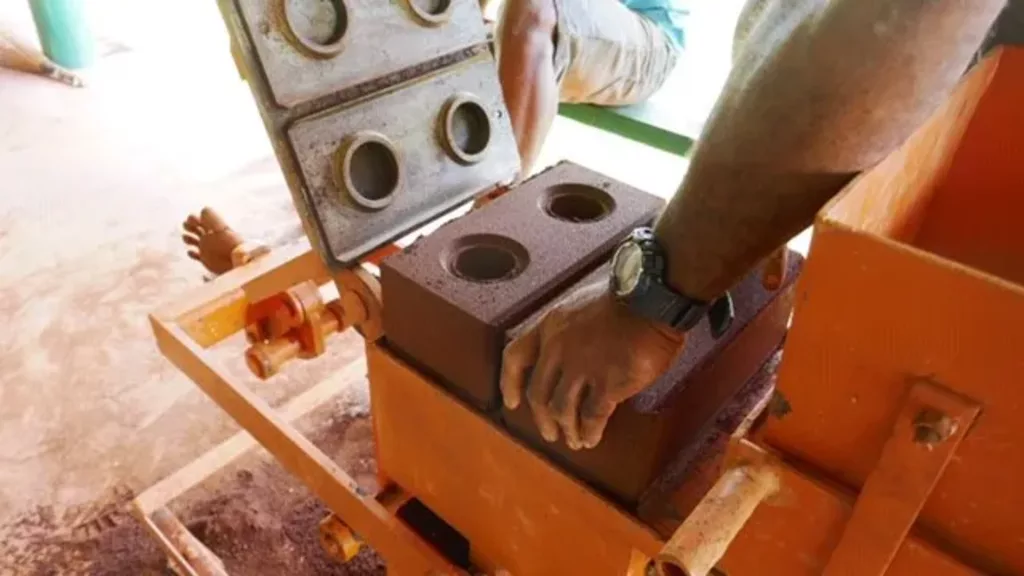
SAFE, affordable housing is realisable from one of Fiji’s most overlooked resources – mud.
Mud is amongst some of the oldest building materials on earth.
What was once dismissed as unsuitable, even “unfriendly,” is now being reshaped into durable, low-cost bricks that could transform how homes in informal settlements are built across the country.
According to BBC, mud buildings are remarkably good at keeping people cool in summer and warm in colder weather and it can withstand extreme weather conditions.
In a search for more sustainable buildings, BBC highlighted that architects are returning to this overlooked age-old construction material today.
For Roger O’Callaghan of the Golden Oldies Mission in New Zealand, the vision to build mud bricks for informal settlement and villages is practical.
The team has built its first mud brick home in Dreketi, Vanua Levu – the first completed home made by the mission team and locals.
The building cost of the new home was at $80,000, largely due to new materials and early-stage logistics.
The goal for O’Callaghan and his team is to reduce that cost significantly as systems improve and local production expands.
On Vanuabalavu, machines have already been deployed, with bricks produced on-site for new housing – an early glimpse of what could become a nationwide model.
Still, scaling up remains the biggest hurdle.
“I’m hoping to get to a stage where we can build a house a week,” O’Callaghan said.
“But to do that, you need multiple teams working at once and funding is the issue before we can get there.”
Despite financial constraints, the mission has made a critical breakthrough: mud bricks are now officially being recognised in Fiji.
“That was a big step,” he said.
And in some ways, a better one.
Beyond affordability, mud bricks offer natural insulation, keeping homes cooler in Fiji’s heat.
Inside the mud brick house in Dreketi, Golden Oldies co-founder, Graeme Mitchell said he noticed the difference immediately.
“It was much cooler inside compared to the heat outside,” he recalls.
He said its ideal for Fiji’s hot climate.
Research is reinforcing those observations.
A PhD student working alongside the project is scientifically proving that the mud bricks being produced are stronger than conventional cement bricks.
For Fiji, where cyclones are an ever-present threat – that resilience is critical.
“Our mud brick home is reinforced so it can survive the cyclone seasons,” Mitchell said.
“We believe this can help solve the problem of stronger affordable homes.
But the vision stretches beyond construction.
The mission hopes to establish satellite production hubs in villages, where communities can make their own bricks using provided machines and training.
In doing so, they could build not only homes, but community halls, evacuation centres, and even set up small businesses.
“They can sell the blocks to the open market,” Mitchell said.
“Instead of relying only on fishing or subsistence farming, they can make bricks. It’s not impacted by the weather.”
That shift could offer a stable source of income, something many rural and maritime communities struggle to secure.
“It’s part of the dream of what we are trying to do,” he adds.
For now, the mission continues to search for financial partners to help turn that dream into a reality.
Manual machines have already been introduced, allowing individuals to begin small-scale production. One house has been built, more are planned.
And beneath it all lies the same humble material, mud – now proving it can do far more than hold footprints. It can hold the future of safe, affordable housing.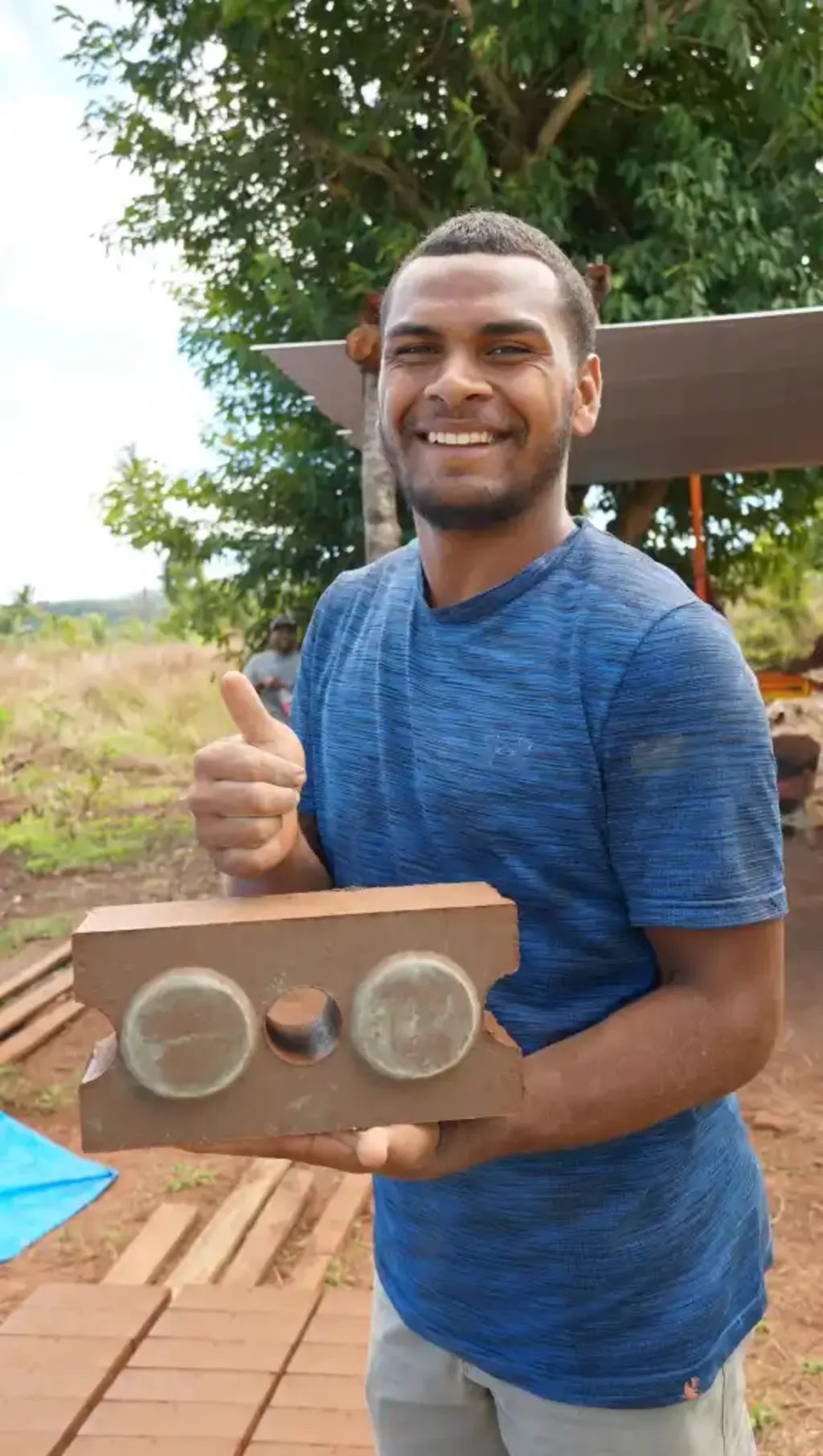
6000 mud bricks now produced in a remote church boundary. Picture: GOLDEN OLDIES MISSION
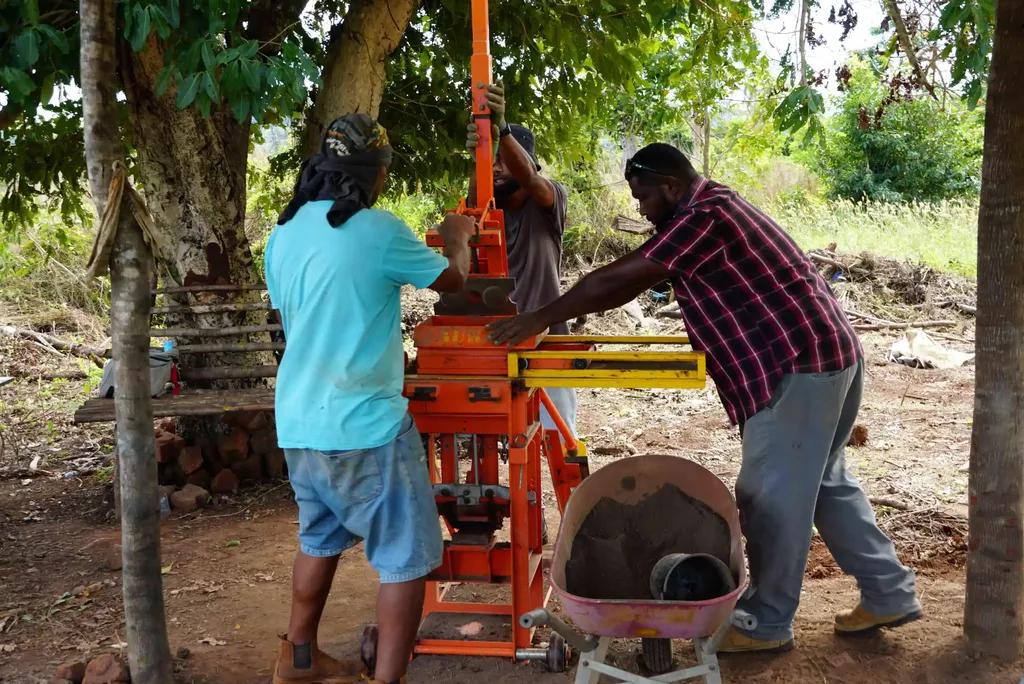
The team manufacturing the bricks.
Picture: GOLDEN OLDIES MISSION
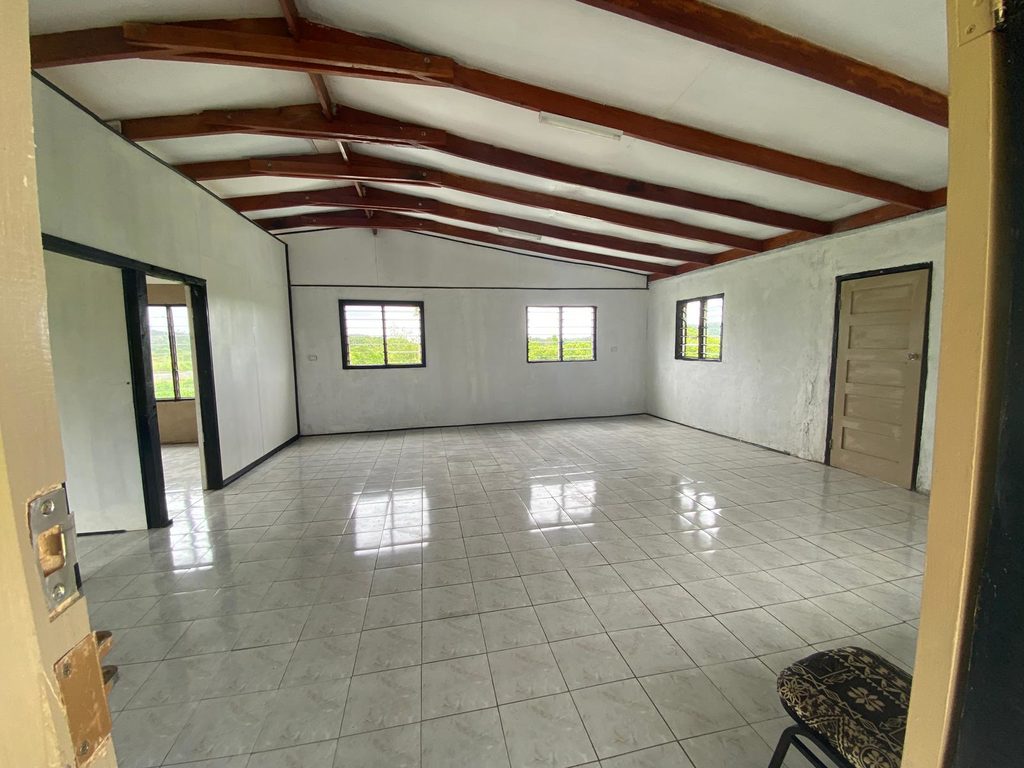
Inside the mud brick home in Dreketi, Vanua Levu.
Picture: GOLDEN OLDIES MISSION
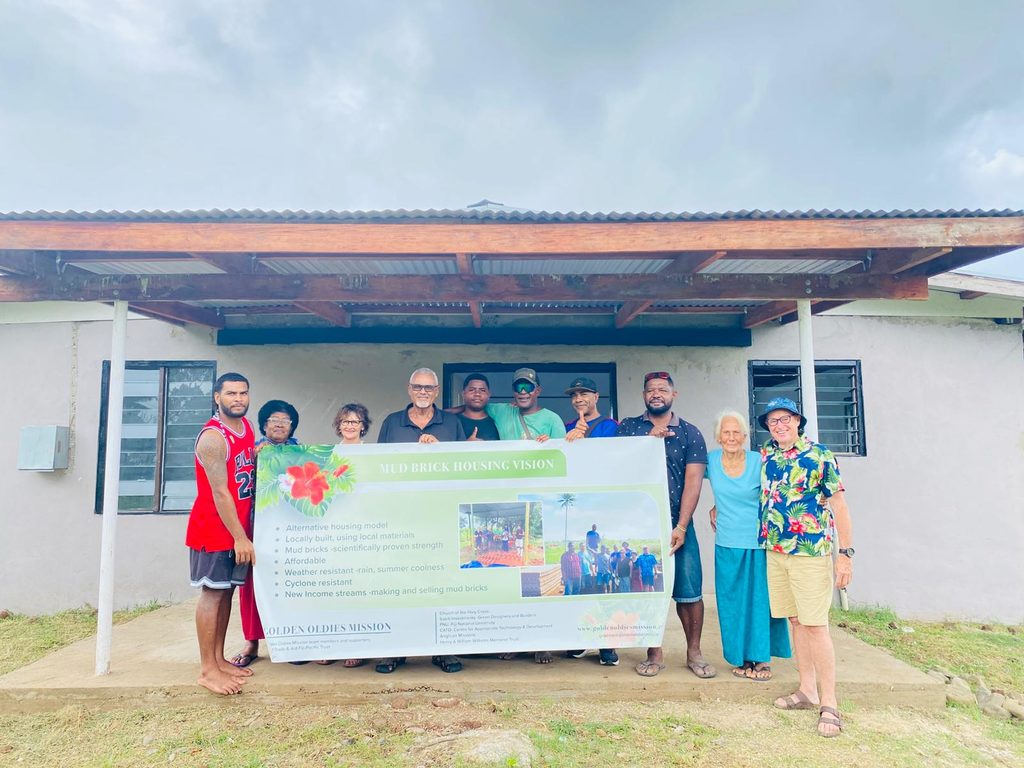
The completed mud brick home done by the Golden Oldies Mission and their Fiji team.
Picture: GOLDEN OLDIES HOME
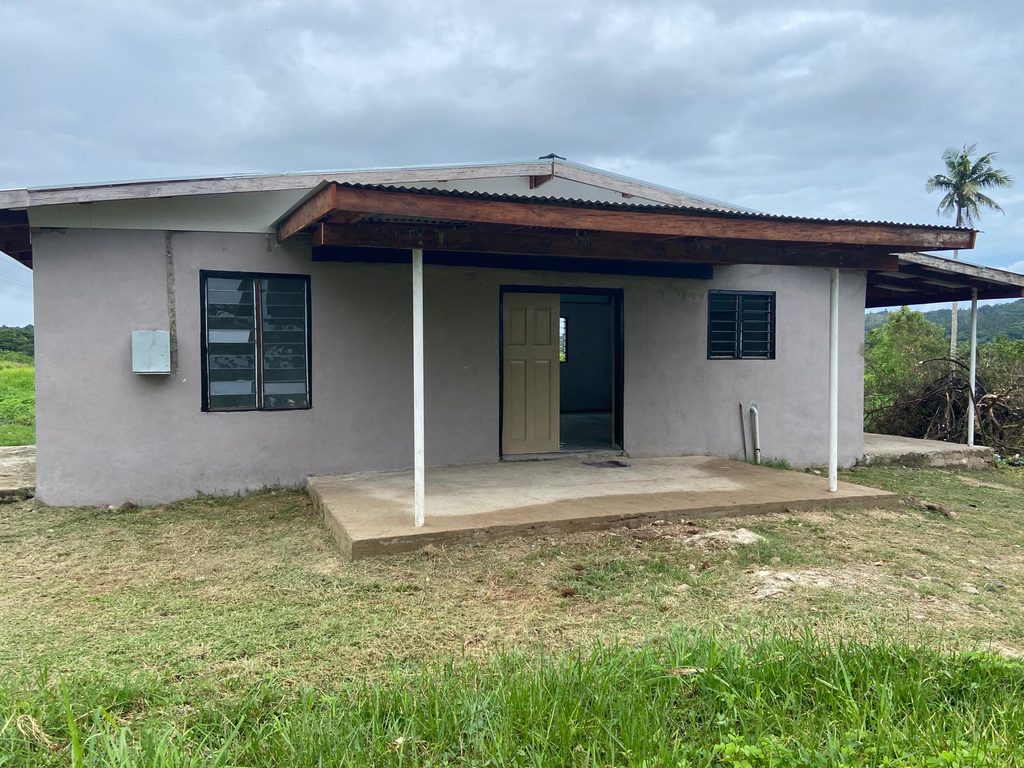
The completed mud brick home. Picture: GOLDEN OLDIES HOME

