
Catholicism arrived in Fiji in 1844 in Lakeba, the chiefly island of the Lau province.
While it faced significant challenges in its formative years, it would eventually establish itself permanently by the mid-1800s.
The first wave of missionaries were led by the Marist Fathers, who would later be supported by the Columban priests.
Among these pioneers were Reverend Bishop Dr Julien Vidal, who was later ordained as the first Roman Catholic bishop of Fiji, and Reverend Father Emmanuel Rougier.
They arrived in Suva aboard the SS Tenterden in August 1888.
It was Fr Rougier, while posted at the Rewa Catholic mission station in Naililili village along the Rewa River, who oversaw the construction of many of the concrete and solid buildings there.
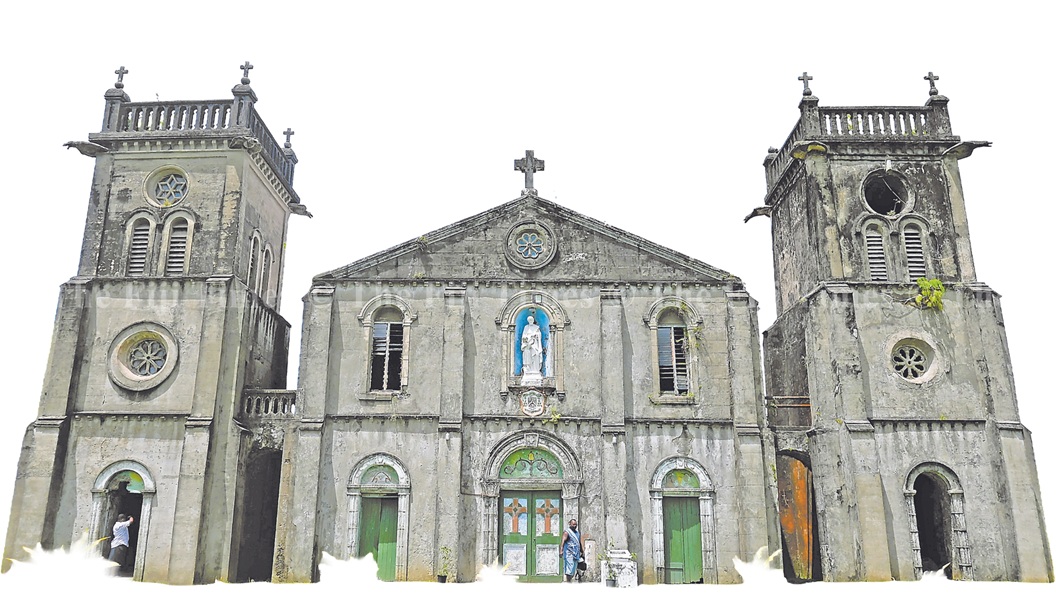
This included the presbytery, which today is still the residence of the local priest, a convent, and a school. Perhaps the most iconic and enduring monument to this French priest’s legacy, however, is the more than 120-year-old cathedral dedicated to Saint Joseph, the earthly father of Jesus.
Its proper name is Saint Joseph the Husband of Mary Cathedral, but it is more commonly known as the Naililili Cathedral.
The building is as magnificent as it is ancient. Sadly, however, this icon of the church is on the brink.
Natural disasters over the years, particularly flooding, the impacts of climate change, as well as the volatile nature of the Rewa Delta weather, have taken a huge toll on the cathedral’s physical state.
Much of its iconic infrastructure is crumbling and is in urgent need of repair, restoration and preservation.
In this first of a two-part series of Discovering Fiji, we bring the story of this national treasure back to our attention by taking a look at its vibrant history, the state it is in today, and why it needs renewal.
Father Rougier — priest and ‘king’
As stated earlier, Fr Rougier designed and supervised the building of the Naililili Cathedral from the late 1890s until its completion in 1901.
But to understand the building, we must first understand the man, and Fr Rougier was no ordinary Catholic priest. He was ordained at 24, which required special permission from the Vatican given his young age. He was not only a pious missionary but also substantially wealthy, having been a landowner and businessman.
It may surprise you to learn that he was even considered, at one stage, to be the wealthiest man in the South Pacific. He purchased the Fanning and Washington Islands in Kiribati, which caught the attention of the Australian prime minister at the time. Fr Rougier would go on to mint his own currency and stamps for use on these two atolls. He later purchased Christmas Island, which would earn him the nickname “Santa Claus” and “King of Christmas Island”.
In Fiji, Fr Rougier played a key role in the conversion of the Tui Namosi from Methodism to the Catholic faith. He also caused friction between the two churches over his alleged involvement in the burning of Methodist hymn books and Bibles, an act for which he was nicknamed “Poacher Rougier”.
In neighbouring Bau, despite the fact that it was the seat of Methodism in Fiji, Fr Rougier befriended another chief, Ratu Joni Colata, who was generous enough to offer a piece of land on the island where a small wooden Catholic chapel was built.
An edition of The Methodist, published in March 1906, revealed in detail the ceremony that took place. It stated that people travelled from Rewa, Natovi and as far as Namosi to participate in the inauguration of the chapel, which was officiated by Bishop Dr Vidal. This was also about 54 years since a Roman Catholic bishop had set foot on the island, and the landing place is known as Na Vesikalakala, which is also where the chapel is located.
Accompanying the bishop was Fr Rougier and others, who were entertained and feted at the Vatanitawake, hosted by the Vunivalu, Ratu Kadavulevu.
After falling out with the leadership of the clergy here, Fr Rougier sold all his assets and business interests in Fiji and, after pursuing ventures across the South Pacific, settled in Tahiti, where he passed away in 1932 at 68 years of age.
Naililili Cathedral — a pretentious gem
The Rewa Catholic Mission was founded in 1851 by the Reverend Fathers Mathieu and Michel.
In 1859, Fr Favre took charge and died in 1886.
In 1888, Fr Rougier was appointed to head the mission, and he took it upon himself to drive the establishment of permanent structures that would ensure the Church’s position in Rewa for years to come.
To help complete the building, assisting Fr Rougier were his Fijian scholars, who split their time between construction labour and theological study.
So, while a Frenchman may have been the mind behind the cathedral, it was built by Fijian hands freely given.
At the time of its opening, the cathedral was said to be able to house more than 800 parishioners. Today, however, catechist Rusiate Tuinacau revealed that it can accommodate about half that figure, given that many areas inside have been deemed unsafe for seating.
The church has two towers in front and, at the time it was opened, had a height of 48 metres and a width of 30 metres.
The interior of the church features 25 intricately designed stained glass windows from France that feature Fijian inscriptions.
The cathedral’s left tower features a clock which, sadly, no longer works. The bronze bells, cast in France, are still there but are no longer used.
The Church’s publication, The Catholic Press, ran a comprehensive commemorative piece on the Naililili Cathedral’s opening in its June 1905 edition, interestingly titled “Festivities at the Scene of the Bible-Burning Myth”.
Bishop Dr Vidal travelled up the river to officially open, bless and consecrate the church, and about 1000 Catholics from Rewa were present throughout the festivities, which lasted for three days.
The paramount chief of Burebasaga and Rewa, the Roko Tui Dreketi, graced the occasion together with his son, and it was during this joyous event that he renounced the old Fijian gods and announced to the bishop that he was embracing the Catholic faith.
- History being the subject it is, a group’s version of events may not be the same as that held by another group. When publishing one account, it is not our intention to cause division or to disrespect other oral traditions. Those with a different version can contact us so we can publish your account of history too — Editor.
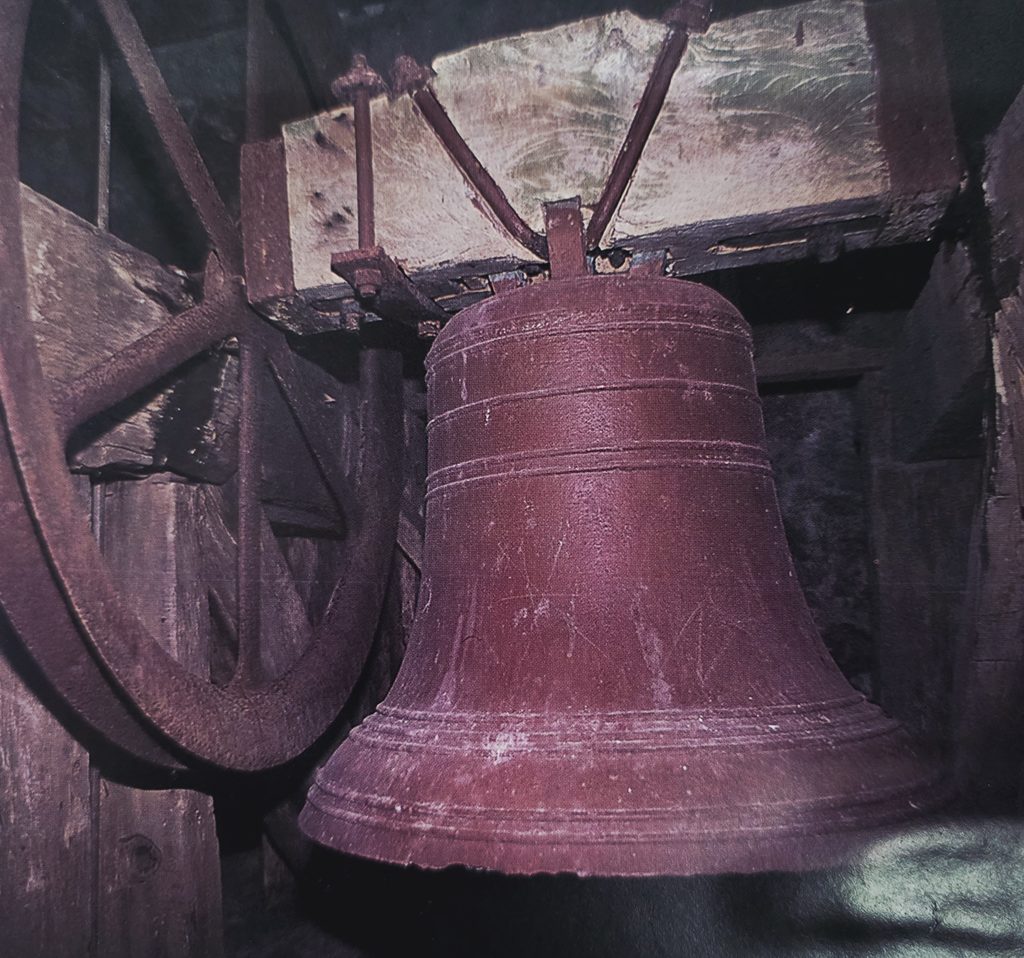
Resting in peace…the cathedral’s old French bell is now silent and idle. Picture: ALIFERETI SAKIASI

