
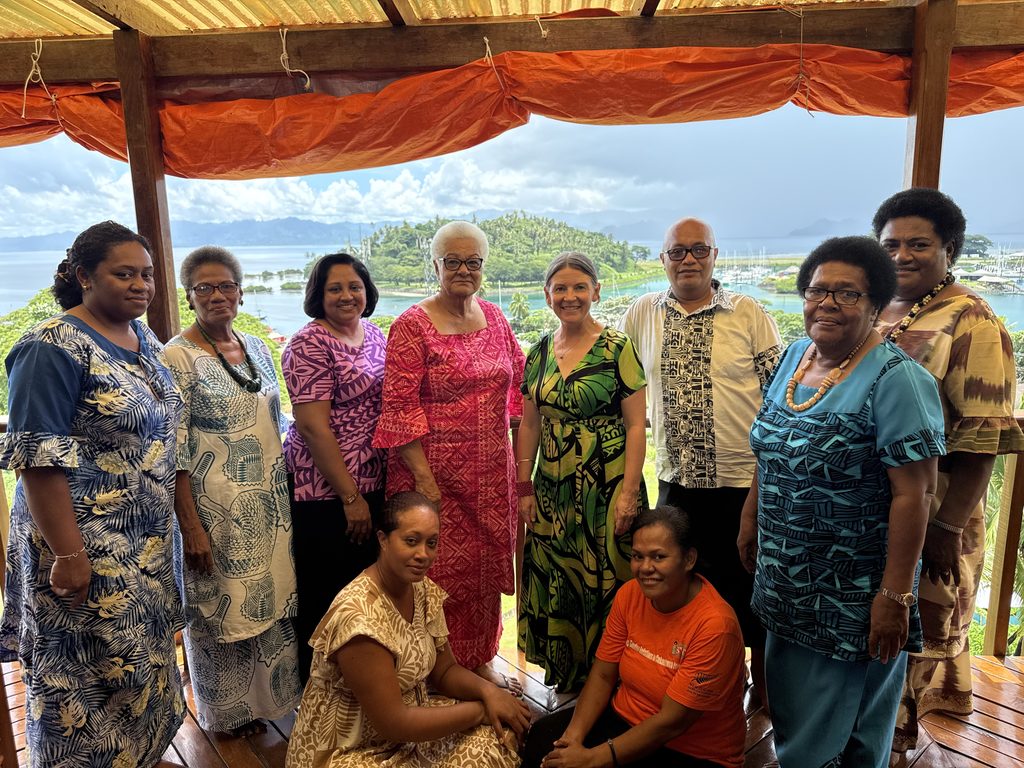
BY listening to women’s voices and witnessing their realities firsthand, partners are seeing how targeted support is transforming lives across Fiji’s Northern Division.
A joint monitoring visit by Women’s Fund Fiji (WFF) and the New Zealand Ministry of Foreign Affairs and Trade (MFAT) has highlighted the tangible impact of women–led initiatives in some of the country’s most remote and maritime communities.
The visit aimed to assess how New Zealand’s funding, channelled through Women’s Fund Fiji, is advancing gender equality and strengthening women’s economic empowerment in hard–to–reach areas of the Northern Division.
The New Zealand delegation included First Secretary at the New Zealand High Commission, Jane Anderson, and Development Programme Coordinator Arti Naidu, who joined the WFF team on the ground in Savusavu earlier this week.
Prior to the delegation’s arrival, Women’s Fund Fiji staff had already been conducting monitoring and site visits with grantee partners in Macuata, gaining valuable insights into ongoing projects and their impact at the community level.
On Tuesday, the joint team met with the Roko Tui Cakaudrove and held monitoring sessions with the Bia–i–Cake Cooperative and Soqosoqo Vakamarama Cakaudrove. During these sessions, women shared updates on their progress, spoke openly about challenges they continue to face, and reflected on achievements made possible through the support received.
Field visits on Wednesday took the team deep into rural communities, including Naidi and Yaroi villages, as well as Bia–i–Cake Cooperative project sites in Nagigi. Women spoke candidly about how the funding and training had strengthened their livelihoods, built confidence, and created new income–generating opportunities for their families.
Later that day, the team travelled more than two hours along rugged terrain to reach Wailevu Village in Natewa, with plans to cross by punt to Salia Village. However, deteriorating weather conditions, including heavy rain and rough seas, forced the team to cancel the crossing and return due to safety concerns along the gravel roads.
Despite this setback, the visit continued to provide valuable insights into the realities faced by women living in isolated locations.
“Through this visit, we are able to better understand the real impact of our support for gender equality and women’s empowerment in remote locations,” Ms Anderson said.
On Thursday, the team travelled to Taveuni and visited Lovonivonu Village, another project site supported through Soqosoqo Vakamarama Cakaudrove. From there, they proceeded to Naqara, where members of the Taveuni Empowerment Women’s Support Group (TWEGS) gathered from across the island to share their stories.
Women proudly showcased products developed through the project and spoke about the positive changes they are seeing in their households and communities as a result of increased skills, income and confidence.
Also present was Udukacu Boots and Skirts, a former Women’s Fund Fiji–supported initiative now operating under the TWEGS umbrella, demonstrating the sustainability and continued growth of women–led enterprises beyond initial funding.
The visit concluded with a stop at a local beekeeping farm, where one of the group members demonstrated honey harvesting techniques. These skills, gained through the project, are now contributing directly to household income and improved resilience.
Women’s Fund Fiji acknowledges and thanks the New Zealand Ministry of Foreign Affairs and Trade for its continued support, noting that the partnership is critical in ensuring women in rural, remote and maritime communities are resourced, empowered and able to lead change within their own communities.
Across all sites, a common message emerged: when women are resourced and supported, they lead change not only for themselves, but for their families and entire communities.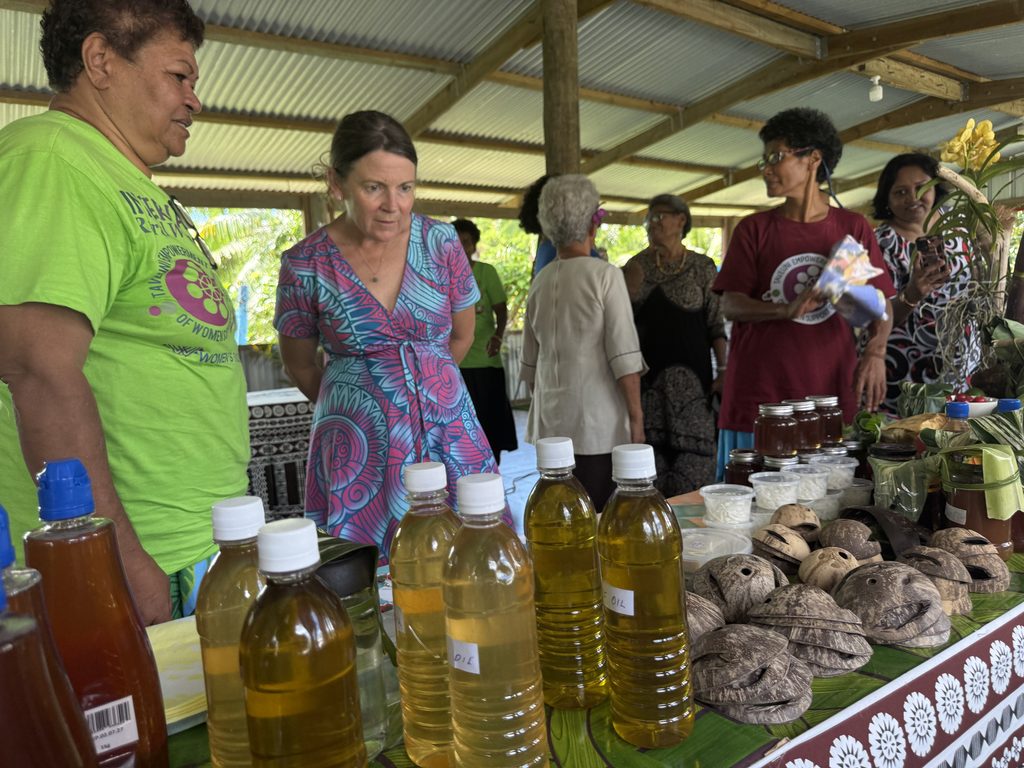
New Zealand High Commission First Secretary Jane Anderson views products by the Taveuni Empowerment Women Support Group in Naqara, alongside the group’s members. Picture: SUPPLIED
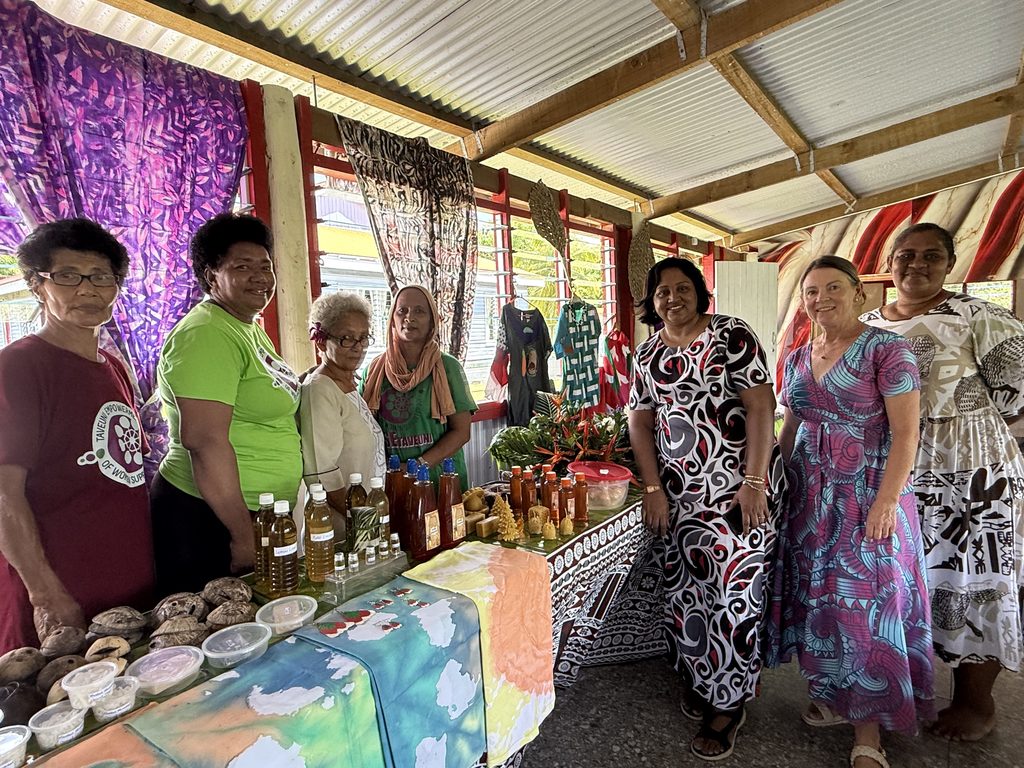
Partnerships are critical in ensuring women in rural, remote and maritime communities are resourced, empowered and able to lead change within their own communities. Picture: SUPPLIED

