
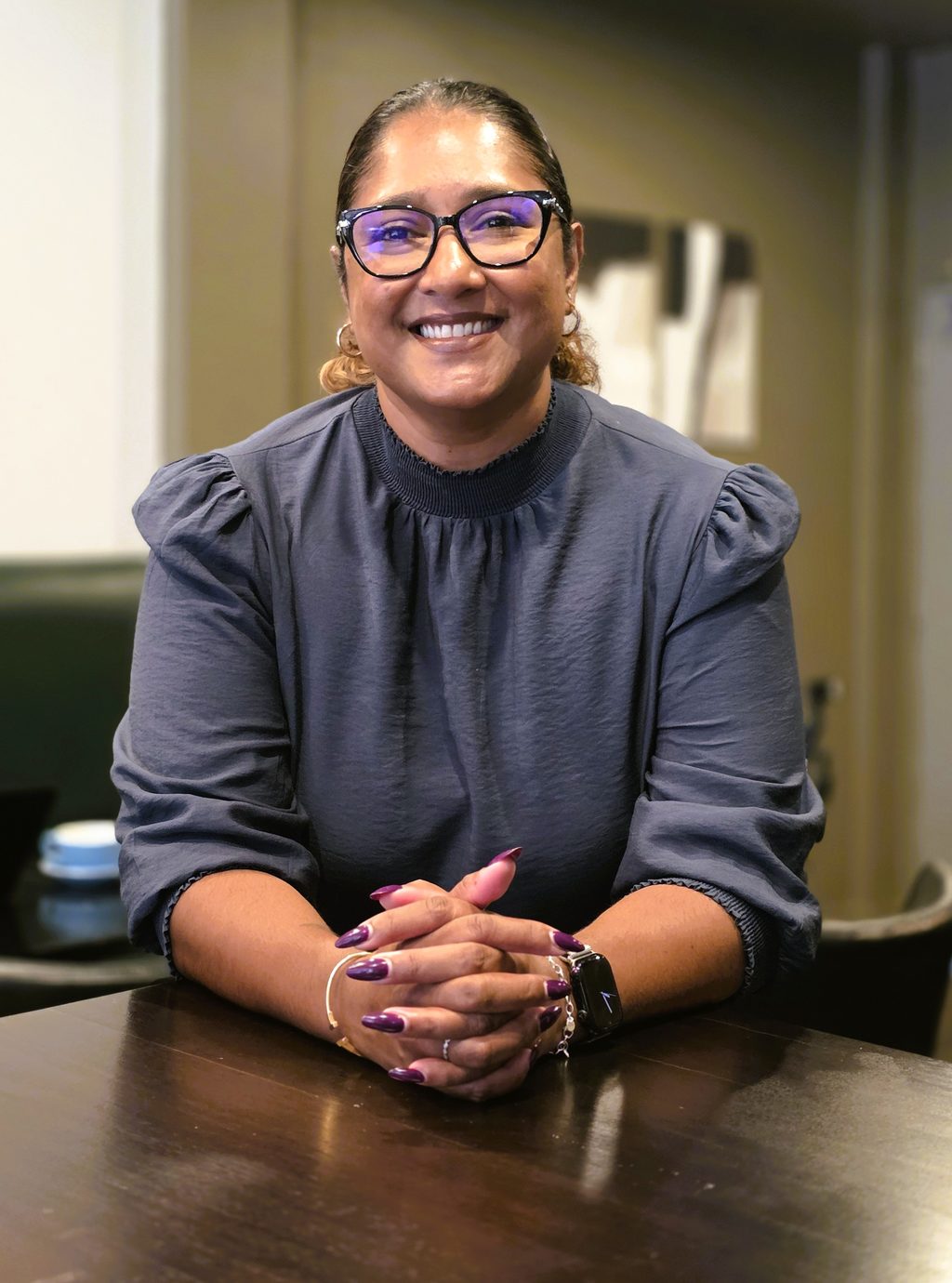
LEADERSHIP that is genuine, sincere and impactful is not confined to titles or boardrooms.
And being a leader is more about a lived experience that is shaped daily by challenges, creative thinking and a passionate for uplifting others.
A 2013 alumna of Leadership Fiji, Ms Julianne Verma has built a career spanning property development, business and advocacy.
Today, she is the founder and executive chair of Women in Construction and Trade (WICAT), while also running Toorak Central in Suva.
Raised in Martintar, Nadi, Ms Verma spent part of her childhood in Australia before returning to complete her schooling in Fiji. She later moved to Suva in 1999, where she has since established her professional base.
“I was raised by my grandparents,” she said.
“That upbringing shaped a lot of who I am today.”
Her academic journey reflects a commitment to lifelong learning. After entering the workforce, she later pursued tertiary studies as a mature student at the University of the South Pacific, specialising in land management to complement her work in property development. She has since added a diploma in project management and continues further studies.
Leadership shaped by experience
Ms Verma credits her time with Leadership Fiji as a turning point in her career.
“It taught me that leadership comes in many forms,” she said.
“You deal with different personalities and you learn how to adapt, communicate and relate to people.”
She said the program also created a lasting network of professionals who continue to support one another.
“It’s a shared journey.”
” Even today, we reach out to each other for guidance, connections and support.”
At the time, she was working in the beverage industry as a business development manager. Within a few years, she transitioned into property development – a shift she believes was influenced by the confidence gained through the leadership program.
“There is no fixed pathway. You can adapt and change,” she said.
A platform for women in construction
That belief in adaptability would later underpin one of her most significant initiatives – the founding of WICAT in 2021.
The idea emerged during the renovation of Toorak Central, where Ms Verma found herself the only woman on site.
“I felt quite lonely,” she recalled.
“Every day I was dealing with men – contractors, subcontractors, architects. I thought, there must be other women in this space.”
WICAT was established to connect and empower women across the construction and trade sectors, from engineers and architects to administrative staff within construction firms.
Today, the organisation has grown to a network of about 240 women and is guided by a board of directors.
“It started as something very personal, but it has taken on a life of its own,” she said.
Beyond networking, WICAT aims to influence policy and advocate for greater female representation in decision-making spaces.
“You’re building infrastructure that will be used by everyone,” she said. “So it’s important that women are part of those conversations.”
Breaking barriers and shifting mindsets
Despite progress, Ms Verma acknowledges that challenges persist for women in the industry.
“There are still issues of not being respected or being overlooked in male-dominated spaces,” she said.
“Sometimes you’re in a room and you’re not seen or heard.”
However, she believes internal barriers can be just as significant.
“Sometimes the seat is there, but we don’t take it. We step back. We need more women to be confident, to step up and believe in their value.”
She also highlighted the impact of family responsibilities on women’s career progression, particularly in technical fields.
“Many women start degrees in engineering or trades but don’t finish because of family commitments,” she said. “But that doesn’t mean the journey ends. It’s seasonal — you can come back and continue.”
Her message is clear: persistence and self-belief are key.
“I’m not the smartest person in the room, but I deserve to be there. And so do many other women.”
Leadership beyond privilege
Ms Verma also stressed the importance of inclusive leadership in addressing broader socio-economic challenges.
“There is a small percentage contributing significantly to the economy, but what about the rest?” she said.
“As leaders, we have to ensure everyone is seen, heard and supported.”
She believes those in positions of privilege have a responsibility to uplift others, particularly in ensuring access to basic needs such as housing.
“Decent homes should be non-negotiable,” she said.
A call to future leaders
As Leadership Fiji marks its 25th anniversary, Ms Verma paid tribute to its founders and encouraged young people to apply.
“It’s a big commitment, but it’s worth it,” she said.
“If you don’t get in the first time, apply again.”
She described the programme as instrumental in shaping her leadership journey and urged aspiring participants to take the opportunity.
“There is no other programme like it,” she said.
Ms Verma believes leadership is an ever evolving journey which is not only measure by success and outcomes but the ability to create impactful pathways for others.
“We are all leaders in one capacity or another,” she said.
“The key is to keep learning, keep growing and bring others along with you.”

