
Non-Communicable diseases (NCDs) remain one of the most pressing public health challenges in Fiji, accounting for an estimated 80 per cent of deaths nationwide.
In response, the Japan International Cooperation Agency (JICA) has been working with the Ministry of Health and Medical Services to strengthen prevention and control measures through its Non Communicable Diseases Phase 2 (NCD2) Project.
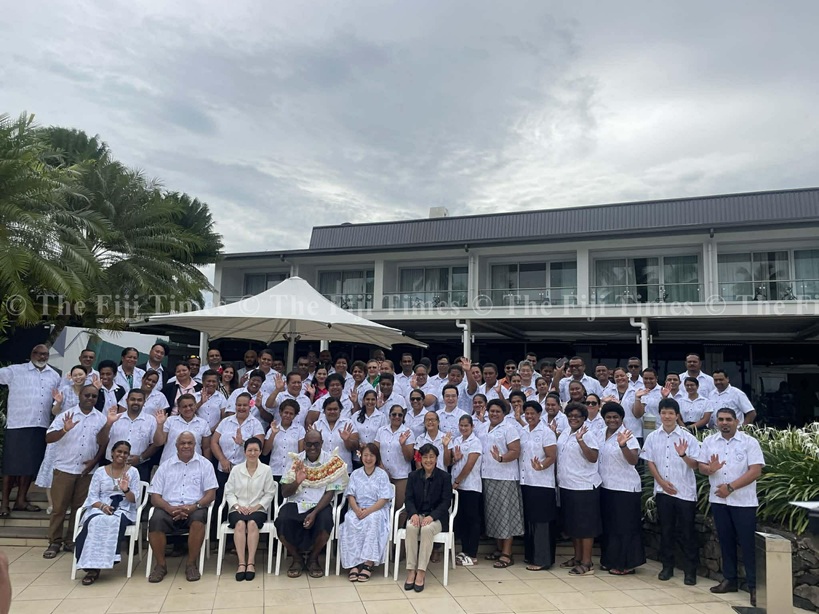
Earlier this month, JICA hosted a final dissemination seminar to discuss the outcomes and lessons learned from the project, which built on earlier work aimed at improving screening systems, training health workers and promoting healthier lifestyles within communities.
According to NCD2 Project lead Keiko Nagai, the initiative expanded significantly after the success of its first phase.
“Phase 1 was just to trial the Central Division,” Ms Nagai said.
“Because it was very effective, under Phase 2 we rolled it out nationwide.”
However, as the program expanded, adjustments were made to ensure the system remained practical for frontline health workers.
“We found that the approach was effective, but during the project we also realised that some adjustments were needed.
“We tried to decrease the additional workload for health workers on the front line, and our standard operating procedures were designed to make their work more efficient.”
The project has also developed a structured monitoring framework to ensure its implementation remains accountable and effective.
Ms Nagai explained that follow-ups are conducted routinely at two levels.
At the operational level, the project implementing committee — comprising sub-divisional medical officers, nurse unit managers and divisional health leaders — reviews how the program is functioning within their respective divisions.
At the national level, oversight is provided by a joint coordinating committee chaired by the permanent secretary for Health.
“These two levels allow us to monitor implementation on the ground while also maintaining high-level oversight.
“It has been a strong model for ensuring accountability for the project’s outcomes and impact.”
Evidence driving investment in NCD prevention
Head of Wellness at the Ministry of Health and Medical Services, Dr Devina Nand, said the scale of Fiji’s NCD problem had long been clear from national health data.
“Evidence from previous studies showed a huge problem with NCD risk factors,” Dr Nand said.
“Our mortality rates clearly demonstrated the significant burden of non-communicable diseases in this country.”
The evidence helped attract support from development partners, including JICA, which had previously implemented the first phase of the project.
Dr Nand said the ministry had contributed financially to the implementation of many project activities, strengthening the prospects for long-term sustainability.
“We are proud that a lot of the implementation was paid for by the ministry itself.
“Financially, sustainability is something we can maintain.”
However, she emphasised that continued investment in human resources would be critical to sustaining the program’s impact.
“We need technical people who can lead initiatives such as motivational interviewing, workplace health promotion and monitoring wellness systems.
“Investments in human resources are essential for critical programs like this.”
Building community ownership
During the seminar this newspaper noted differences between wellness initiatives in the private sector and those implemented in public institutions.
Private companies, particularly large employers, were seen to invest heavily in employee wellbeing programs, recognising the link between workforce health and productivity.
The approach demonstrated by Bank South Pacific (BSP), where senior leadership actively supports employee wellness programs, was a great example that could be replicated within the public sector.
Experts involved in the project believe the groundwork laid during the NCD2 initiative will allow Fiji to continue strengthening its health promotion efforts even after the project concludes.
Senior consultant for Health and Wellbeing, Dr Yoshihisa Yamazaki, said one of the most encouraging outcomes was the level of understanding developed at the community level.
“People at the grassroots level understand that they can manage their own health,” Dr Yoshihisa said.
“Autonomy has been established, and even after the project finishes, I believe the activities will continue steadily.”
He noted that many of the challenges faced in Fiji were similar to those experienced in Japan, creating opportunities for continued collaboration and shared learning.
Deputy lead of the NCD2 Project, Daigo Sango, said a key strength of the initiative was its collaborative approach with the Fijian Government.
“We do not simply provide knowledge and leave,” Mr Sango said.
“We work together with the Government every day, implementing activities jointly.”
He said the project focused on multiple aspects of the health system, including policy development, workforce capacity, equipment and the overall environment.
“We did not just bring Japanese models to Fiji.
“We adjusted them to suit the local context, and that is what makes the approach sustainable.”
As Fiji continues to grapple with one of the highest NCD burdens in the Pacific, Minister for Health, Atonio Lalabalavu said partnerships such as this remained vital in strengthening the country’s health systems and promoting healthier lifestyles for its population.

