
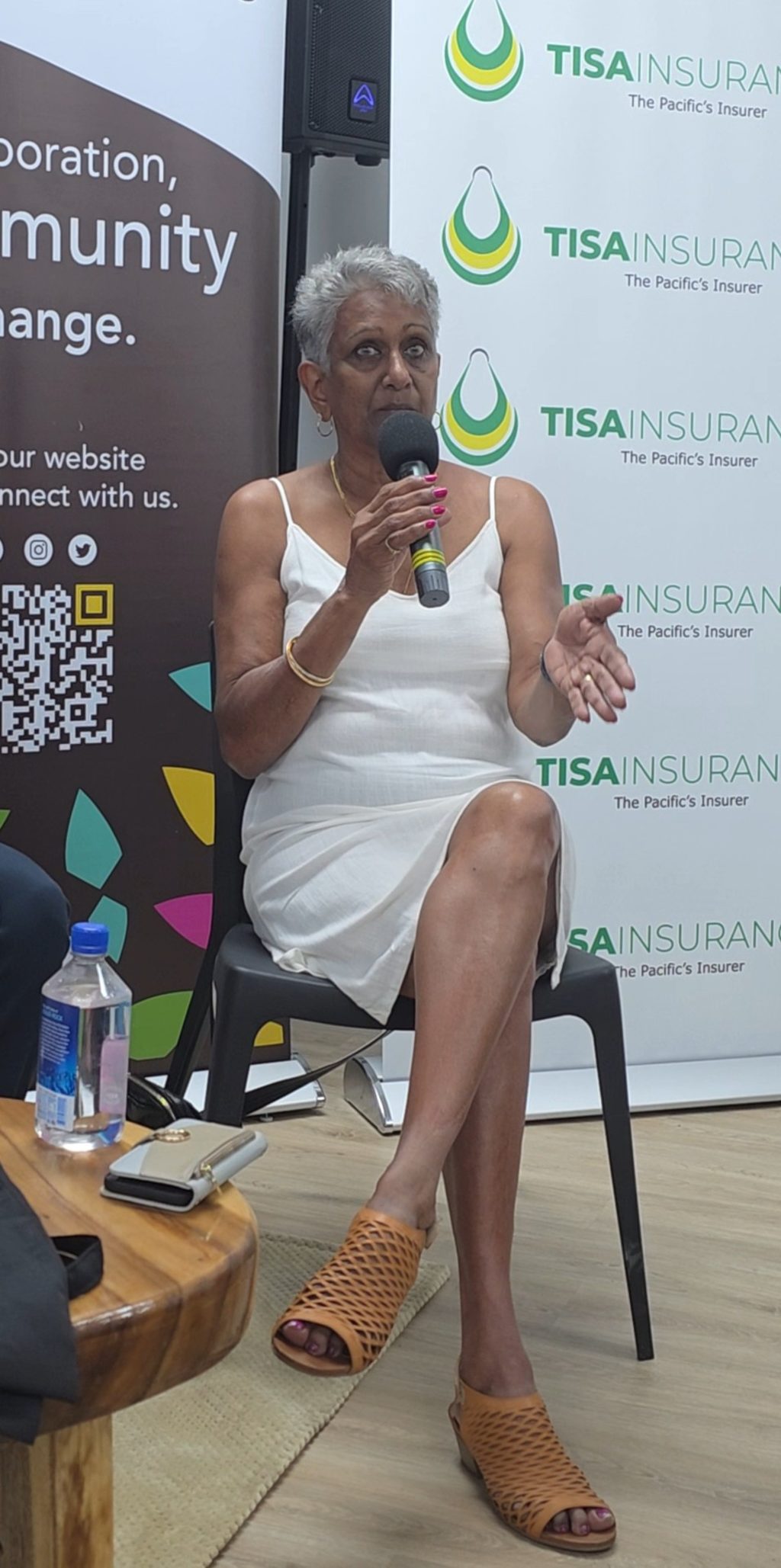
A WARM, easy atmosphere filled the Greenhouse Co-Working space in Nasese as Leadership Fiji founders and alumni gathered for the organisation’s Leaders Lounge event on Wednesday.
Around the room were leaders from different generations connected by an inclusive and people-centred leadership philosophy, searching conversations and deep reflecting on what leadership means in Fiji.
Leadership Fiji founders William Parkinson, Sufi Dean and Dr Wame Baravilala, who joined virtually, did not begin with statistics or accolades.
Instead, they reflected on a movement that grew out of the uncertainty and soul-searching following the 2000 coup.
“It has evolved,” Mr Parkinson said.
To contextualise Leadership Fiji’s journey, Ms Dean and Dr Wame revisited the painful memories and divisions that emerged as a result of the 2000 coup.
Dr Wame recalled saying, when he heard about the 2000 coup, “Oh my God, we haven’t learned a thing. It’s happening all over again!”
Ms Dean was emotional when she talked about the horrific scenes of looting, burning and violence outside her office windows on Waimanu Road that morning.
Mr Parkinson traced the program’s roots back to its earliest days, when the organisation leaned heavily on a small circle of committed partners and mentors who helped shape its foundation.
“In those early years we had some incredible friends helping us think through what leadership training should look like here,” he said.
One of them helped design the opening retreat concept all alumni know so well. That retreat sets the tone of the program. It challenges people to step outside their comfort zones and start thinking differently about leadership.
The model worked, but it did not remain static. Along the way, new elements were added as the program grew and adapted. Mr Parkinson recalled how one particular addition became something of a tradition among participants.
“Sufi introduced the Etiquette Dinner,” he said.
What seemed like a simple idea turned into one of the most powerful parts of the program. It created a space for honest reflection and connection.
About 15 years ago, another important shift took place when adaptive leadership principles were introduced into the curriculum.
That has helped steer the conversation away from leadership as a title or position and towards leadership as behaviour – how we respond to challenges, how we mobilise people, how we deal with change.
The program’s philosophy expanded even further with the introduction of community action projects. The realisation was that talking about leadership in a classroom wasn’t enough, it had to be actioned and lived.
So participants went out into communities in groups and actually did something about the issues they cared about.
Those experiences eventually led to the creation of the Leadership Fiji Fellows program, extending the impact beyond the initial cohort of participants.
For the founders, these developments were never the work of one individual or a single committee.
Rather, it had been shaped by many people. Every founder, every cohort, every mentor, every partner contributed something and it has been a collective learning process.
“I honestly don’t know of another leadership program quite like this,” Mr Parkinson said.
He pointed to the organisation’s wide network of partners, businesses, institutions and individuals who have supported the program over the years.
“That in itself is quite unique about Leadership Fiji, and it gives us some firm financial roots across the community.
“The fact that we have maintained this diversity across different industries, careers, paths, and all sorts of different people coming from different ethnicities, different parts of the country, and so on. That diversity has also provided that firm root, which is really quite extraordinary. That leads us to where we’re at now.”
But the founders’ dialogue with alumni gathered in Nasese this week was not entirely about the past. It was, more importantly, about the future.
With Fiji continuing to navigate complex political, economic and social challenges, Mr Parkinson believes the next chapter of leadership must come from post-coup candidates who have passed through the program.
“For those of us who’ve been around for a while, the time has come for us to step back,” he said.
“The future of this country belongs to the next generation, the post-coup generation, and you are part of that.”
Leadership, he reminded them, was not something handed over on a silver platter.
“You can’t wait to be invited into that space,” Parkinson said. “Leadership doesn’t work like that. You have to step forward and claim it.”
Looking around the room, filled with alumni from different cohorts, he said the responsibility of shaping leadership for the future now belonged to them.
There are many ways to lead, Mr Parkinson added.
“If you want to be really involved, go for the elections coming up. Think about how can you play a part in that.”
“But it’s not only that, you can join your local community watch too, you can get involved in all sorts of other activities across our nation, which are out there solving problems, leading, bringing about change.”
“I’m hoping that each and every one of you can leave today and say, right, ‘I’m going to go out there and gather a group around me’. That requires effort.”
So after 25 years of building Leadership Fiji, the group of founders who lit the first torch believes the most important chapter may still lie ahead.
That would be up to the next generation of leaders, alumni of the program, who are willing take all the good lessons learnt and great opportunities exploited and turn tem into action for Fiji.
The Leader Lounge also featured a Question and Answer session, giving alumni and 2026 program candidates the opportunity to engage with, clarify issues and seek guidance from founders.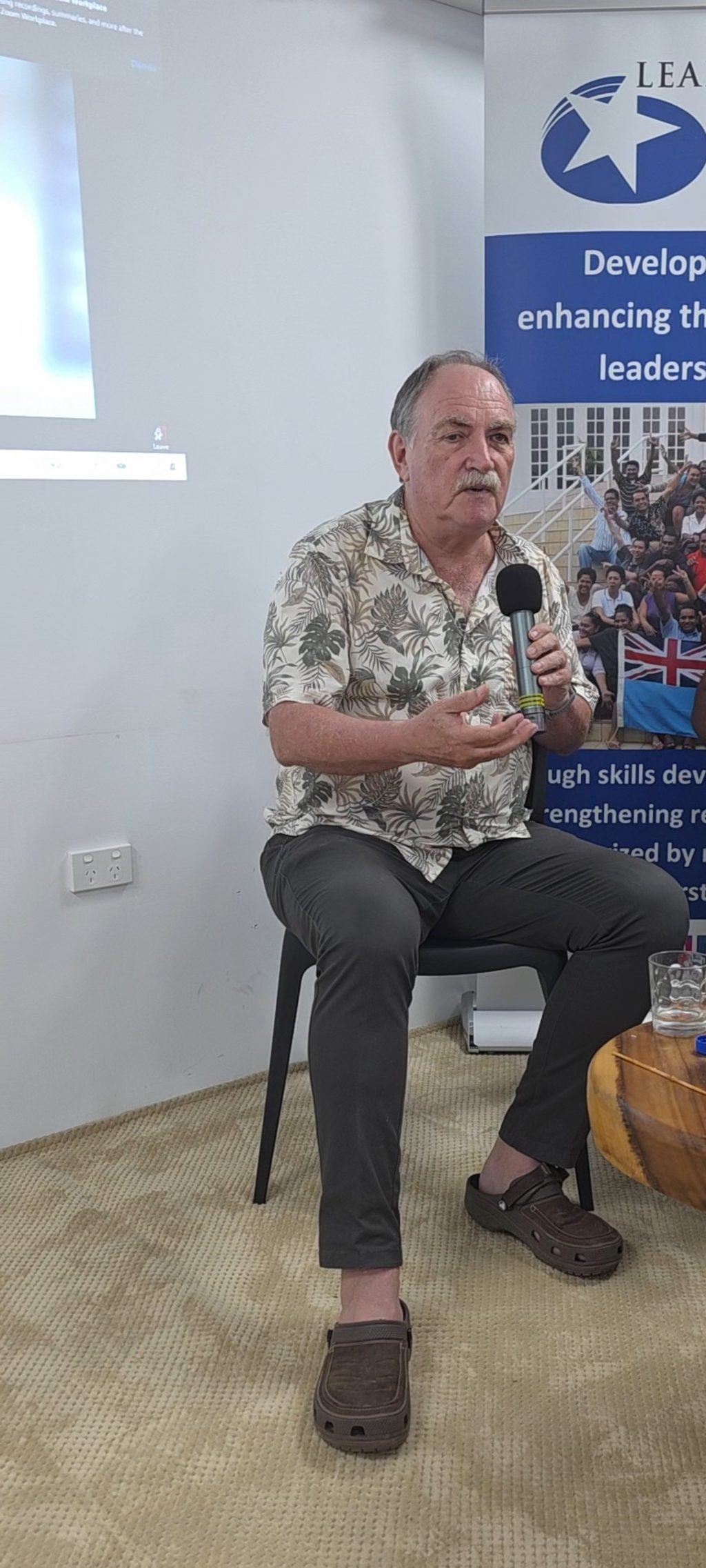
Leadership Fiji founder, William Parkinson, makes a point during the Leaders Lounge event on Wednesday. Picture: JOHN KAMEA
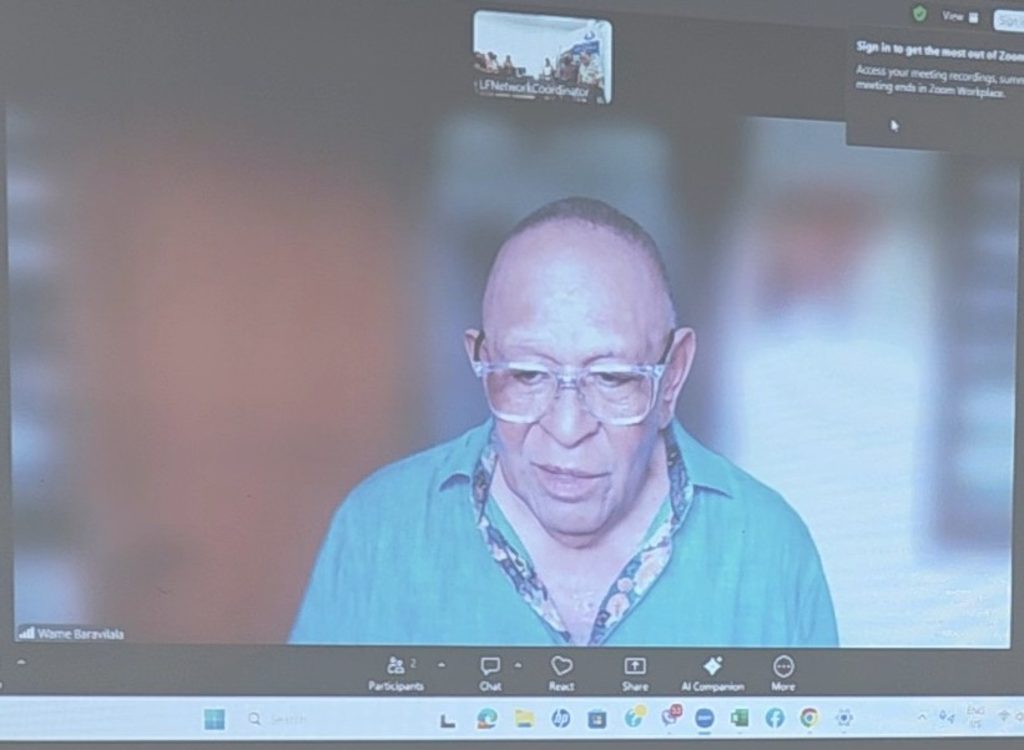
Dr Wame Baravilala, who resides in Savusavu, joined the event virtually. Picture: JOHN KAMEA

