
On the night of March 9, 2026, a single CBS News interview moved global oil markets by $30 a barrel. President Donald Trump told a reporter the Iran war was “very complete, pretty much” — and Brent crude, which had been clawing toward $USD120 ($F265), shed $US30 ($F66) in after-hours trading before markets even opened Monday morning. No OPEC meeting. No strategic reserve release. No ceasefire. One man’s casual sentence, and the arteries of the global energy economy lurched in unison. That is the precise and terrifying nature of the crisis now unfolding. The world does not have an oil shortage. It has a confidence crisis engineered by a single presidency — and the nations least equipped to absorb that instability are not the United States, not Australia, not Japan. They are the small island economies, like Fiji, at the end of the world’s longest and most fragile supply chains.
One war. One waterway. One shock
US and Israeli warplanes struck Iran on February 28, 2026. Within seventy-two hours, Brent crude had begun its climb from $67 a barrel toward what would become a $119.50 peak — a 78 per cent surge representing the largest six-day gain in oil prices since the first Gulf War in 1991. Japan’s Nikkei lost 7 per cent. Australia’s ASX shed $140 billion in a single session. Iran’s Islamic Revolutionary Guard Corps formally confirmed closure of the Strait of Hormuz to commercial shipping on March 2. Iran then named Mojtaba Khamenei — son of the supreme leader killed in the opening airstrike — as the country’s new spiritual authority, a deliberate signal to Washington that Tehran intends a long war and will not negotiate surrender. The economic shockwave from that combination of military action and political defiance has now reached every port, every fuel terminal and every household fuel budget on the planet.
Hormuz: The throat the world cannot clear
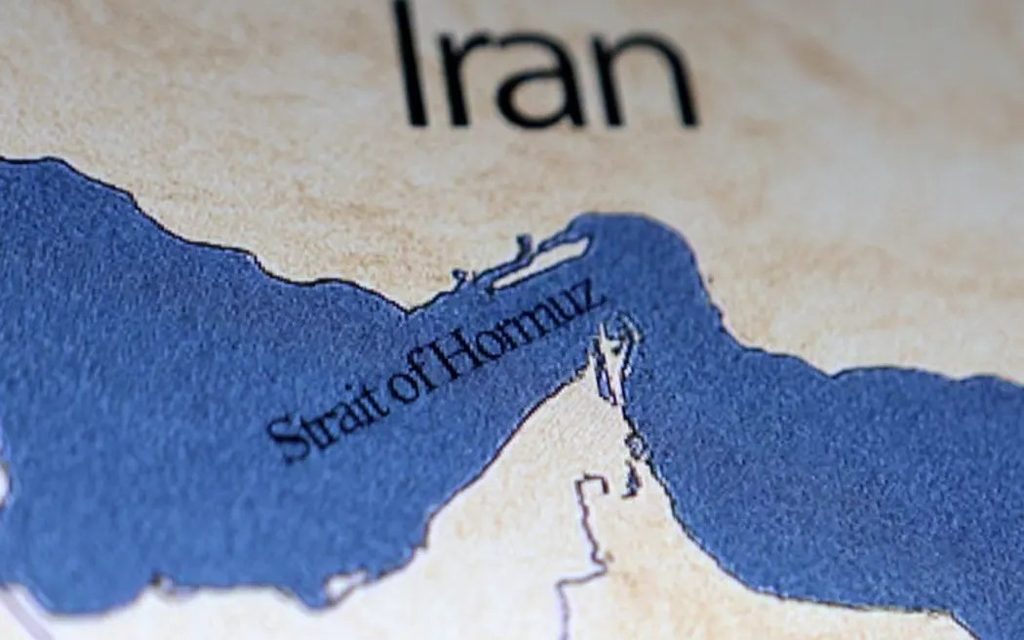
The Strait of Hormuz is 33 kilometres wide at its narrowest point. Through it flows one-fifth of the world’s oil and liquefied natural gas. Since March 2, tanker traffic through the strait has collapsed by 70 to 80 per cent. More than 1000 vessels are trapped in or near the Persian Gulf with nowhere to go. Of the 20 million barrels per day normally exported from Gulf states, only 5.5 million can bypass the strait via alternative pipeline routes — leaving 14.5 million barrels per day effectively locked inside a war zone. Qatar has halted LNG exports entirely, sending natural gas prices surging across Europe and Asia. Shipping giants Maersk, Hapag-Lloyd, MSC and CMA CGM have all suspended Hormuz operations. Two major Singapore refiners have declared force majeure on regional supply contracts. Goldman Sachs has calculated the Hormuz blockade to be 17 times larger in oil market impact than the peak Russian production disruption at the height of the Ukraine war in April 2022.
The oil exists. The panic does not have to
The most important fact buried beneath the noise of collapsing equity markets and surging pump prices is this: The world is not running out of oil. The International Energy Agency holds 1.2 billion barrels in public strategic stocks, with a further 600 million in mandatory commercial inventories — about 124 days of the total lost Gulf supply. The US Strategic Petroleum Reserve holds 415 million barrels in Louisiana and Texas salt caverns. China has accumulated an estimated 1.5 billion barrels of its own reserves. The United States, transformed by the shale revolution, is now the world’s largest oil producer and a net exporter actively dispatching cargoes across the Pacific. Venezuela, under post-Maduro transitional arrangements, is re-entering international markets with the world’s largest proven reserves behind it. Russia continues flooding global markets with discounted crude. Energy analyst Rob Thummel of Tortoise Capital said it plainly on March 10: “We do have plenty of oil in the world. We just need to get it moving.” What is moving instead is panic.
Asia, Australia, the UK: The bleeding has begun
The geography of pain radiates outward from the Persian Gulf fastest toward Asia and the Pacific. South Korea’s Kospi index fell 7.5 per cent on March 10. Japan’s Nikkei lost 7 per cent. Singapore — the critical refining and distribution hub for the entire Pacific basin — saw two of its major refiners’ halt operations under force majeure after failing to secure crude supply. China and Thailand immediately banned refined fuel exports to protect domestic inventories, accelerating scarcity across downstream markets. South Korea and the Philippines enacted mandatory national energy conservation orders. Australia, holding only 34 to 36 days of diesel against the International Energy Agency’s recommended 90-day strategic benchmark, saw panic buying strip regional supply chains within days — farmers in rural New South Wales reporting diesel deliveries cancelled with no replacement delivery date given. In Britain, Chancellor Rachel Reeves warned Parliament directly of “months of upward pressure on inflation”. The word stagflation — stagnant growth, rising prices — has re-entered every major central bank conversation for the first time since 2022.
Fiji: No reserve, no refinery, no shelter
Pacific Island nations occupy the single most exposed position in this crisis. They hold no oil. They refine none. They produce none. Every litre of fuel is imported. Every price shock is absorbed in full, with no domestic buffer and no sovereign reserve to draw upon. Fiji, with a population of about 950,000 and an economy structurally dependent on tourism, maritime transport and the uninterrupted import of food and goods, sits at the furthest end of a supply chain that runs through Singapore — a hub now itself under severe operational stress. Unlike Australia, which can pivot toward US export cargoes already being dispatched across the Pacific, or Asian nations partially protected by State reserves and diversified supplier networks, Fiji has no pivot. When Singapore benchmark diesel prices hit $144 per barrel, Fiji pays it. When tanker rerouting adds three to four weeks to delivery schedules, Fiji waits — with whatever is in the tanks. When the world catches a cold from Trump’s sneeze, Fiji develops pneumonia.
Freeze prices, ration supply, cut waste — now
Governments across the world are not treating this as a watch-and-wait situation. China and Thailand have banned refined fuel exports outright. The Philippines and South Korea have activated mandatory conservation protocols.
In Australia, independent fuel distributors are calling for mandatory 50-litre purchase limits per customer at city service stations to protect regional supply chains from being stripped. In Britain, the competition authority has issued formal warnings to heating oil suppliers against price gouging, and the Treasury has summoned petrol retailers directly. For Fiji and Pacific Island governments, the policy imperatives are equally clear and equally urgent. Price controls must apply immediately to all fuel already contracted, pre-costed and in the supply pipeline — no consumer can be asked to pay retrospectively inflated prices for stock whose cost was set before the war began. Non-essential government and State vehicle operations must be suspended. Generator usage, logistics consolidation and deferred non-essential travel are no longer contingency options. They are present obligations.
Three months of pain after the last missile
The ceasefire, when it comes, will not end the crisis. The physics of oil infrastructure are unforgiving and slow. Bombed refineries in Iran and Bahrain require weeks of structural repair before they can resume processing. Shut wells in the UAE, Saudi Arabia and Kuwait take weeks to months to return to production capacity — and some wells, once shut under pressure, never fully recover. Petrobras CEO Magda Chambriard said it plainly on March 10: “It’s fast to stop, not so fast to resume.” Once the Strait of Hormuz reopens, tankers must be loaded, insured, approved, and sailed — adding four to five weeks to delivery timelines for Pacific destinations. Planning on current trajectories — three to four more weeks of active hostilities, followed by four to five weeks of supply chain restoration — places the realistic end of Fiji’s supply disruption window in late May 2026 at the earliest. In that window, Fiji and its Pacific neighbours must actively pursue every available alternative supply channel:
l Discounted Russian crude, accessed as India has done under US Treasury waiver arrangements;
l Venezuelan supply through commercial intermediary markets; and
l direct US export cargoes now crossing the Pacific.
The cold will outlast the sneeze by months. The time to prepare is not later. It is now.
- DR SUSHIL K SHARMA held security clearance to operate on military installations alongside senior Kingdom of Saudi Arabia command staff. The views expressed are those of the author alone and do not represent the views of this newspaper or its employees.

