
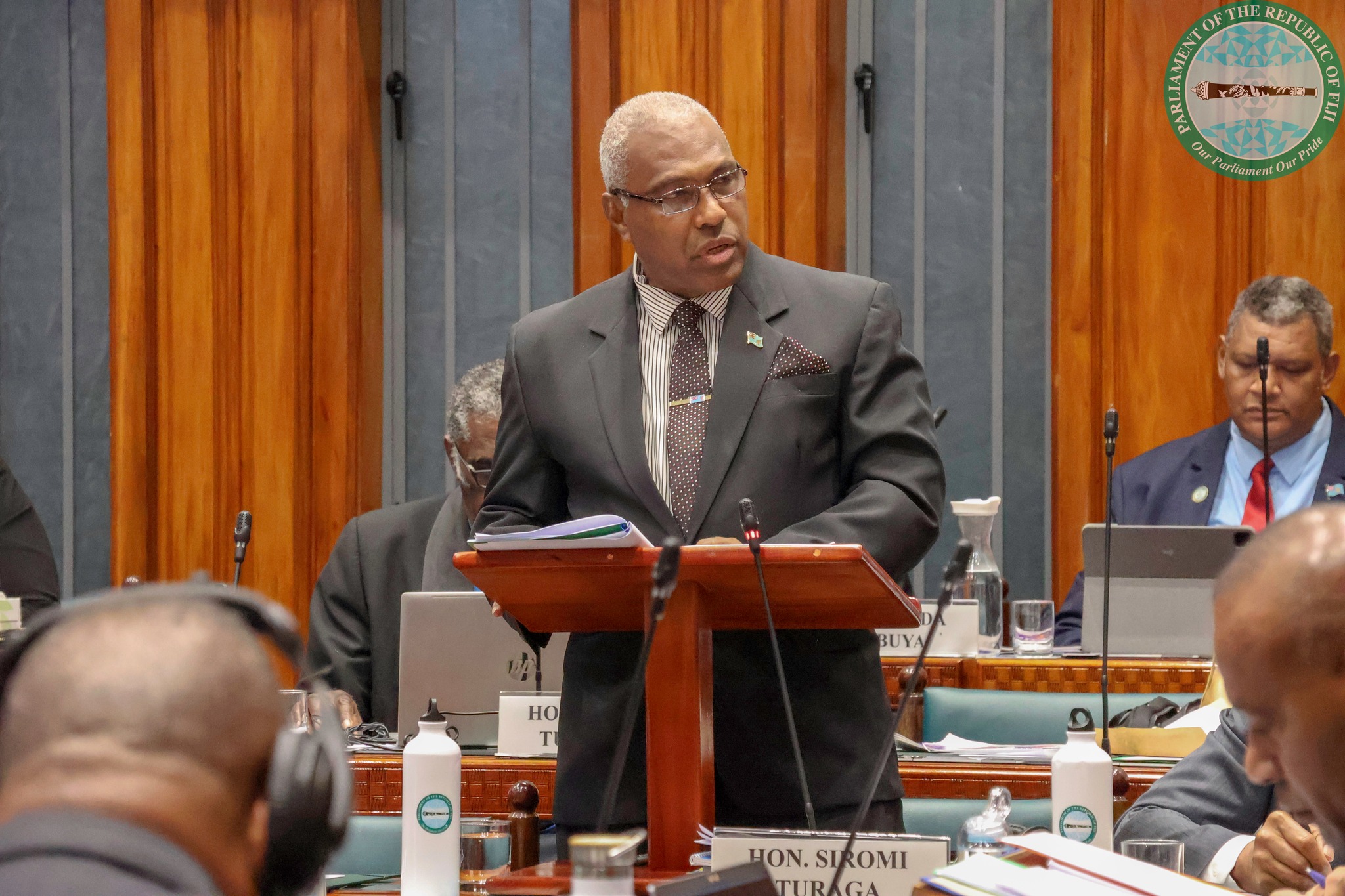
MINISTER for Justice and Acting Attorney-General Siromi Turaga has warned Parliament that Fiji faces a growing threat from illicit drugs, calling it a “lived crisis affecting families, communities and young people across our nation.”
Speaking on behalf of the Minister for Policing and Communications on Tuesday, he said the fight against drugs require a whole-of-nation approach.
“We are seeing the increasing prevalence of synthetic drug use, while law enforcement agencies continue to record significant seizures,” Mr Turaga said.
“Fiji’s geographic location along key maritime routes makes us vulnerable as both a destination and a transshipment point for transnational organised crime networks.”
He also highlighted that Fiji’s proximity to Southeast Asia and the Americas further exposes the country to illicit drug trafficking.
“His excellency the president rightly acknowledged the important role played by the Fiji Police Force, the Republic of Fiji Military Forces, other enforcement agencies, the vanua and faith leaders in confronting this crisis.
“The fight against drugs cannot be left to law enforcement alone. It requires a whole-of-nation approach.”
He described the illicit drug situation as a “national emergency,” noting that in 2025 alone, more than 2400 drug-related cases were recorded nationwide, with most offenders between the ages of 18 and 35.
“Major seizures have confirmed Fiji’s exposure to transnational trafficking routes, indicating that our country is not only a transit point for illicit drugs but increasingly a potential distribution hub.”
Mr Turaga linked the growing use of methamphetamine to rising HIV transmission rates, underscoring the public health dimension of the crisis.
To address the threat, he said the Government has intensified efforts through joint Police–RFMF operations targeting illicit cultivation and trafficking, strengthened intelligence-led policing, and enhanced border security.
“The establishment of the Counter Narcotics Bureau will coordinate national efforts under the pillars of harm reduction, supply reduction, rehabilitation and treatment.”
He added that the bureau will also support faith-based transformation programs and work with government and community agencies to strengthen family and community support systems.

