
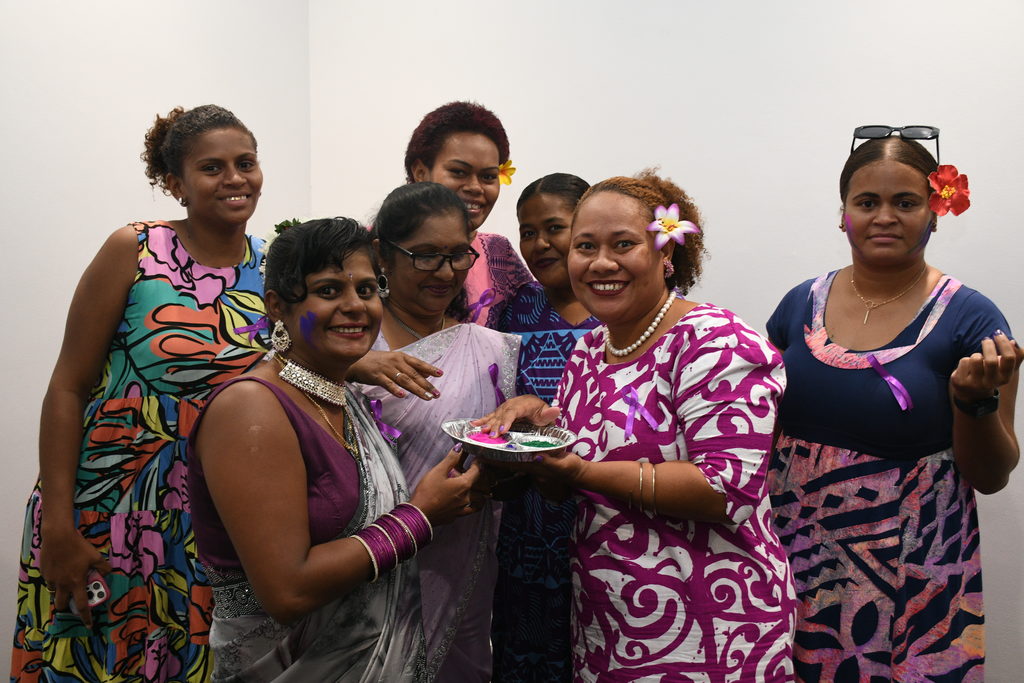
FOR most women in Fiji, International Women’s Day looks exactly like the one before it. The school uniforms and working clothes need ironing. The market stall needs setting up.
The wage from last week is already gone and the week is not. Somewhere in between, a date on the calendar that the rest of the world is marking with speeches and hashtags passes without a second thought.
International Women’s Day has been observed every March 8 for over a century. It was born from the kind of exhaustion that does not wait for a convenient moment — 15,000 women marching through New York City in 1908, demanding shorter hours, better pay, the right to vote, in a world that was not listening.
The world eventually did. But the work that started those marches is not finished.
Fiji’s 2013 Constitution guarantees equal rights regardless of gender. Women are outpacing men at tertiary education levels and are well-represented in law, medicine, commerce and finance.
On paper, the promise holds. But paper and daily life are not always the same thing.
Women in Fiji make up 34 per cent of the paid labour force, yet receive only 30 per cent of total incomes.
At the same time, they carry 73 per cent of all unpaid work — and when paid and unpaid hours are counted together, women account for 54 per cent of all work done in this country. That is more than half of everything, for less than a third of the money.
The cost of living is making it harder. As a country importing around 60 per cent of its consumer goods, Fiji is exposed to every shift in global prices — and that exposure lands hardest on women, who in households across the country are the ones managing what is left when the bills are paid. Cutting back on food. Skipping the doctor. Finding ways to make nothing stretch.
Global research has found that when household budgets tighten, women absorb the blow first — eating least, spending last on themselves, taking on more time-consuming ways of keeping a family fed when the easier options become too expensive.
For many women, the pressure does not stop at the front door.
According to the Fiji Women’s Crisis Centre, 64 per cent of women who have been in intimate relationships have experienced physical or sexual violence from a partner.
UN Women data shows 74 per cent of those women never report it to police — held back by fear, financial dependence, cultural stigma, and limited confidence that the system will protect them.
Fiji Women’s Crisis Centre coordinator Shamima Ali has said poverty has a major role to play as a contributing factor to women remaining in violent relationships and not being able to get out — the women who want to leave often cannot afford to.
The cultural weight is real too.
In iTaukei communities, reconciliation ceremonies have long been the expected response to family conflict — including violence.
For Indo-Fijian women, extended family mediation often plays a similar role. Both carry a quiet but firm expectation: keep the family together. That expectation is almost always directed at the woman.
None of this sits comfortably alongside a Constitution that promises equality. But a promise on paper requires something more to become a reality in someone’s life.
It requires the kind of daily, ordinary change that does not make headlines — a wage that reflects the work, a home that is safe, a system that takes a woman’s word seriously.
In Fiji, there is much to acknowledge. Classrooms full of girls who will outperform their male peers.
Women leading businesses, organisations and communities.
A country that has placed women at the centre of its social fabric in ways that are genuine and visible. But acknowledgment without honesty is just noise.
March 8 is not for the women who have already made it. It is for the ones still in the thick of it — and the question it puts to this country, every year without fail, is this: are we doing enough, and if not, why?

