
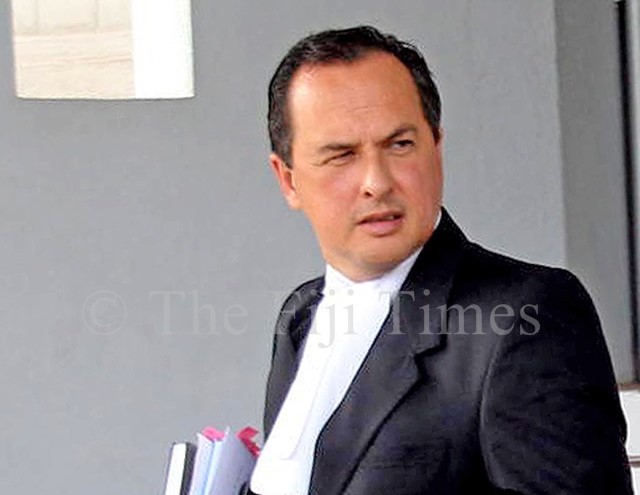
A lawyer has challenged the admissibility of Tender Evaluation Committee (TEC) documents as prosecution evidence in the High Court case against three former government ministers, saying “hearsay remains hearsay”.
Wylie Clarke said the documents were not supported by the underlying source material, adding that the information should have been derived from the original tender documents.
He is representing former health minister Dr Neil Sharma, who is charged together with former prime minister Voreqe Bainimarama and former attorney-General Aiyaz Sayed-Khaiyum for abuse of office, obstructing the course of justice, and breach of trust by a person employed in the public service. The alleged offences took place in 2011.
Mr Clarke told Justice Usaia Ratuvili yesterday that, without the original tenders, the defence cannot test their accuracy, and the court is unable to evaluate whether the summaries are correct.
Mr Clarke added that to prove the contents of the tenders, the State will need to call each tenderer to confirm their original submissions.
He said no member of the TEC can attest to the truth of what the tenderers wrote as only the tenderers can do so.
In response, Assistant Director of Public Prosecutions, Laisani Tabuakuro, said hearsay objections are premature because the State is not relying solely on documentary evidence.
Ms Tabuakuro said hearsay does not apply where a witness has personal knowledge of the matters recorded. She said the High Court is yet hear oral evidence, and to exclude the documents at this stage will deny the State the opportunity to establish admissibility through testimony.
She said the objections raised concerns about trial issues that should properly be determined during the course of evidence and, as such, should be dismissed.
A ruling on the legal issue will be delivered tomorrow, Friday.

