
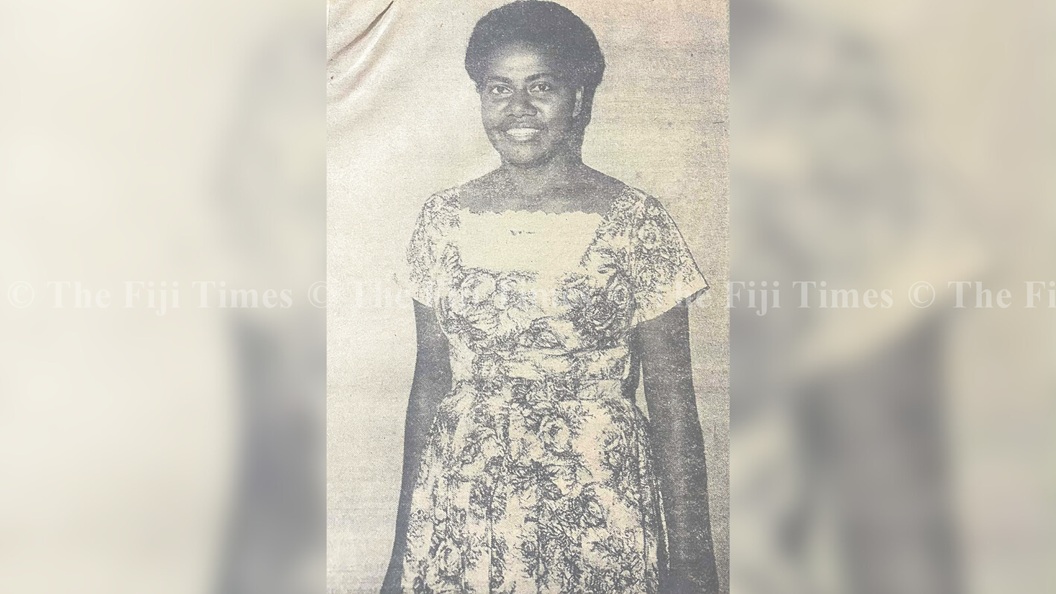
An article in The Fiji Times reflected on a period when school leavers turned their attention seriously towards future career paths, particularly those who had yet to commit to a specific ambition.
The report on January 11, 1964, said for many girls at the time, teaching and nursing held the greatest appeal, and these vocations were not only satisfying careers in themselves but also opened the way to other challenging occupations.
Proof of this was Marama Sovaki, who found her nursing training invaluable in her work as an assistant probation officer with the Education Department in Suva.
She explained that nursing taught a great deal about people through contact with different personalities and this experience was excellent preparation for probation work.
Sovaki, who was from Ovalau, was educated at Ballantine Memorial and Lelean Memorial schools, and after completing her nursing training, she spent eight months working at the Savusavu Hospital.
She candidly admitted she had applied for the position of assistant probation officer without having much idea of what it involved, but she said she never regretted her decision.
She noted it was not the sort of job suited to a girl just leaving school, as a certain level of maturity and experience in dealing with people was required, and she believed that nursing or teaching provided ideal preparation.
Sovaki said most of her time was taken up interviewing people with various problems and preparing reports on juvenile offenders for the courts.
These reports were based on interviews with the child’s parents, teachers, and associates, as well as studies of their homes and interests.
She explained that recommendations were made to the court while bearing in mind that the child’s offence could not be overlooked, and efforts were made to assess what would best help the child.
Other duties of probation officers included finding employment for people returning from jail and assisting deserted wives and unmarried mothers.
She said many of these women had no idea how to obtain maintenance through the courts and were advised on the process, although the court was always considered a last resort, as efforts were first made to reunite families and prevent homes from breaking up.
Sovaki generally observed that it was the wife and children who suffered most when trouble entered the home.
Sovaki said at times she attended court three to four times a week, and when individuals she dealt with were sentenced to jail, she frequently visited them there.
She said other prisoners with family problems were also visited.
Sovaki, who succeeded Miss Annie Williams and Miss Ruth Robertson as Assistant Probation Officer, said broken homes were the saddest aspect of her work.
She explained when parents no longer wished to live together and nothing could be done to change the situation, it was deeply distressing.
She noted cases involving juvenile offenders were less difficult, as parents were usually willing to work together to help their child.
Sovaki said she was constantly amazed at how deserted mothers managed to care for their children, particularly Indian mothers who were left to rely solely on their own resources and, unlike Fijian women, had no village to turn to for food and shelter.
She identified another major problem as the large number of youths who failed to complete their education.
She said many had no qualifications yet applied for jobs without realising that qualifications were necessary and that they were often overly selective.
Sovaki expressed her inability to understand why some boys preferred to remain unemployed rather than work for what they considered a small wage.
She added that despite having no prospect of alternative employment, some youths gave up jobs earning $30 a week because they felt the pay was inadequate.
Sovaki said one of the most satisfying aspects of her work was the opportunity to get to know people of different races and ages.

