
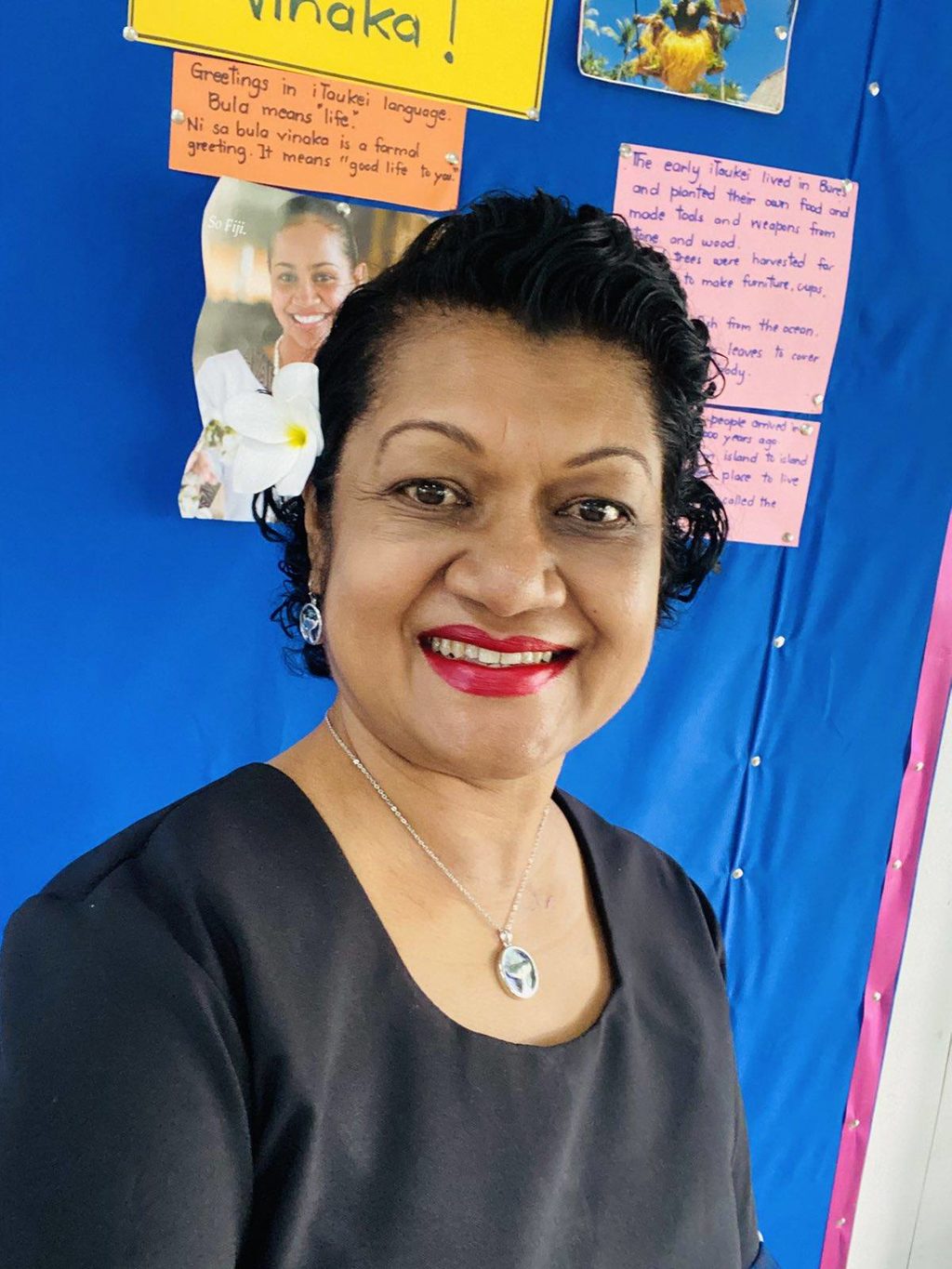
FELICITY Ali communicates in a language that only an estimated 3.3 per cent of people in Fiji understand.
She was not born into it, nor did she take up formal training to learn. It was her students who taught her how to communicate with them.
Twenty-one years ago, Ms Ali joined the Gospel School for the Deaf as a librarian but when a teacher left without warning, she was asked to stand in by the school’s director at the time, Jim Cooney. As he watched her interact with the class over several days, he was convinced she would make a great teacher and encouraged her to take on the role.
“That was a challenge. But I took the class and I loved it. I didn’t know sign language a lot, but the children taught me and the deaf teachers taught me.”
Today, Ms Ali is a lead teacher at the Gospel School for the Deaf in Samabula, Suva. She has moved through every lower level, from kindergarten and through classes one to four.
Last year, for the first time, she stepped up to teach the pre-vocational class comprising students aged 15 to 18.
“I’m still learning,” she says of sign language.
“There’s no stop for signing. You learn every day. There’s new words, change of words so you continue learning.”
With her students on the threshold of adulthood and at an age where the world is still largely unprepared to receive them, Ms Ali makes every effort to close that gap.
She teaches them literacy and numeracy, how to handle money, and how to run a small business from home if the formal workforce is not yet ready to take them.
“If they go home and they don’t have any other place to work, they can start a small business from where they are.
“Our greatest achievement is when we see the children we taught make something of themselves,” she says.
Ms Ali is equally direct about what holds these children back.
“The challenge is the parents are not learning sign language. We do our part in school. But when children go home and tell their parents what they learned today, their parents are not aware of what’s happening,” she said.
Some children, she added, do not attend school until they are 15 or 18. Ms Ali urges parents to send their children as early as possible, especially if they are living with a disability.
“When you know your child is disabled, send them as young as possible. That’s the learning time – from kindergarten to class two. If they come in at the age of 15 or 18, that’s too late.”
She understands some parents struggle with fear and shame while others harbour a stubborn belief or denial that the child is normal and does not live with a disability therefore does not need special help or education.
“Some parents haven’t accepted their child yet. They want to hide them, they want to keep them at home. But here we are – we take them for excursions, we take them everywhere.
“We are proud to do things for them. We want the same thing from the parents: be proud of your child and take them everywhere, like a normal child.”
Ms Ali is passionate about working with children living with hearing difficulties and does not appreciate inappropriate or derogatory labelling.
“Stop calling them deaf and dumb. A lot of times I hear people call them deaf and dumb, and it makes me angry. We call them deaf persons, and they know it. They learn all the subjects like the hearing. They can do everything normal children do, except hear.”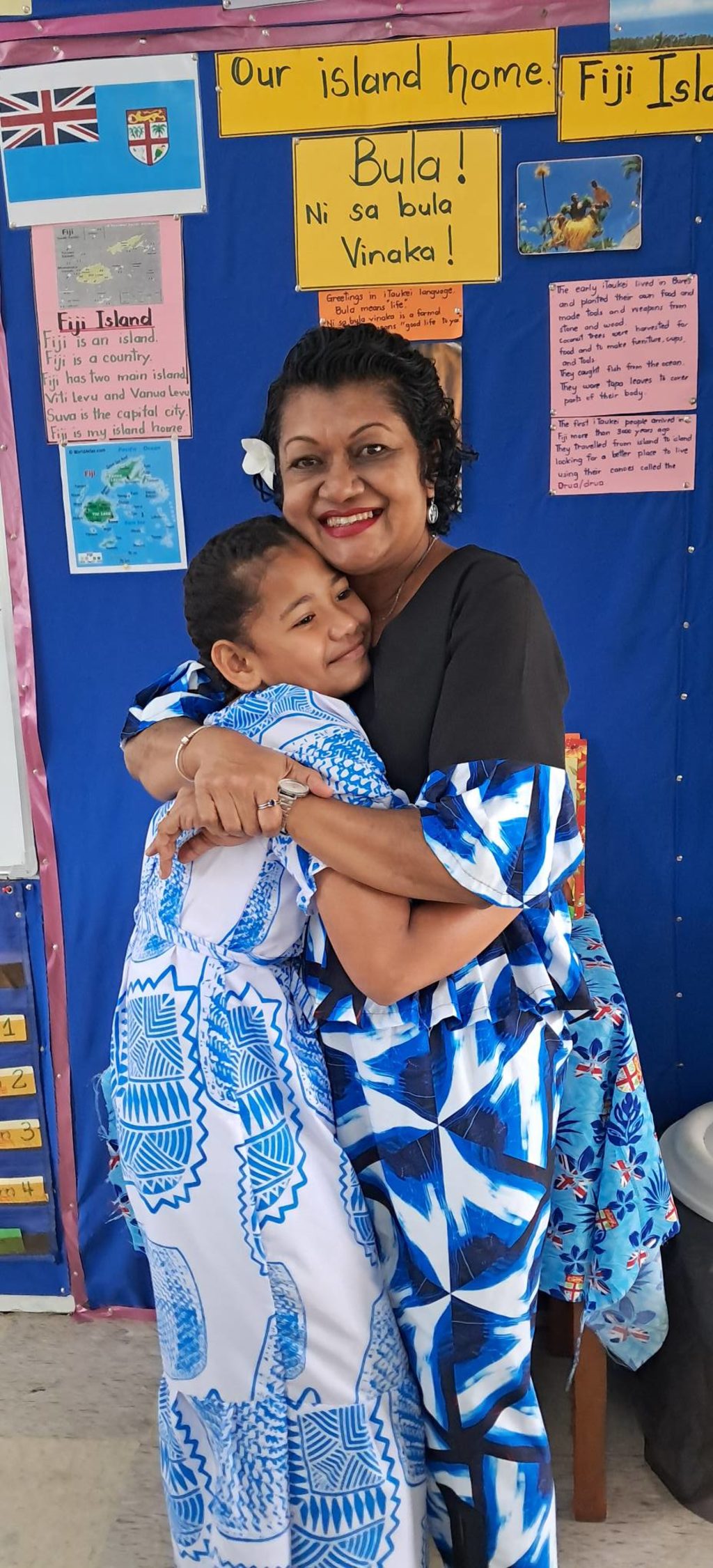
Still learning… Ms Ali has spent 21 years teaching at the Gospel School for the Deaf. Picture: GOSPEL SCHOOL FOR THE DEAF/FACEBOOK
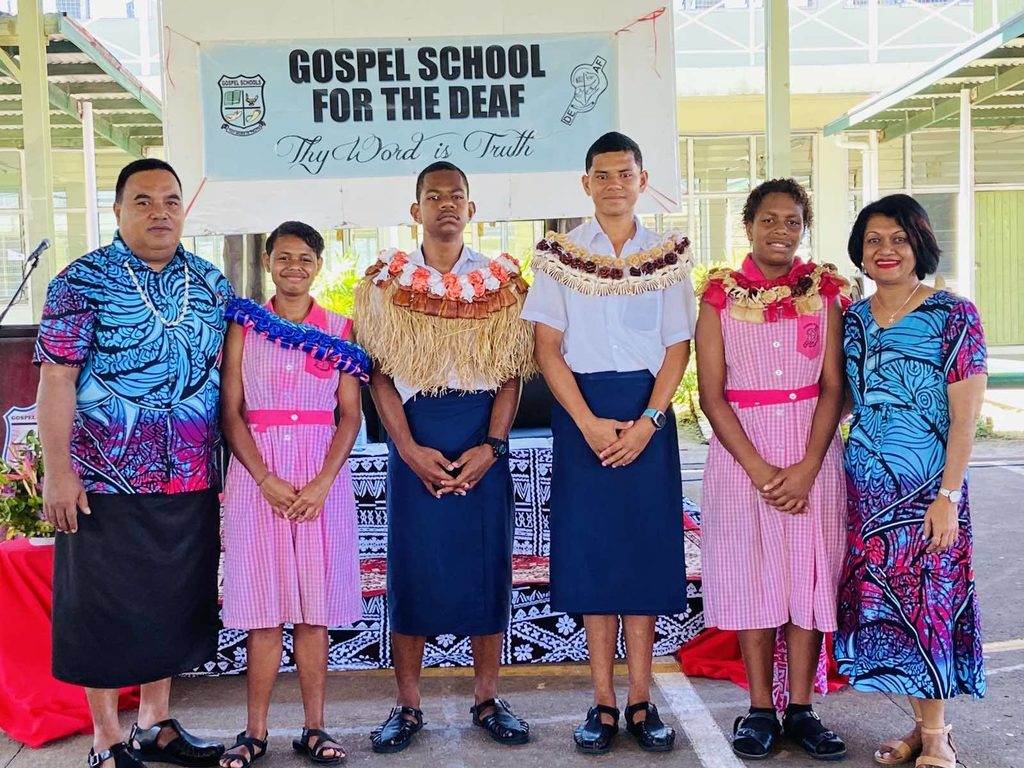
Ms Ali, far right, with a fellow teacher and students of Gospel School for the Deaf at a school event this year. Picture: GOSPEL SCHOOL FOR THE DEAF/FACEBOOK

