
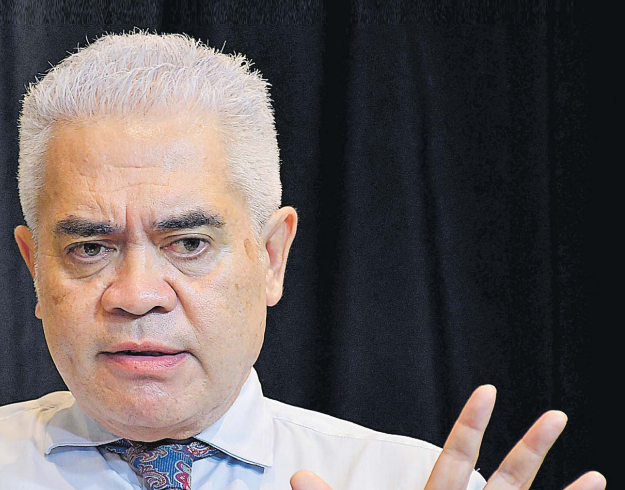
The President must follow recommendations put before him by constitutional bodies but before doing so he may take time to clarify recommendations or take legal advice that they are lawful.
That is the view of senior lawyer Jon Apted as questions continue over whether President Ratu Naiqama Lalabalavu can delay acting on advice from the Judicial Services Commission regarding the leadership of the Fiji Independent Commission Against Corruption.
The issue comes amid the ongoing deadlock between the JSC and the President with media reports by The Fiji Times suggesting the recommendation may not yet have been accepted.
“Under the current Constitution, when exercising his powers, His Excellency is required to act only on advice of a Minister or the Cabinet or a body prescribed by the Constitution,” Mr Apted said.
“He has no power to perform any of his functions in his own deliberate judgement.”
However, Mr Apted said this does not mean that he must always blindly follow what has been advised or recommended.
“He cannot act contrary to the advice, but he can refuse to act if for example the advice requires him to do something illegal or seek confirmation if he wants to be assured that the advice in fact reflects the views of the advising body.”
Mr Apted added there may also be limited scope for the President to seek clarification before proceeding.
“It is arguable that he also has the discretion to question and caution in the manner that the King or a Governor General had, but if the advice is lawful and comes from the appropriate body and the person advising maintains their advice – he must act on it.”
Lawyer urges quick end to FICAC deadlock
THOSE involved in the current impasse over the leadership of the Fiji Independent Commission Against
Corruption must recognise the realities of today’s media environment even as they carry out their duties with the decorum required of high office.
That’s the view of senior lawyer Jon Apted as the deadlock between His Excellency and the Judicial Services
Commission continues, following media reports that the President has allegedly not accepted the JSC’s
recommendation.
“While I appreciate that those involved must act respectfully, and with the decorum that is required when
dealing with high office, official bodies need to be conscious that we live in a digital age where commentators on social media and mainstream media can easily take control of the narrative.”
“It is therefore incumbent on the official parties involved to get ahead of the other players by being more
transparent about what is happening.
“They need to frame the public narrative as best they can instead of ignoring it.”
Mr Apted said the present situation was not ideal, with official silence suggesting an impasse between His
Excellency and the JSC over a matter of great public importance – one that is also likely to affect a number of investigations and charges involving FICAC.
“It is also important to act quickly to resolve the issues to avoid a constitutional crisis, loss of confidence and trust, political instability and legal uncertainty over charges laid by FICAC in the interim.”
Legal experts divided on Constitution in FICAC case
THERE are differing views on how the 2013 Constitution should be interpreted as the standoff between the
President and the Judicial Services Commission over the leadership of the Fiji Independent Commission Against Corruption continues.
The issue follows media reports that the President has allegedly not accepted the JSC’s recommendation on the removal of the Commissioner.
Senior lawyer Jon Apted says the wording of the Constitution has created room for debate.
“Because of the wording of the 2013 Constitution there are two different interpretations about whether the President acts on the advice of the Cabinet or a Minister when making substantive or acting appointments, or when removing the FI- CAC Commissioner and Deputy Commissioner,” he said.
He said the High Court has recently ruled in the Barbara Malinmali judicial review that His Excellency must act on the recommendation of the JSC.
“In my view, when he receives a recommendation from the JSC, the President cannot impose conditions, but he may query whether the advice or recommendation is lawful or needs to be modified to become lawful.
“Arguably he may also suggest reconsideration of the terms of the advice by the JSC but if the JSC maintains its advice and it is lawful, the President must act on it.
“In this case, we are not privy to what has been exchanged between the President and the JSC and its
chairperson, the Chief Justice.
“I am not sure if the President has refused to follow the recommendation unless certain conditions are met or whether he has counselled the JSC to reconsider for legal or other reasons.
“We also don’t know if the JSC has agreed to reconsider or whether there is a stalemate between them.
“I do not think that the speculation and the strong views that have been expressed publicly that are based on unconfirmed speculation are helpful.”

