
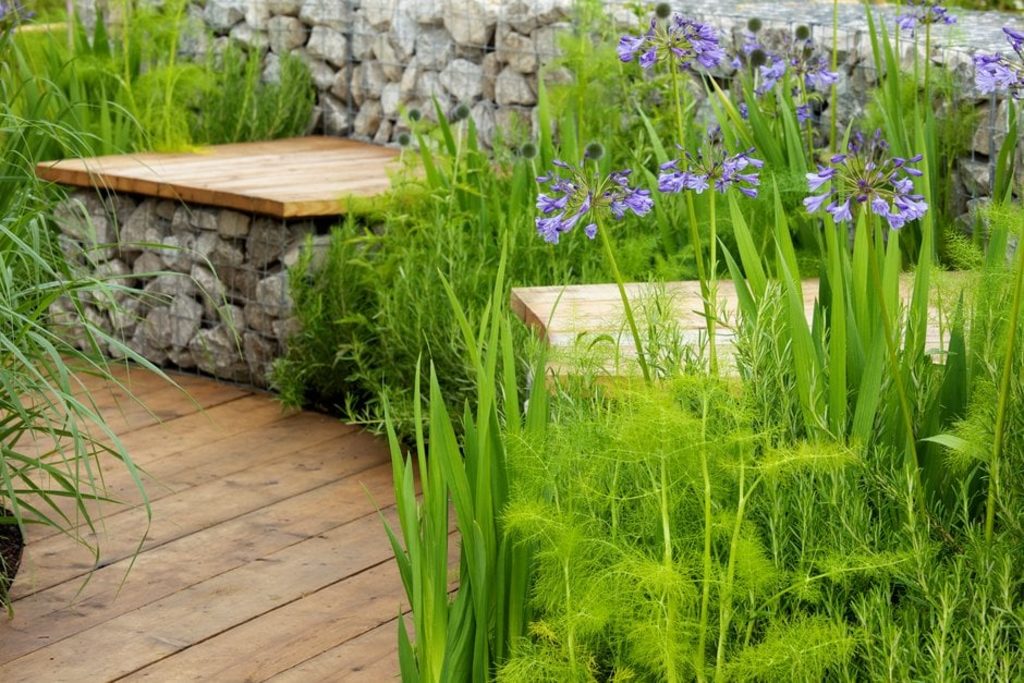
A great-looking garden doesn’t have to be hard work. Follow these simple guidelines for a no-fuss outdoor space that will bring you joy every time you step into it
Ditch the lawn
It might seem surprising advice, but if your garden is small and you don’t have children, ditch the lawn. Big borders and a reasonably-sized paved, gravelled or decked area will actually be less work than keeping a small area of grass looking good, and you won’t have to allocate precious shed space to a lawnmower. If you choose paving, permeable options are available.
Right plant, right place
Pick plants that are well-suited to your soil and site conditions. For example, if you have a sunny garden with dry soil, lavenders will thrive. Try our online plant selector to find the perfect plants for your garden. You can specify the amount of light, soil type, colour preference and season of interest for a selection of results to guide your plant hunting.
Go large with pots
As a general rule of thumb, big pots are easier to look after than small ones. The smaller the pot, the quicker it dries out and the more watering it will need. Group plants in large pots or use raised planters instead if you have little or no garden soil – such as in many urban gardens.
Keep it simple
Keep planting simple – hardy shrubs and evergreen plants are key. Shrubs are great because they’re long-lived and won’t need replacing every year. Evergreens such as these sedges and hellebores look good all year and drop fewer leaves than deciduous plants. Those labelled as ‘groundcover’ plants are a good choice as they tend to be tough and will knit together to help keep weeds down.
Choose long-lasting combinations
Choose plants with complementing textures and colours for year-round effect – round glossy leaves next to finely-textured grasses, for example – that way you won’t be needing to put in seasonal bedding plants to add colour. The foliage in the Winter Garden at RHS Garden Rosemoor looks great all year round, even in the depths of winter.
Make your lawn easier to cut
If you do have a lawn, install a permanent edge to it, such as a run of bricks or paving stones, or lay small-sized gravel at a lower level than the lawn. This means you won’t have to spend time trimming the edges every time you cut the grass. Smooth out any difficult angles and awkward corners (either by extending the grass or enlarging your borders) to make a shape that’s easier to cut.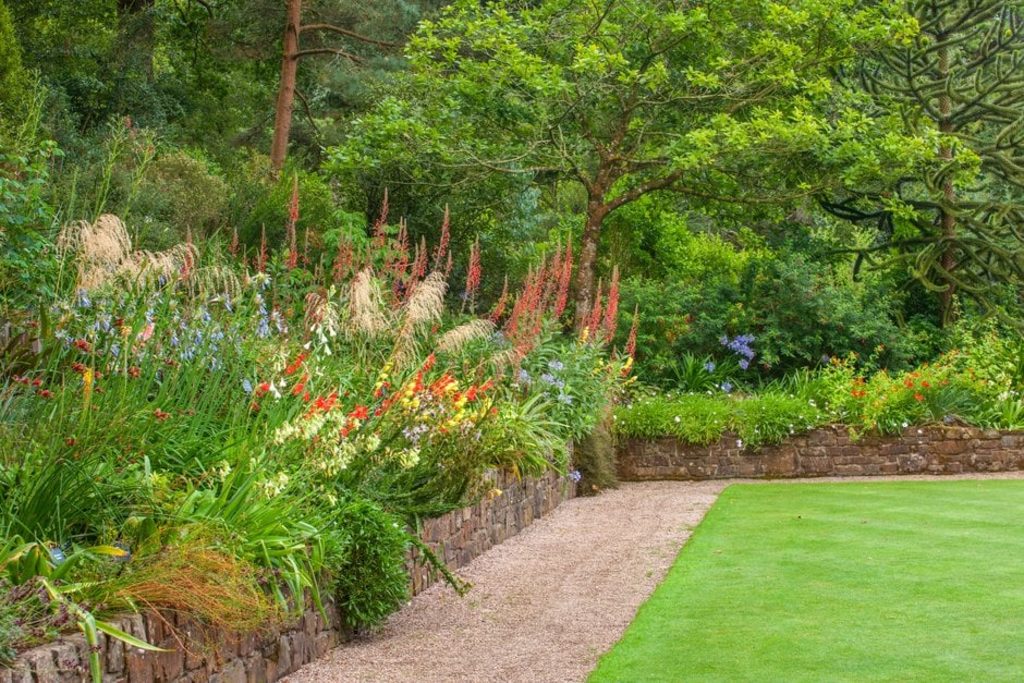
If you do have a lawn, install a permanent edge to it, such as a run of bricks or paving stones, or lay small-sized gravel at a lower level than the lawn. Picture: WWW.RHS.ORG.UK
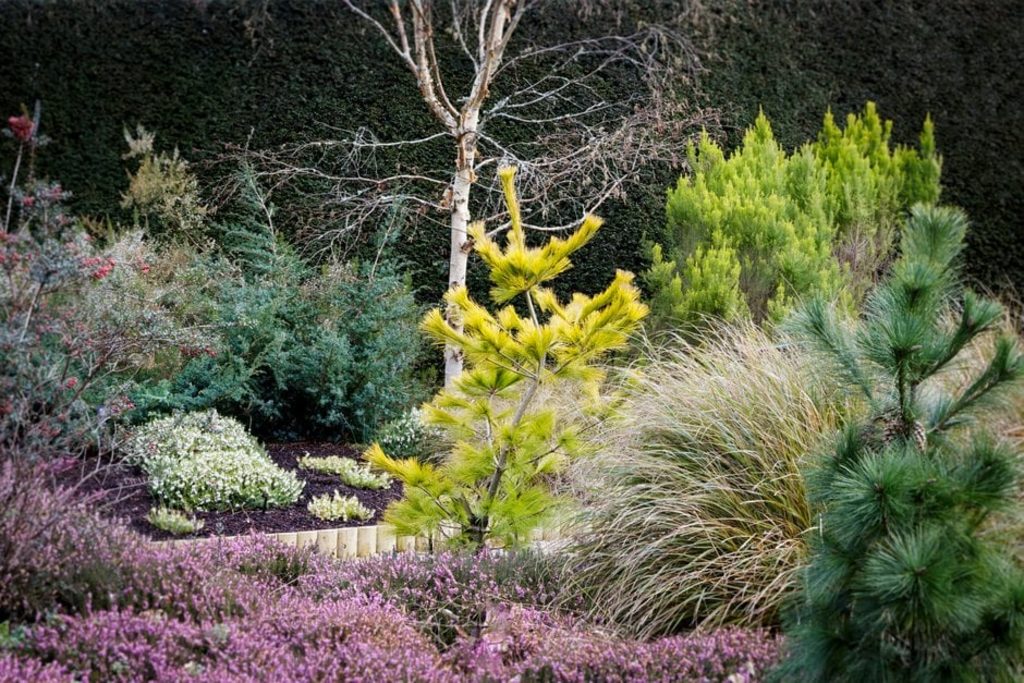
Choose plants with complementing textures and colours for year-round effect.
Picture: WWW.RHS.ORG.UK
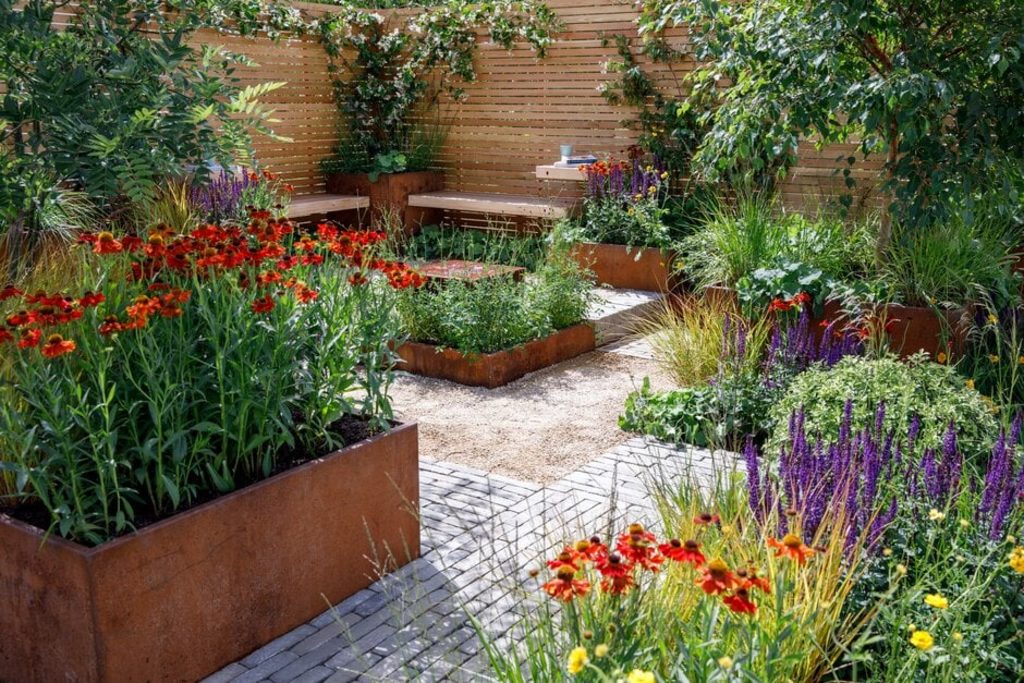
Above: As a general rule of thumb, big pots are easier to look after than small ones. Picture: WWW.RHS.ORG.UK

