
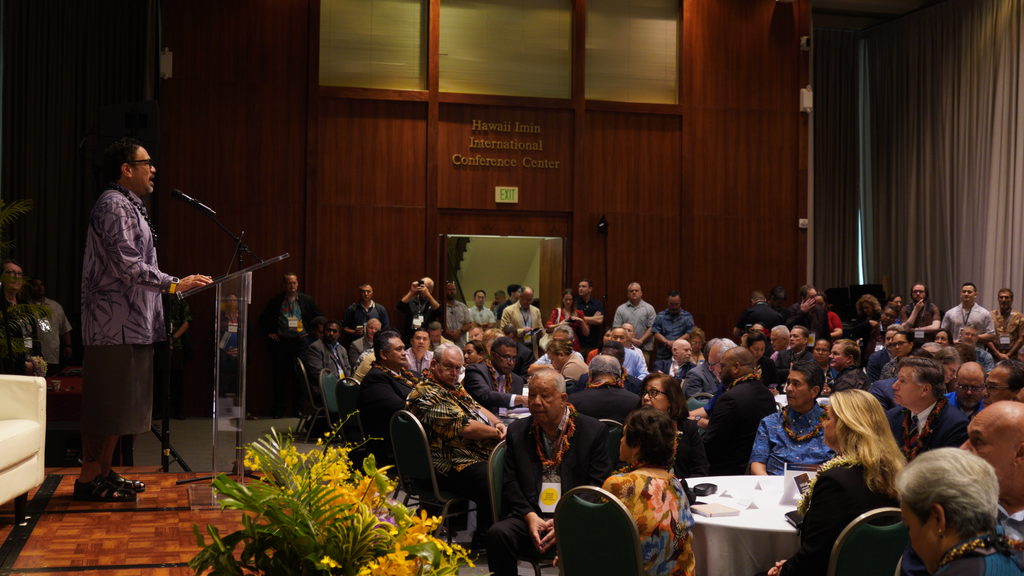
THE US-Pacific Summit that officially opened in Honolulu, Hawaii on Monday acknowledged the late Fijian statesman Ratu Sir Kamisese Mara as being the leader who strived to frame the Pacific as capable and resilient — a vision Pacific leaders now realise as the Blue Pacific Continent.
In his opening remarks at the US-Pacific Summit, Hawaii Visitors and Convention Bureau president and chief executive officer Aaron Salā paid tribute to Ratu Mara, whose work, he said was central to leaders choosing to strengthen coordination among themselves in the closing decades of the cold war when global tensions were shaping policy across the oceans.
He said Oceanian leaders of the time understood that major powers were engaging the region strategically — maritime access, basing arrangements, nuclear legacies, development finance and diplomatic alignment being the active forces that influenced both foreign and domestic policy in the Pacific.
“He (Ratu Mara) understood that Pacific nations, many finding again their independence and still consolidating statehood, would be more secure engaging the world in coordination than in isolation,” Mr Salā said.
He said that conviction gave rise to the Pacific Islands Conference of Leaders (PICL).
Mr Salā said PICL was not a ceremonial gesture but structural as it created a standing forum where independent states, freely associated states and territories could meet across political status and jurisdictional difference — as Pacific leadership — before engaging externally.
In active alignment with Hawaii’s governor George Ariyoshi (third governor of Hawaii who served from 1974 to 1986) and working together with the Pacific leadership, Ratu Mara ensured the Pacific Islands Development Program would be housed at the East-West Center, which was established by the US as part of its broader foreign policy architecture, and was already a platform through which American engagement across Asia and the Pacific was being shaped.
“This decision was critical because it ensured that Pacific coordination would operate inside the architecture of American engagement — neither outside of, nor subject to it – but within proximity.
“The placement of the Pacific Islands Development Program (PIDP) within the East-West Center meant then that Pacific engagement with the United States would occur through continuity, not through crisis; through standing dialogue, not episodic diplomacy; through collective cooperation and articulation, not mere fragmented approach,” Mr Salā said.
“Simultaneously, the Pacific Islands Forum was formalising itself as the region’s principal political body — establishing multilateral mechanisms capable of engaging the United Nations, development banks, and global partners with consensus and clarity.
“Taken together, then, Ratu Mara’s collective Pacific vision, governor Ariyoshi’s strategic positioning, the creation of the PICL, the establishment of PIDP as its secretariat and the formal maturation of the Pacific Islands Forum is brilliant institutional statecraft.
“It signaled that Pacific engagement with the world would be coordinated, formal where necessary, grounded in regional priorities, and disciplined by continuity.”
Mr Salā said for more than four decades, that architecture had endured — and through real, practical experience, leaders had learned that engagement was strongest when it was entered into in partnership.
Now, he said if the Pacific islands Forum represented the formal multilateral table of the region, PICL carried something slightly different.
“The power of the PICL lies in its candor, in its ability to speak plainly across status, in its informality, which allows leaders to test ideas, to surface tensions, to build trust before positions are formalised.
“That interplay — the formality of the Forum and the frankness of the PICL — has served the region well.
“And it is in that same spirit that we gather here today for The Pacific Agenda: an investment, security, and shared prosperity summit,” he said.
He told delegates at the meeting of Pacific leaders and the US private sector that they had a lot of work to accomplish over the course of the summit, and that they wanted to engage in the more informal and candid approach of the PICL.
In his opening address, US Deputy Secretary of State Christopher Landau told delegates that the US is a Pacific nation, underscored by the summit being held in Hawaii.
“We’re here at the East-West Center, which is a recognition of our place in the Pacific, and it is also a particular joy to have the governors of other jurisdictions of the United States of the Pacific,” Mr Landau said, acknowledging the attendance of the governors of Guam, the Northern Marianas Commonwealth, and American Samoa.
He said their presence underscored the unbreakable human bonds between the United States and its Pacific neighbors.
“Samoa and American Samoa are right there next to each other. So we are very much a part of the Pacific, and I think it is important that the United States play a leading role in partnership with Pacific nations to foster the prosperity and the security of everyone.”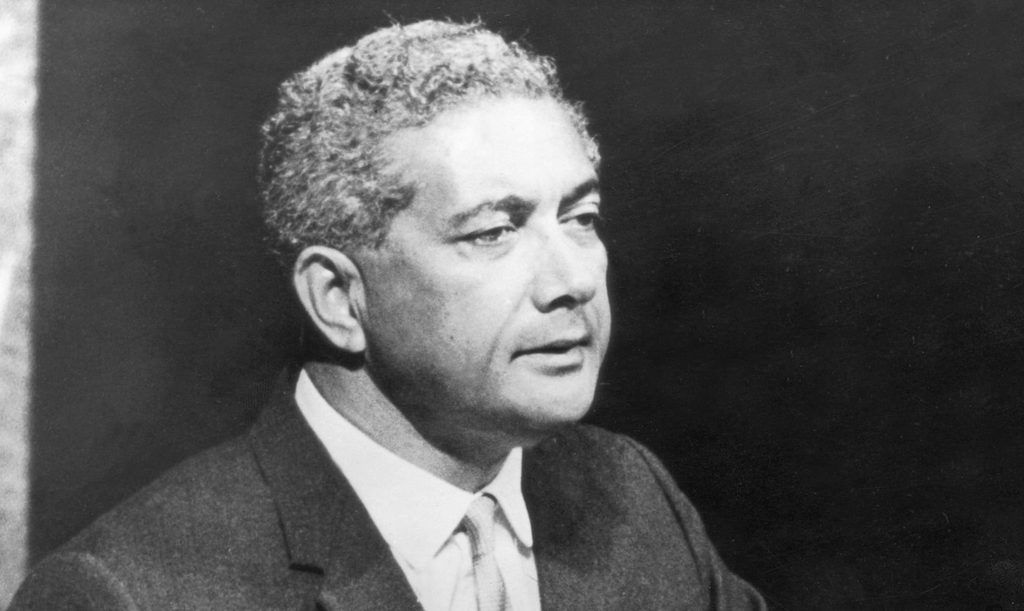
INSET: The late Ratu Sir Kamisese Mara, Fiji’s first Prime Minister and a founding father and central leader of the Pacific Islands Forum (PIF). Picture: FILE

