
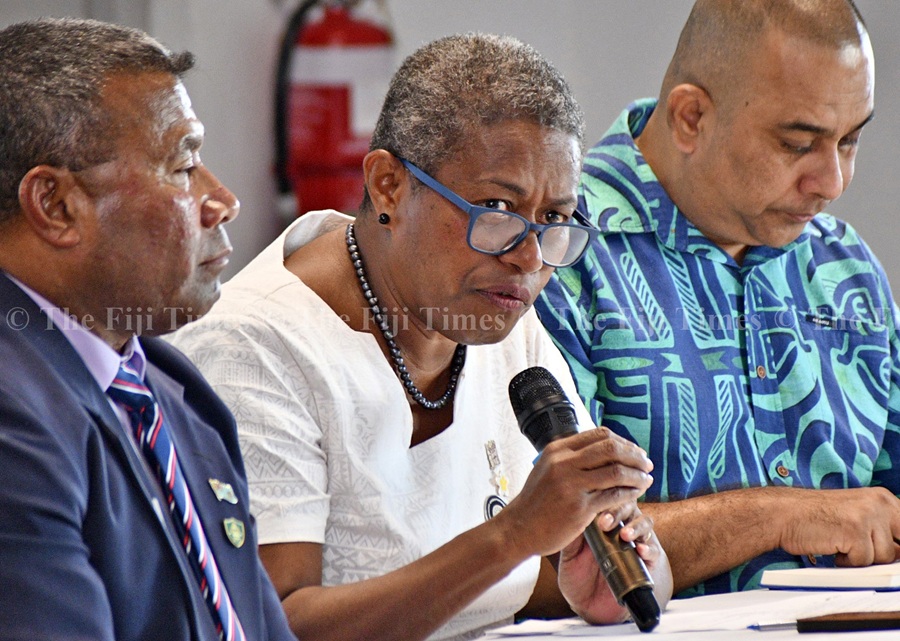
Now that was a relief to hear Justice Permanent Secretary Selina Kuruleca talk about drug rehabilitation centres.
Because we have been highlighting this issue for more than four years now, it’s going to sound like an old record on permanent replay mode.
We have no qualms though about continuing to highlight what we feel is a major issue that needs urgent attention.
Now Ms Kuruleca has called on landowners and property holders to dedicate unused land and vacant buildings for the establishment of rehabilitation centres.
Speaking at the National Dialogue on Drugs yesterday, she noted that one recurring concern has always been about where such facilities would be located.
Many people, she pointed out, have idle land or underutilised properties. The solution, she suggested, could be as straightforward as communities coming together to transform such spaces into rehabilitation homes.
She emphasised that any facility must be backed by trained professionals offering treatment grounded in science. Rehabilitation must be driven by evidence-based care delivered by qualified service providers. There is a need to re-purpose available resources now and move quickly to establish centres that can provide structured and professional support.
Drawing on her experience at the Ministry of Women, Children and Social Protection, she described rehabilitation as a form of urgent early intervention.
And we agree with her. We need a strong sense of urgency to deal with this. It’s a massive undertaking and a serious national challenge.
Using a powerful analogy, she highlighted how the justice system too often responds only after damage has already been done, like placing an ambulance at the bottom of a cliff instead of preventing the fall in the first place.
However, she also made the important point that rehabilitation on its own will not resolve the crisis. While early intervention is critical, attention must be given to understanding why the supply of drugs remains so high in the first place.
Ms Kuruleca makes sense, but we maintain that rehabilitation centres are critically important in the greater scheme of things.They provide a structured pathway for users wanting to break free from addiction. They stand as beacons of hope for people who might otherwise see no escape from dependency.
Importantly, they may also play a positive role in addressing broader public health concerns, including the sharing of needles and the rise in HIV cases.
We are glad that the issue of rehabilitation centres is being brought to the forefront.
That’s the way to go. This is something that should be amplified at every level of national discussion. We should be advocating systems and support networks built around properly resourced centres that offer medical care, counselling and long-term recovery programs.
People battling addiction need them. Fiji needs them to support some of the most vulnerable members of our society. We need facilities staffed by trained medical experts who understand the complexities of substance dependency.
Well-run rehabilitation centres can reduce addiction rates, limit risky behaviours such as needle sharing, and help curb the spread of HIV. They offer recovery for addicts, and protection for communities. We need them!

