
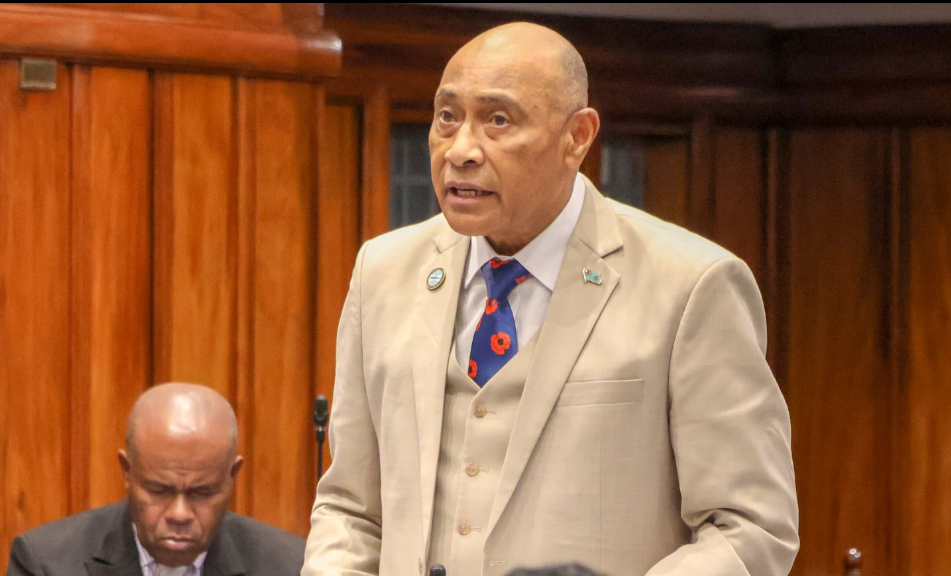
Former journalist Charlie Charters was prevented from leaving Fiji after an alert in the border control system flagged him as a person of interest (POI), Immigration Minister Viliame Naupoto has confirmed.
In a statement responding to questions from The Fiji Times, Mr Naupoto detailed the sequence of events that led to Mr Charters being offloaded from Flight FJ915 on February 21.
“Mr Charters’ departure was referred by primary line officer (PLO) (manned by customs officer) to immigration referral officer on 21/02/26 because of a departure alert in the system,” Mr Naupoto said.
“The alert was confirmed by the immigration officer and consulted Border Police and FICAC who indicated that Mr Charters was a person of interest (POI). Mr Charters was offloaded from flight FJ915 and handed over to Border Police.”
Mr Naupoto explained that the alert system is triggered only when a traveller’s details are entered by a primary line officer upon exit or arrival.
He said only certain authorities were empowered to issue stop departure orders (SDOs), including the courts, FNPF, FRCS, the Fiji Independent Commission Against Corruption, BAF and TELS.
“Immigration can only stop a person at the border if the person’s travel documents are damaged or not in order,” Mr Naupoto said, emphasising that officers act within the confines of legislation.
Regarding Charters’ case, he added, “I am not aware as to whether a SDO was served on Mr Charters by FICAC but I can confirm that the SDO for Mr Charters from FICAC was received by Immigration”.
Mr Naupoto said immigration officers consulted relevant authorities when individuals are flagged under Section 45 of the Crimes Act 2009 or Section 13G of the FICAC Act.
His comments come amid growing public scrutiny over the circumstances surrounding Charters’ detention and transfer to FICAC officers.
Mr Charters’ legal counsel Mr Seforan Fatiaki has stated that his client was approached at the boarding gate, declined what was described as an alleged “deal” from investigators, and was subsequently taken to FICAC’s Suva office for questioning.
The developments have intensified debate over the balance between law enforcement powers and constitutional safeguards — particularly in light of the High Court’s recent reaffirmation of the limits of executive authority and the independence of statutory bodies.
With Immigration confirming receipt of a stop departure order from FICAC, attention now turns to the legal basis and procedural steps underpinning that directive — and whether they withstand public and judicial scrutiny.

