
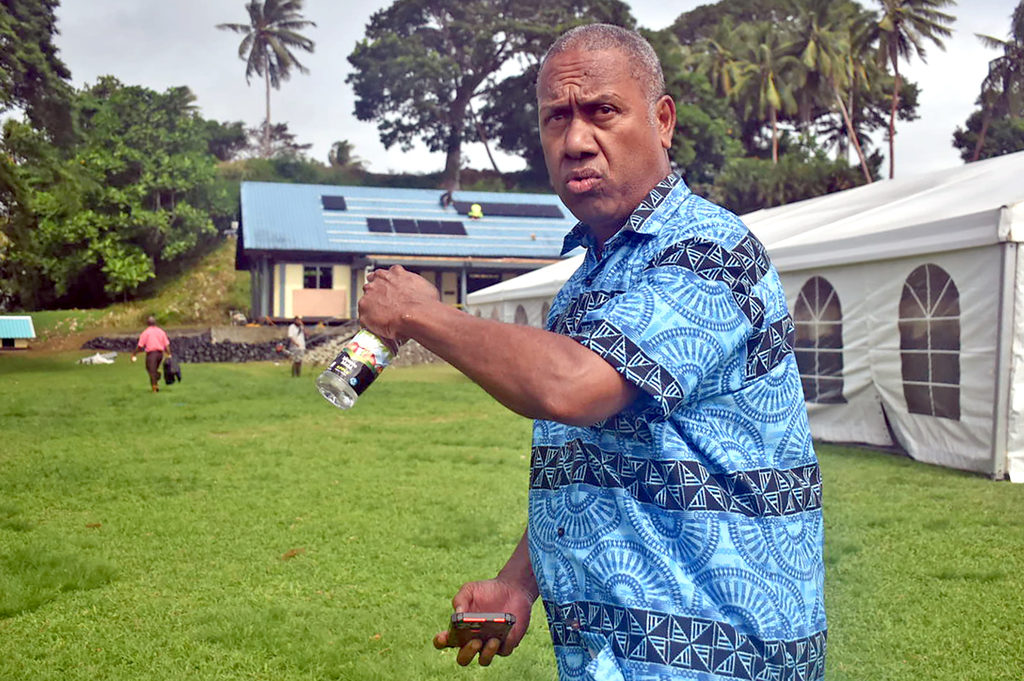
To step onto the island of Bau is to walk through a portal where the air itself feels heavy with the weight of ancient sovereignty.
This sacred ground, home to the villages of Bau, Lasakau and Rara-o-Soso, preserves a legacy etched into its very foundations, a history not merely written, but breathed through the character of its people.
At the heart of the island, a striking visual dialogue between two eras unfolds. On one side lingers the shadow of Na Vatanitawake, a remnant of the dark ages. On the other stands the pearly white radiance of the Ratu Cakobau Memorial Church — luminous, defiant, redemptive.
“The story (of the church) I relate has been passed through generations,” said Turaga Tunitoga, Ratu Aisea Komaitai.
In the 19th century, Bau was the domain of Na Vunivalu na Tui Kaba, Ratu Seru Cakobau, a warlord of unmatched ferocity who ruled with an iron fist, his mana fuelled by rituals that defined an era of fear and conquest. Yet across the waters of Viwa Island, another force was quietly at work.
John Hunt, a missionary from North Hykeham, England, spent his final years in fasting and silent intercession for the chief’s soul.
“Ratu Cakobau ruled with power, however, Rev John Hunt was at Viwa, praying and fasting for this man.
“But he passed away six years before Ratu Cakobau accepted God.”
Though Hunt died six years earlier, his prayers found their mark on April 30, 1854.
In a moment that redirected the course of Fijian history, Ratu Cakobau surrendered to “The Christ”.
He took the name Epenisa — Ebenezer, the “Stone of Help” (Vatu ni Veivuke) — signalling a new dawn for the islands.
As he knelt, his plea was simple and profound.
“Ni tauri au vakagumatua, ni tauri au dei, ni tauri vakaukauwa” — Hold me firmly, hold me fast, hold me with strength.
The transformation was not merely spiritual — it was physical.
In 1859, Ratu Cakobau ordered the destruction of 17 of his 18 bure kalou, or spirit temples. The very stones that once upheld pagan altars were reclaimed to build a monument to his newfound faith.
“A stonemason, John Sinclair, built the church from the stones of the 17 bure kalou, with the help of the boubula (prisoners of war),” Ratu Aisea said.
Under the master craftsmanship of German stonemason John Sinclair and the labour of prisoners of war, the church rose over 21 years.
Its metre-thick walls were assembled with precision, braced by pillars of rosewood and illuminated by Gothic arched windows.
Converts harvested sea coral, cured it, and crushed it into lime whitewash — a labour of devotion that still gives the sanctuary its brilliant glow.
Completed in 1880, the church was carpeted in traditional tabakau, woven from coconut leaves. Though Ratu Epenisa passed away only three years later, the sanctuary was renamed the Ratu Cakobau Memorial Church in his honour.
Time and tide have tested it. The first major renovation in 1954 was carried out with the support of the villagers of Daku (who have customary rights and traditional obligations to the Tui Kaba clan). The second expansion in 1980 prepared the church to welcome Queen Elizabeth II when she was on the island to open the Great Council of Chiefs meeting.
“There have been two renovations so far, the first was done by the people of Daku and the second was to welcome the late Queen Elizabeth II in ’82,” Ratu Aisea explained.
Yet perhaps the most striking symbol of redemption rests quietly within the sanctuary walls — the Vatu ni Bokola, the killing stone.
Once used to slay enemies outside the heathen temple, it was cleansed and hollowed out by Ratu Cakobau’s decree. Today, the stone that once ran red with the blood of war cradles the holy water of baptism.
After 146 years and 49 ministers, the church remains a living pulse of worship. To attend a service at Bau today is to witness the chief’s prayer still in motion.
“We kneel to our knees and pray like how Ratu Cakobau prayed.”
On Bau, the stones still speak.
They tell of a violent past, a surrendered heart, and a “Stone of Help” raised from ruin — a testimony that sovereignty, like faith, can be remade.
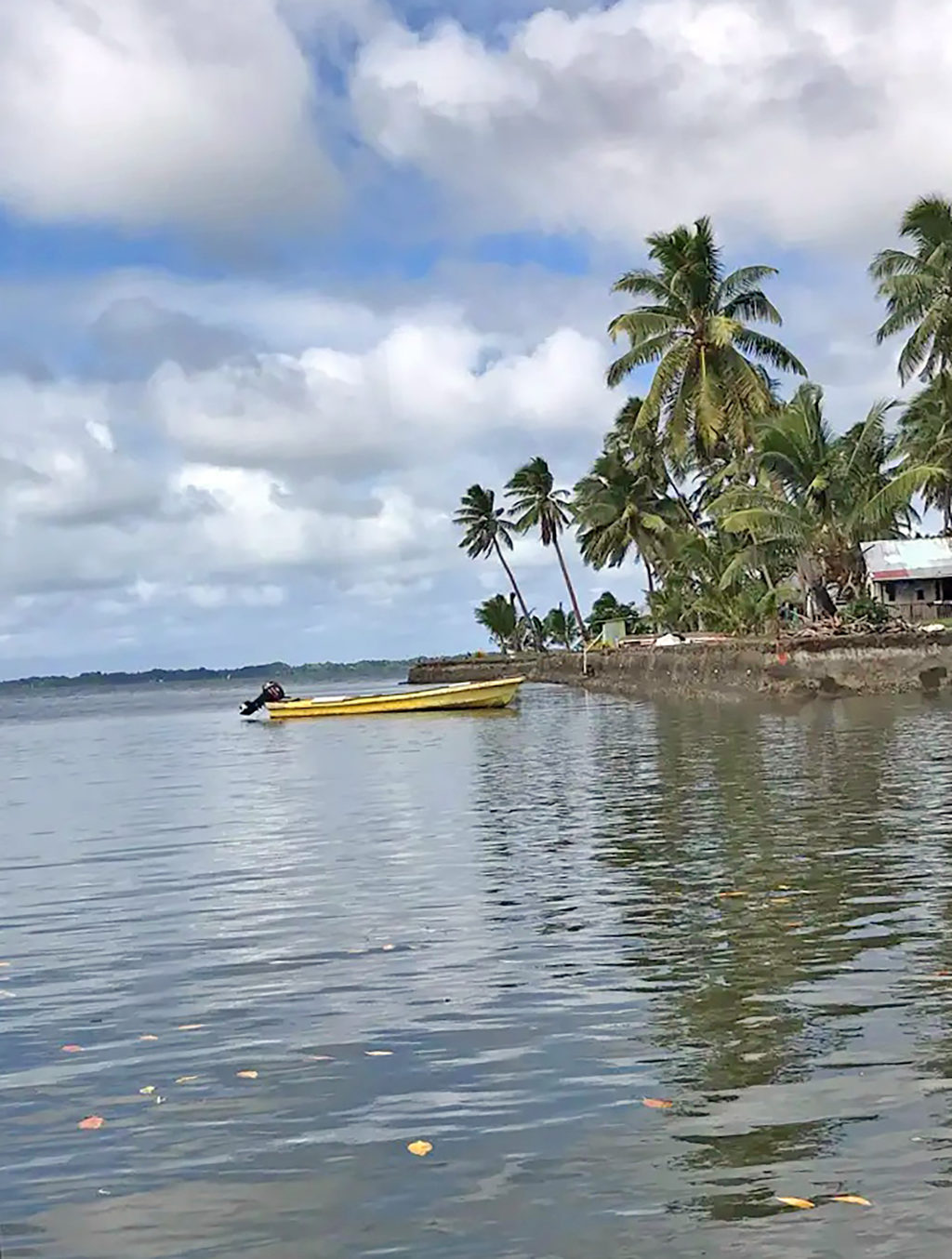
A view of Bau Island from the sea. Picture: FILE
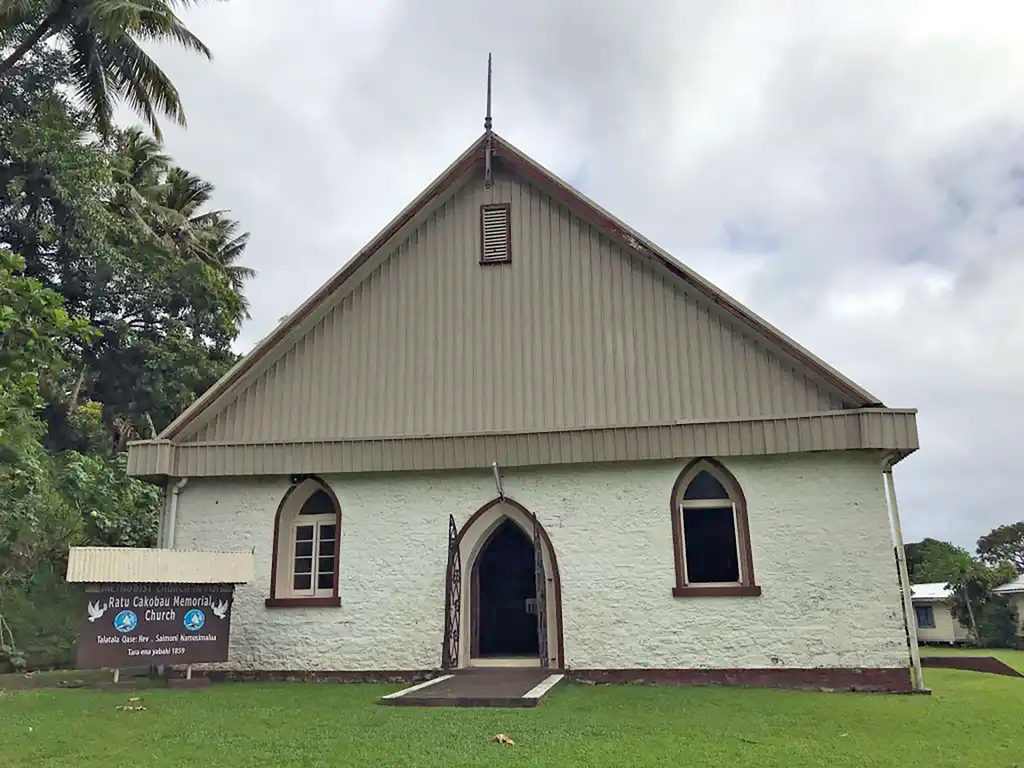
The Ratu Cakobau Memorial Church on Bau Island. Picture: FILE

