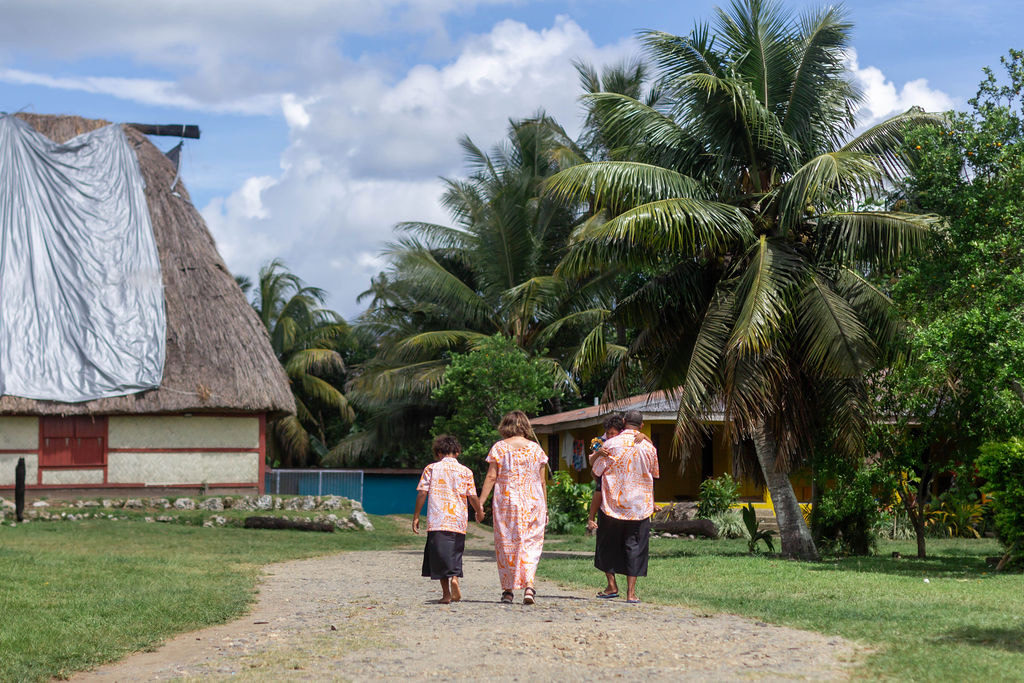
Boom! — I looked up and my older son was gone. Not missing just absorbed. He had followed a group of children down the path without asking, slipping out of the house as though he already knew where he was going.
When I eventually found him, he was kneeling on the ground, a kerosene-soaked rag in one hand, blowing into a bamboo cannon, willing the sound to come. Around him, children leaned in, laughing, all waiting for that sharp crack of noise to break the air.
No one seemed to notice that he was new.
He is ten, old enough to hesitate in unfamiliar places, old enough to notice when he stands out.
At home, he is confident at making friends, but sometimes pauses before joining in, watching first, gauging the mood. Here, in his father’s village, there was none of that. No hovering at the edges. No checking back for reassurance. He settled quickly, almost invisibly, into the rhythm of the place.
I had brought my children to Fiji with my husband to show them where their father comes from, and specifically to bring them to his village.
I imagined the visit would be explanatory answering questions, filling in gaps, helping them connect the stories they had grown up hearing with the place those stories came from. I expected the visit to be meaningful; I did not expect it to feel grounding.
We are an expat, mixed-race family. Our sons are growing up across countries and cultures, with lives shaped as much by movement as by place. I arrived in the village expecting explanation to be part of our conversations.
None of that was required.
The village did not ask us to explain who we were, and my eldest son did not need me to tell him who he was. He seemed to arrive already certain of where he fit.
I travelled with two sons, six and ten, and their experiences unfolded differently. The younger moved through the village with bright curiosity.
He stayed close, checking in often, happy to join but just as happy to return. The older settled. He learned quickly when to wait, when to follow, when to speak and when to stay quiet. He accepted instruction without resistance, and correction without embarrassment. His comfort did not feel earned through effort; it felt assumed.
By the second day in the village, he was gone most mornings chasing the crack of the bamboo cannon or disappearing with new friends down the sand dunes. He came home dusty, sun-warmed but content. When I asked what he had done, he shrugged, as if the details were not particularly important.
I am not Fijian, but Fiji has been part of my life for more than twenty years. I lived and worked here at the very start of my career, Fiji gave me my professional beginning. Back in Australia, I met and fell in love with a man from Nasama Village in Nadroga. Through him, and now through our sons, Fiji has remained a constant presence in my life sometimes close, sometimes distant, but always significant.
I have always understood my relationship to this place as one that requires care. Affection, certainly, but also respect and listening. Loving Fiji does not mean claiming it. That understanding shaped how I approached this visit, grateful, conscious of my place within it.
As the week unfolded, the village shifted from feeling like a destination to feeling like a place my eldest son navigated with quiet confidence. He knew where to go. He knew who to wait for. He did not perform his belonging or seek validation for it. He simply moved within it.
That sense of assurance deepened during the kau matanigone (a child’s first trip to his village, especially his mum’s or koro ni vasu).
Conversations softened and attention gathered. I was included alongside my children, welcomed into a moment that did not require explanation or interpretation. I understood enough to know that my sons were being formally acknowledged by their father’s family and village.
What I had not anticipated was how my older son would respond.
He leaned towards me and whispered, “Mum, does this mean I can live here whenever I want? Does it mean all of these people are my family? This means it’s my village, right?”
Then, quietly to himself, he said, “Yes.”
While the younger one slept, worn out by the heat and rhythm of the day, the older sat upright and still, unusually composed. He did not fidget or look around. He did not glance back for reassurance. His attention suggested recognition rather than confusion, as though he understood that this was not a moment that needed to be explained to him, only received.
Watching him, I felt something shift.
I am mixed-race too, and I grew up learning how to explain myself where I was from, how I fit, which parts of me belonged where. I had expected that work to fall to my children as well. Instead, I was watching my son experience something I had rarely known at his age: belonging without explanation.
We often think of identity as something that must be taught and protected, especially for children growing up away from their parents’ home countries. But what I saw suggested something else.
The village did not ask my son to choose between where he lives and where he comes from. It did not ask him to explain himself or prove his place. It simply made space for him. In doing so, it offered something rare and enduring: the assurance of who he is, and where he belongs, regardless of where in the world his life takes him.
There was a gentle role reversal in this experience. I had come prepared to guide my children through Fiji. Instead, I found myself stepping back, watching Fiji meet my son on its own terms. My role was not to translate or instruct, but to trust the welcome being extended.
As an expat, and as someone who married into Fiji, this was deeply humbling. I was reminded that culture does not endure because it is carefully managed, but because it is generous. It survives through families, everyday moments, and children who are allowed to belong without hesitation.
When it was time to leave, my son spoke about the village not as somewhere he had visited, but somewhere he would return to not vaguely, not someday, but with certainty.
Fiji gave me the start of my career. It gave me my husband. And through moments like this, it continues to give my sons a sense of themselves that will travel with them wherever they go.
For that, I will always love Fiji not in parts, but entirely.
n AMY LEE-HOPKINS lived and worked in Fiji in 2003 and now lives and works in Saudi Arabia with her husband and two sons. The views expressed in this article are hers and do not necessarily reflect the views of this newspaper.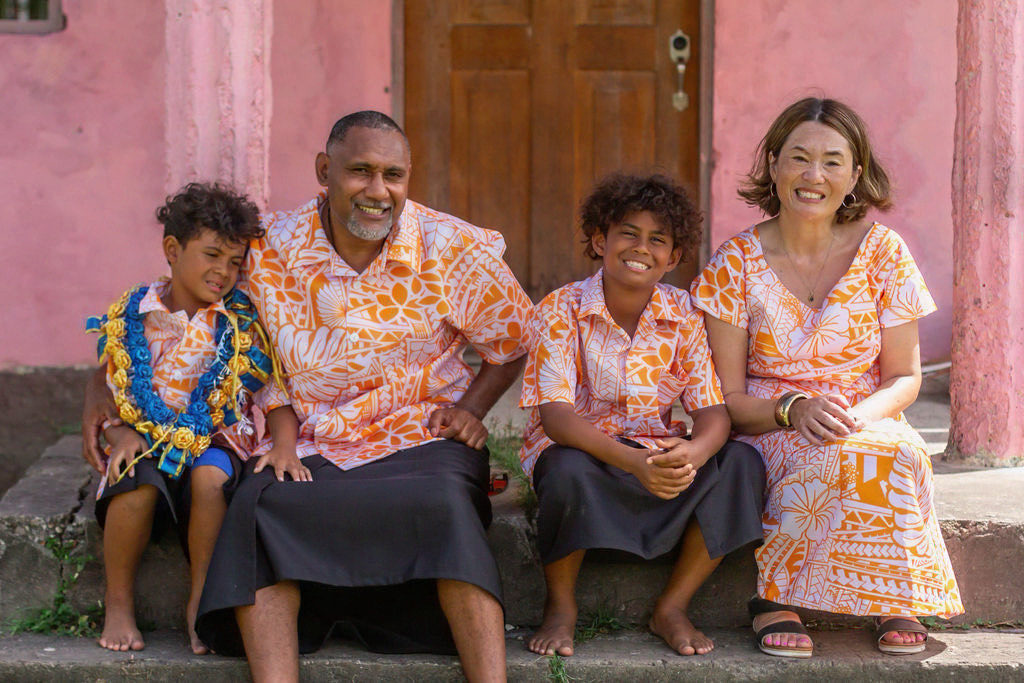
Left: The family… Meli Allen and Amy Lee Hopkins, with their sons Charlie and Quincy. Picture: SUPPLIED
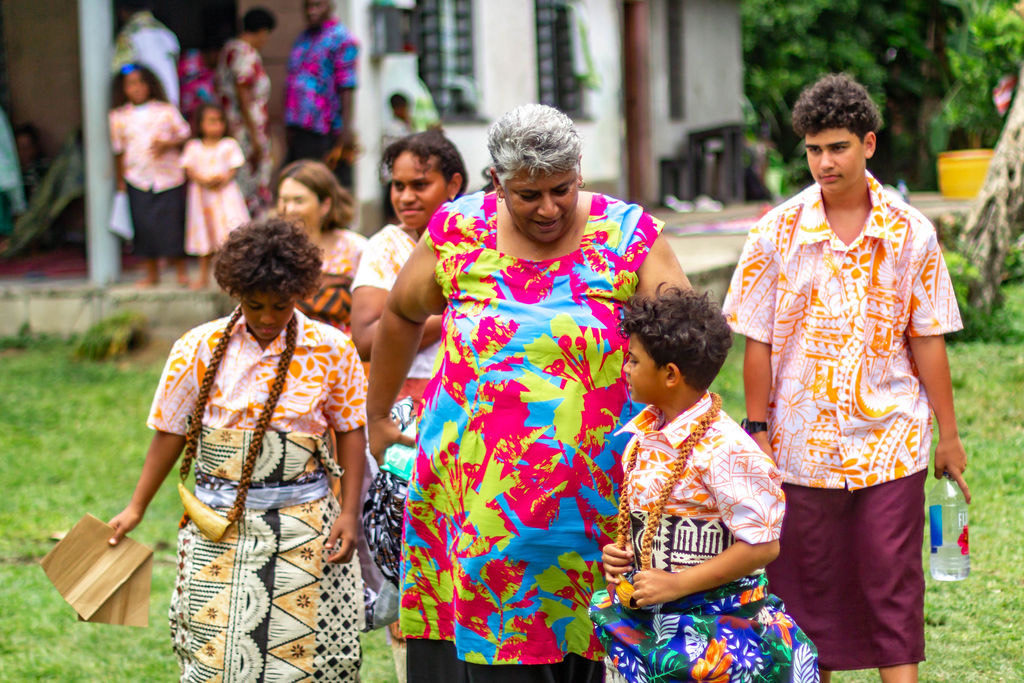
Right: Charlie, 10, and Quincy, 6, walk to the venue of an indigenous Fijian ceremony with their aunt in Nasama, Nadroga. Picture: SUPPLIED
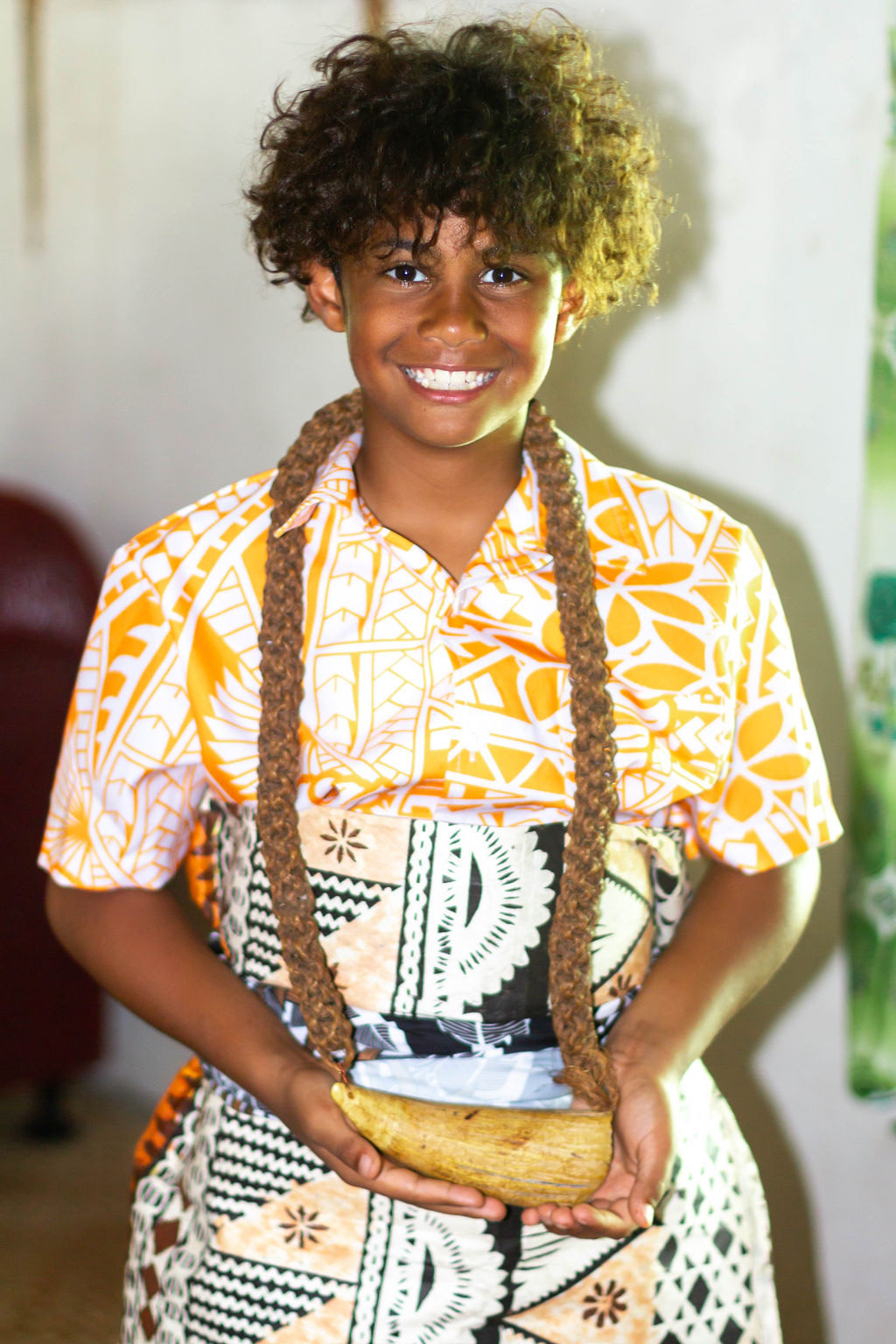
Charlie holds a traditional tabua during the welcome ceremony. Picture: SUPPLIED
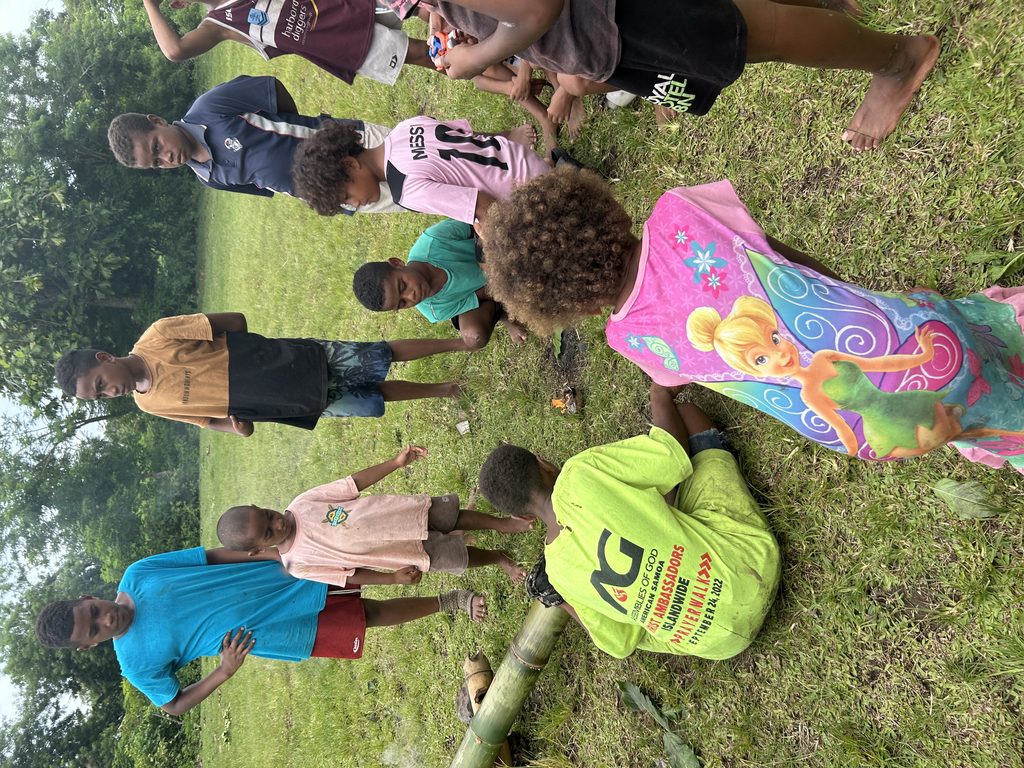
Charlie learns to fire a bamboo cannon with children in the village. Picture:SUPPLIED