
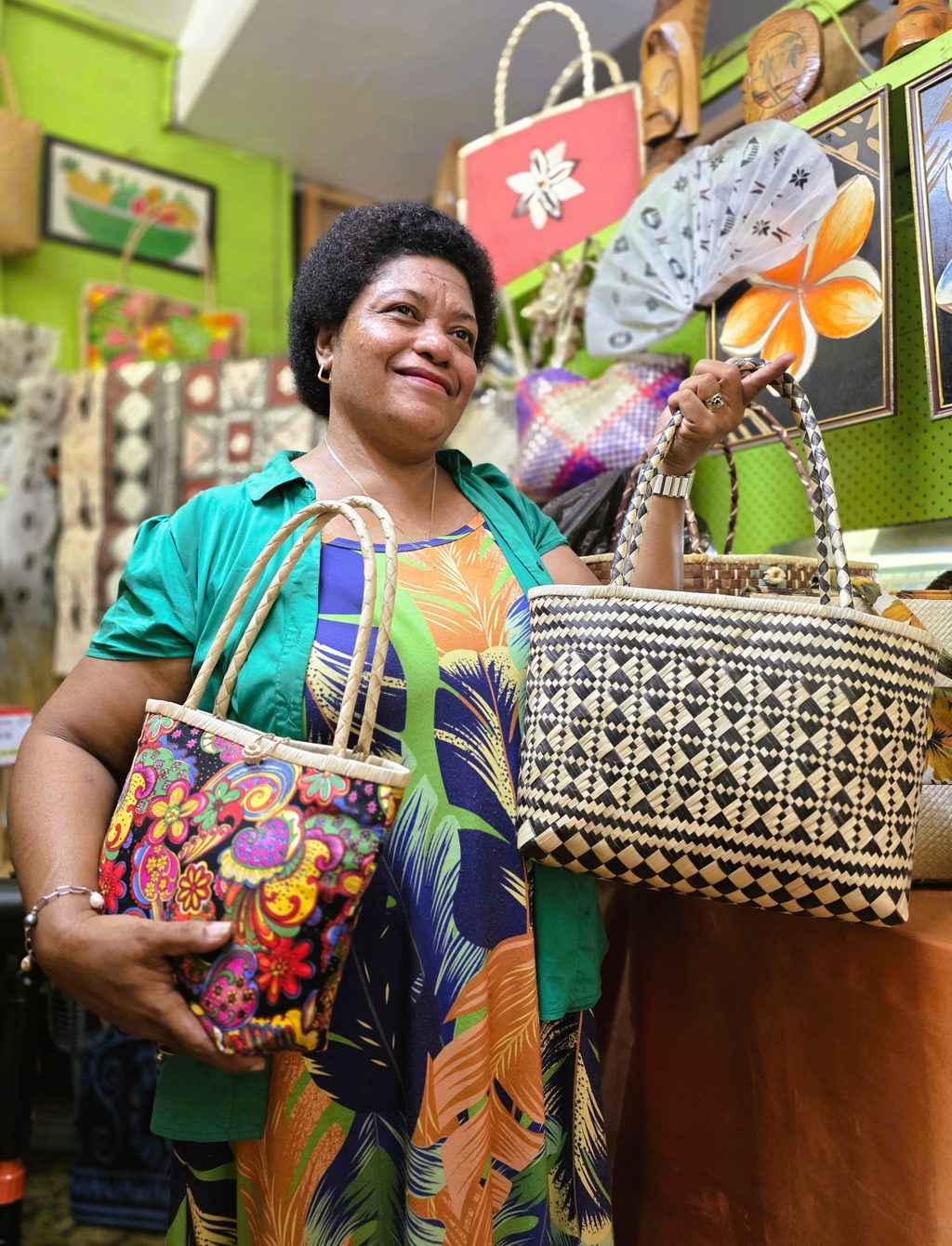
In the heart of Suva’s central business district, the Suva Handicraft Centre is home to artisans keeping Fiji’s rich cultural heritage alive.
Among them is Laisani Mara, a 46-year-old mother of three from Lau, whose family-owned handicraft business has been a fixture at the centre for years.
Her husband hails from Koro in Lomaiviti, and together they continue a tradition passed down through generations.
Family tradition
Ms Mara’s journey into the world of handicrafts began in primary school under the guidance of her mother.
“The art of weaving was instilled in me at a young age,” she said.
“We made everything from handbags for church to purses and other items. The special knowledge of weaving fine, intricate patterns has been passed down to me and my sisters by our mother.”
The family business has remained at the Suva Handicraft Centre a since its inception, although the Mara family changed stalls during the COVID-19 pandemic.
Despite these challenges, their commitment to authentic iTaukei craftsmanship has never wavered.
Navigating the business
For Ms Mara and her fellow artisans, the rhythm of the business year is predictable.
“The beginning of the school year is the slackest time,” she explained.
“Business continues slowly until April, and then picks up towards the year-end.”
However, she lamented the fact that modern tourism practices have changed the dynamic that once benefited small vendors.
“When cruise ships dock, buses whisk tourists straight to large retail outlets in Suva, bypassing us completely. In the past, singers and meke groups would entertain tourists here, creating a vibrant atmosphere and drawing them to our stalls. That doesn’t happen anymore.”
She said the Suva Handicraft Centre was a space for genuine iTaukei artisans.
“We make and sell our own products that are unique and authentic to our cultural background. This is different from vendors who buy items elsewhere and resell them. Authenticity matters, and traditional arts and crafts need to be protected from unethical copying and low-quality reproductions.”
Challenge of low sales
Financial uncertainty is a reality for many at the centre.
“There are times we earn nothing for up to a month,” Ms Mara shared.
“We continue making items and adding to our stock, because you never know when they will be bought. For example, a European visitor bought a shell necklace this morning that had been on display for almost a year.”
Despite the unpredictability, she stressed the importance of careful financial planning.
“When business flows well, we are happy. But we prioritise saving and investment, keeping money aside for rainy days and ensuring there’s enough to keep the business running.”
Message to fellow artisans
Ms Mara’s advice to fellow artisans is to carry on despite the set backs and unfavourable business dynamics at play.
“Never be discouraged by slow sales or a bleak outlook. Continue perfecting your craft. God has given us the talent, and it is up to us to use these gifts. The hands that make these crafts are the same hands that will bring income back to us.”
Her advice also echoes a wider call shared by fellow vendors to protect Fiji’s cultural treasures and to revitalise spaces like the Suva Handicraft Centre.
She urged the Suva City Council and relevant authorities to develop ways to reinvigorate the tourist experience, such as creating spaces for cultural performances and displays.
“Many visitors today don’t even know this is the handicraft centre,” she said.
“Some even mistake it for a fish market. We want tourists to see the vibrancy and authenticity that we offer.”
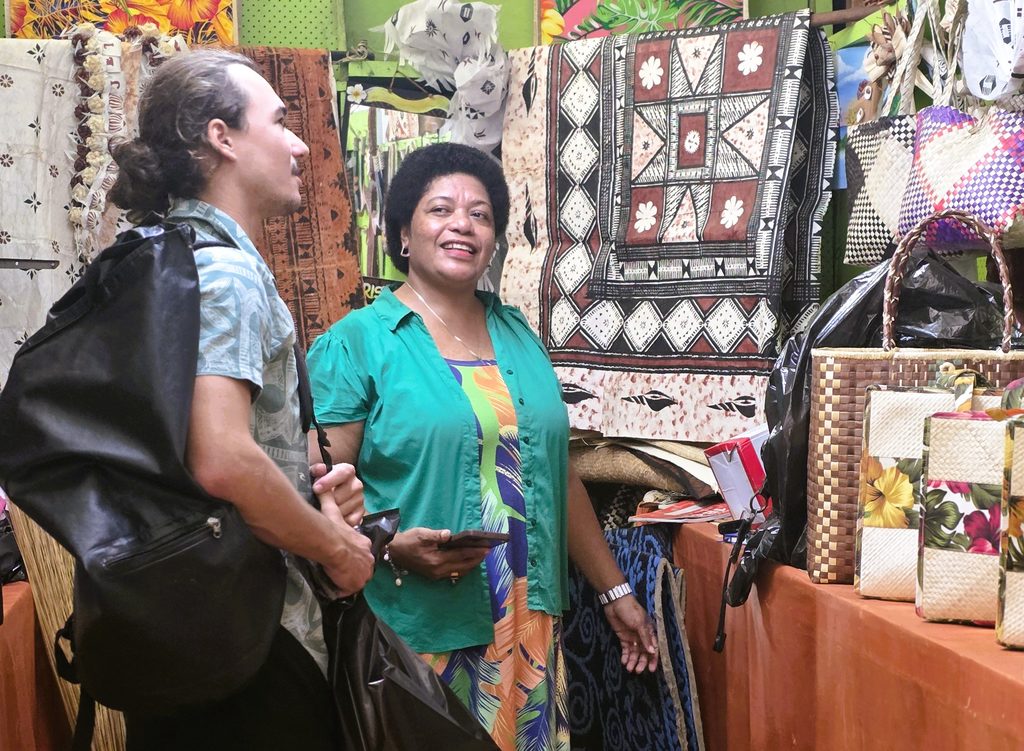
Laisani assists a tourist at the stall. Picture: ALIFERETI SAKIASI

