
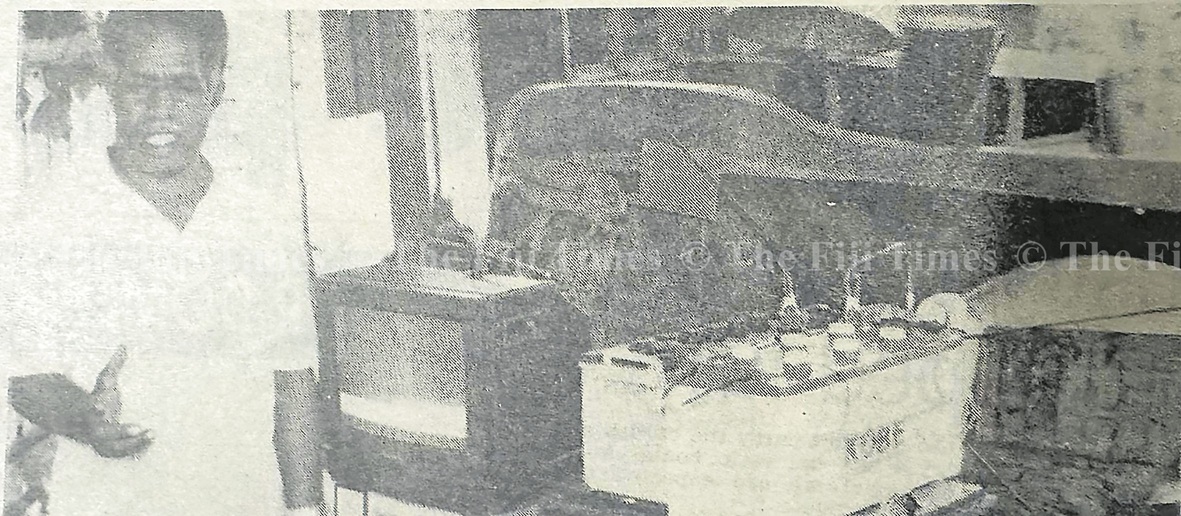
On May 4, 1996, The Fiji Times reported on Kitione Namakadre and his ambitious venture into electric vehicles, a project that could have positioned Fiji on the global automotive map.
Inventions were rarely associated with Fiji, especially of a technical or mechanical nature, but Namakadre, a 49-year-old mechanic and former Fiji Military Forces territorial soldier, was determined to change that.
“I think I have the key to the electric car,” he declared. “Because I made it and it worked.”
Known simply as “Koti,” Namakadre traced his inspiration back to Albert Einstein, whose theories guided him, though he insisted, “it takes doing.”
His project took shape in 1987, when he left a decade-long job to open his garage, Namakadre Mobile Enterprise, and began building and tinkering with cars from the ground up.
“I just wanted to start with the car because I felt I was wasting time.”
Over the years, he obtained the first licence to produce and manufacture cars in Fiji.
“I obtained my licence from the Government in 1983 and the Fiji Trade and Investment Board also gave the green light.”
The main challenge, he explained, was maintaining engine power without external recharging.
“I saw a huge problem with the projects. If the engine didn’t produce its own power, then this car wouldn’t run.”
By 1992, he had focused on the battery itself, experimenting with volts, resistors, and electric mechanisms. Between $10,000 to $15,000 was spent replacing incompatible parts.
The result of three years of work and testing was what Namakadre called the “black box”. In a demonstration, he explained the system.
“The battery supplies power to the invertor which is converted to direct current.
“This power goes to the TV. Linking through some connections to the black box, it recharges lost power to the battery.”
Remarkably, it recharged without drawing power from any outside source.
Born in Navuniivi Village, Ra, and the third youngest of eight children, Namakadre studied electronics and mechanics at Levuka Technical School, then advanced as an apprentice at the Derrick Technical Institute and with
Carpenters Motor. He served eight months as a territorial soldier in Sinai in 1980.
Married with one child and living in Cunningham, Suva, at the time, he hoped to see his invention reach foreign markets.
“They are currently building the first electric car, and they have come across the same problem as I have. I think they could utilise my invention for the world,” he said, referring to potential interest from General Motors Corporation.
A strict Seventh-day Adventist, Namakadre was confident that guidance from above would help him secure the best deal, bringing his revolutionary work into the international spotlight.

