
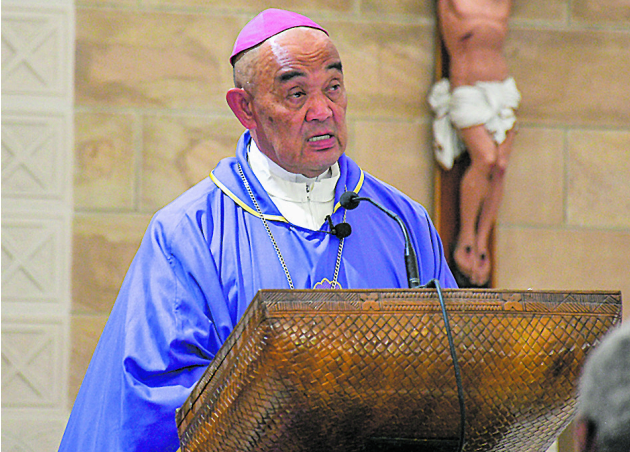
Lent and drugs
As we begin this holy season of Lent, we find ourselves once again entering the “desert” with Our Lord. It is a time of quiet, a time of reflection, and above all, a time for conversion. When Jesus began His ministry, His very first teaching was a call to action: “Repent, for the kingdom of God is near.”
In our modern language, we often think of “repentance” as simply feeling sorry for our mistakes. But the Greek word used in the Gospels is Metanoia. It is much deeper than a feeling. Metanoia is a profound change of mind and heart. It is a deep, inner transformation that turns us around and points us in a new direction. This Lent, the Holy Spirit is asking us: in what direction is our heart pointing?
Today, I wish to speak to you about a shadow that has grown long over our homes, our villages, parishes and country. It is the shadow of drug abuse.
We cannot remain silent, for drugs are a direct threat to the human dignity that God has woven into every one of us. Pope Saint John Paul II described drugs as an “invisible – a slow and silent threat that brings about a “culture of death.” Drug addiction does not discriminate; it reaches into every part of our society, affecting the rich and the poor, the city and the village alike.
When we look at the drug crisis, we see a “lethal sickness.” It is, of course, a sickness of the body, but more importantly, it is a sickness of the spirit. This spiritual sickness leads a person to want to escape from themselves. It leads them to seek “false-short term satisfactions” in an attempt to avoid the inner struggles of life, sometimes to the point where the very meaning of their existence begins to fade away.
The Catechism of the Catholic Church reminds us that the use of drugs – outside of strict medical necessity – inflicts “very grave damage on human health and life”. It is a grave offense because it strikes at the gift of life that God has entrusted to us.
During my parish visits, I ask people; Why are our children, youths and our neighbours turning to drugs for an “artificial paradise”?
When we look beneath the surface, we find the root causes are often wounds of the heart. We see a lack of clear motivation for living; a lack of values; a sense of loneliness and a lack of purpose. We see an inability to address life’s anxieties and, most tragically, an absence of intimacy with God. At the very core, drug abuse reveals a hunger for love that is not being met.
To solve the drug problem, we cannot rely on laws alone. We must bring Love back into the centre of our lives. We must bring back meaning, purpose, and the presence of God.
We must believe – and we must teach our children to believe – that we are made in the image and likeness of God. We are the Beloved of God. We were made to love and to be loved. When a person truly knows their worth in the eyes of the Creator, they no longer need to escape from reality, because they find God within that reality.
As a church, our response must be three-fold: prevention, suppression, and rehabilitation.
1. Prevention is the primary call for us as a community of faith. It begins in the family – the “domestic church.” We need a “therapy of love” in our homes, our schools, and our youth groups. We must restore the human values of love and life so that our young people have a foundation that no drug can shake.
2. We must suppress and denounce drug sale and abuse. The government and law-makers must create laws and policies against the production, sale, and abuse of drugs. The law enforcers and police must continue and intensify their efforts to stop drug abuse.
3. Finally, we must help people with drug addiction to rediscover their proper human dignity and restore their lives.
This year, the Archdiocese of Suva is making a serious, prayerful commitment to this battle. We have already begun with Fiji Council of Churches Pastoral Response to Drugs workshops, but we are going further. During this Lenten season, we will be running youth workshops across our three regions. Our goal is to train parish youth leaders who will then carry this message of awareness and hope into all 37 of our parishes and villages.
Our 2026 Lenten Appeal is dedicated to this mission. This is where I ask for your help; to pray and donate to this mission against drugs. When you give to the Lenten collection this year, you are not just giving money to a fund. You are contributing to the restoration of a life. You are helping a young person find their purpose. You are helping a family stay together. Your donation is a seed of hope planted in the soil of our Archdiocese.
I thank you for your commitment, your prayers, and your continued generosity. Let us use these forty days to turn back to the Lord with all our hearts. Let us be a church that protects the vulnerable and heals the broken.
Together, through the grace of Jesus Christ, let us restore human dignity. Let us restore lives.
May you have a blessed and transformative Lenten journey.

