
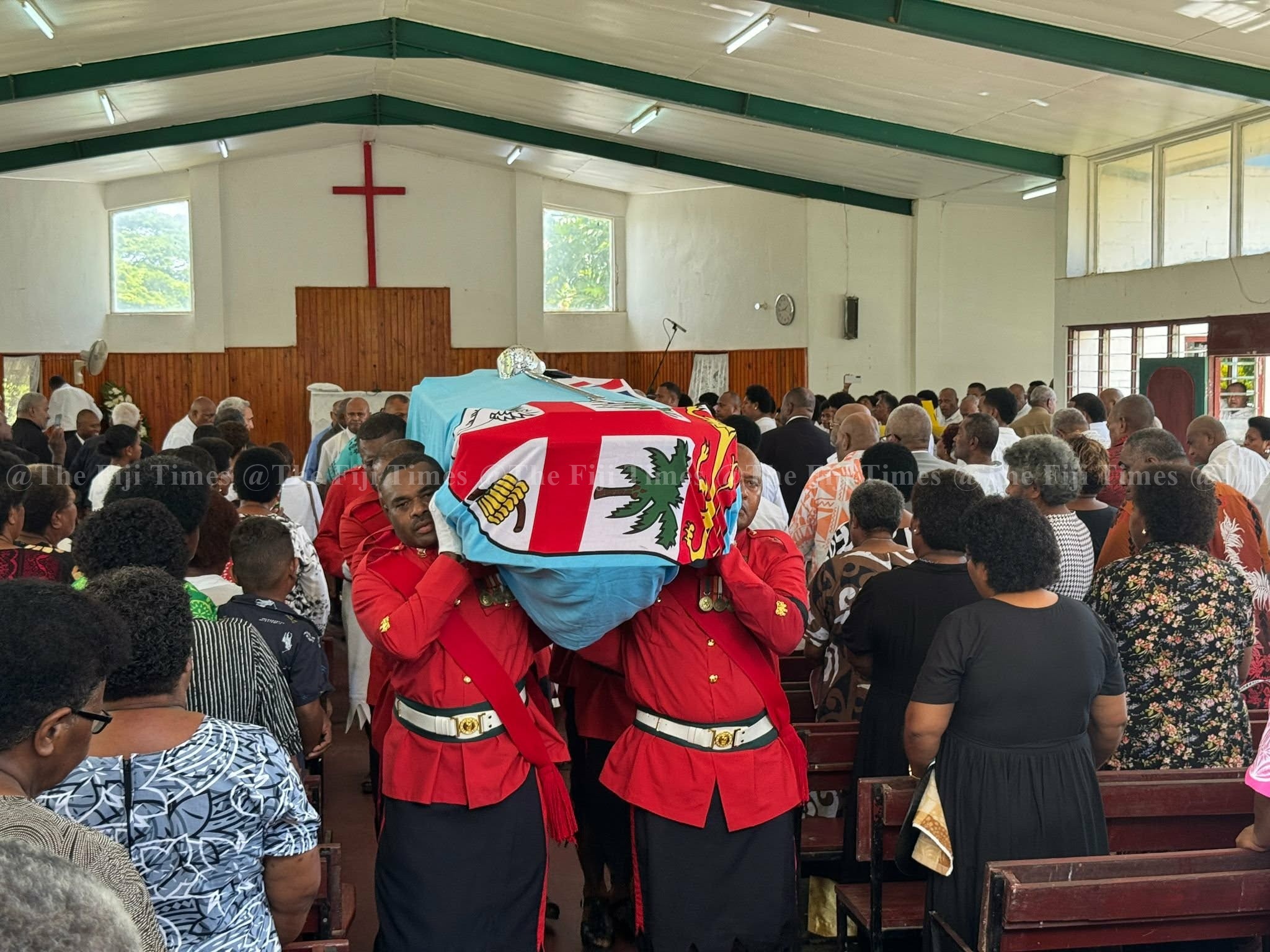
THE rugby community gathered in solemn unity yesterday to bid farewell to one of Fiji’s finest sons, former Fiji 7s captain and coach and Fiji Rugby League representative Alifereti Dere, laid to rest in his home village of Vatutu Village, Nawaka in Nadi.
Family, friends, former teammates, and generations of rugby followers gathered for what many described as a final homecoming for a man whose leadership, courage, and sacrifice helped shape the course of rugby in Fiji.
A pioneer remembered
Among those who paid tribute was rugby commentator and rugby pioneer Culden Kamea, who stood alongside Dere in the early days of establishing rugby league in Fiji.
Speaking during the eulogy, Kamea made a powerful declaration.
“Without Dere there will be no rugby league in the country.”
He reflected on how the journey began in 1991 long before the global prominence of the HSBC Sevens Series. At the time, international sevens tournaments were limited, with Hong Kong standing as the premier stage where Fiji had already achieved back-to-back victories.
Kamea recalled discussions with Australian contacts about the growing reach of rugby league and how the Australian Rugby League hoped to introduce the game to emerging rugby nations such as Fiji, Samoa, and Taiwan.
The idea was ambitious and risky especially for players deeply rooted in amateur rugby union traditions.
When the concept of forming a Fijian rugby league team was raised, influential players were approached.
But the decision ultimately rested with the captain Dere.
Kamea remembered visiting Dere in October 1991. The response he received would become a defining moment in Fiji’s sporting history.
“If I do it, it’s not for me I do it for the future generations.”
Dere, already captain of one of Fiji’s greatest 7s teams, had everything to lose. His decision meant stepping into uncharted territory that could challenge rugby union traditions and draw criticism from established authorities. Yet he chose the path not for personal gain, but to create opportunities for those who would follow.
A captain who led by action
Former teammate and Fiji 7s maestro Waisale Serevi delivered an emotional tribute, beginning with the heartfelt farewell, “Moce mada Skipper.”
Serevi described Dere as a true warrior a leader who sacrificed much for his team and country, and whose legacy will live on forever.
He recalled one of Dere’s defining moments on the field the famous last-ditch saving tackle against New Zealand at the 1991 Hong Kong 7s that secured victory for Fiji.
Beyond rugby, Serevi reminded mourners that Dere also served his country as a member of the Republic of Fiji Military Forces, embodying discipline and service both on and off the field.
Soldier, leader, brother
Workmate and teammate Koli Rakoroi spoke of Dere the soldier and leader. He recalled Dere joining the Republic of Fiji Military Forces in 1986 and quickly earning respect for his strict discipline and unwavering commitment.
“He never knew how to give up,” Rakoroi said, describing a man who demanded the best not only from others but from himself.
A legacy beyond the game
Those who gathered in Vatutu did not simply mourn a rugby player they honoured a pioneer, a soldier, a leader, and a man who chose sacrifice over comfort so future generations could dream bigger.
From the rugby fields of Hong Kong to the quiet strength of his village roots, Dere’s journey reflected dedication, courage, and service.
His influence helped open doors for professional opportunities in the sport and strengthened Fiji’s presence on the global rugby stage.
As prayers were offered and final respects paid, one message echoed clearly through the voices of those who knew him best his impact will endure far beyond the try line: a true servant of Fiji rugby has returned home.
Moce mada, Skipper.

