
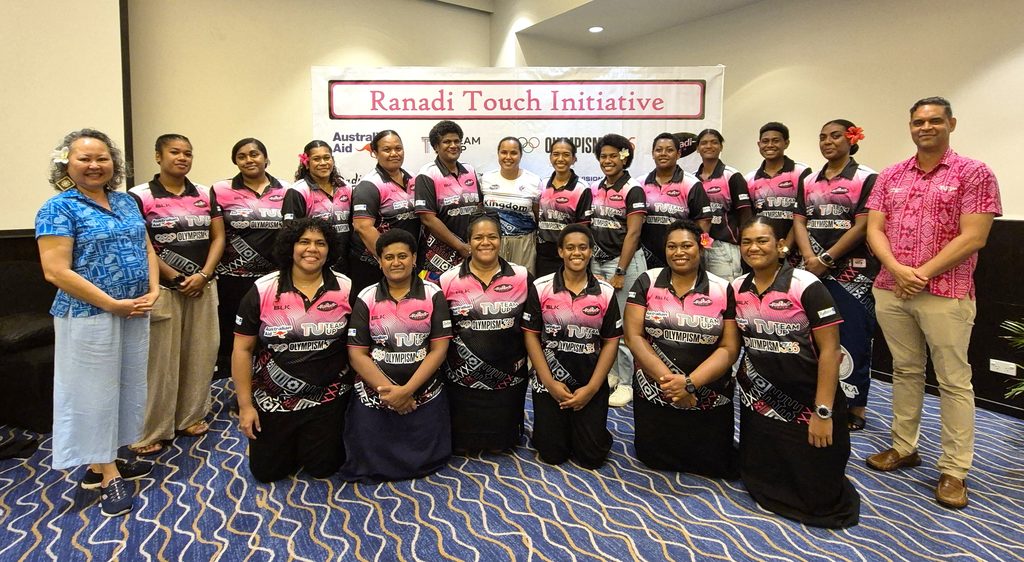
WHILE the scoreboards usually capture the headlines, a different kind of victory is being won off the field in Nadi.
The RaNadi Touch Initiative is proving that when the private sector, government, and grassroots sports organisations team up, the result is a masterclass in community transformation.
Over the past weekend, the Nadi Touch Rugby Association (NTRA) hosted a high-level leadership training session, marking a pivotal moment for a programme that uses the oval ball to tackle much tougher opponents including gender inequality, youth vulnerability, and social exclusion.
A powerhouse partnership
The success of the initiative is a strategic cross-sector alliance- a model that brings together diverse heavyweights to support locally identified needs:
Funding: Supported by the Australian Government’s Team Up program and the International Olympic Committee (IOC) via the Play for Equity Fund.
Private sector: Radisson Blu Resort Fiji has stepped up as a key enabler, providing $6,000 in sponsorship and world-class facilities to ensure the program is delivered in a professional, safe environment.
Expertise: Leadership Fiji and the NTRA facilitate the training, ensuring the curriculum is culturally grounded and impactful.
Empowering Nadi’s women
Launched in late 2025 and now hitting its stride in 2026, the RaNadi Training Initiative focuses on women who are already leaders in their own right, whether in the boardroom, the classroom, or the household.
By embedding leadership development within the familiar structure of touch rugby, the program bypasses the “stand-alone activity” trap. Instead, it creates a sustainable network of female leaders equipped to influence social norms and address local challenges like substance abuse and community safety.
Beyond corporate responsibility
The involvement of Radisson Blu Resort Fiji marks a shift in how the tourism industry engages with the community. Rather than just a one-off donation, their role in the RaNadi Initiative represents shared value creation.
By investing in the social wellbeing and leadership capacity of Nadi’s residents, they are helping build a more resilient and professional local workforce and community. Early indicators point to increased confidence, stronger peer networks, and improved participation of women in leadership roles within sporting organisations and workplaces.
A replicable model for the Pacific
As the program enters its second phase this year, the focus has shifted toward long-term mentoring. For the Australian Government and the IOC, Nadi is now a glowing case study.
It proves that sport is one of the most effective, accessible tools for driving gender equity and community resilience across the Pacific.

