
IN the mid-20th century, as Lautoka flourished into Fiji’s “Sugar City” following the establishment of the Lautoka Sugar Mill in 1903, it became a beacon of economic opportunity.
Its growth was evident over decades drawing in people from across the country.
One such person, in search of a better life for herself, was Nalawa, Ra villager Salanieta Vasekai in the early 1970s when she moved to Lautoka where she found love and a new life in Waiyavi.
Married with young kids, Ms Vasekai decided to find a permanent home on the outskirts of Drasa where she moved to with her husband and children to live in the sugar cane farming community.
A few years later, Ms Vasekai and her neighbours made the decision to settle on the piece of land by seeking permission to build their homes on the land owned by Naviyago villagers.
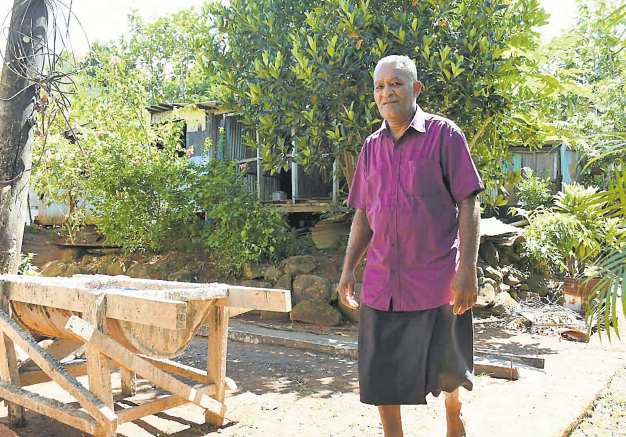
Her son Kolinio Nasilokia recalls how this decision was the origins of Vadraiyawasewa Village where more than 40 households now live.
“My mother and seven other people approached the people of Vadraiyawa in Naviyago, the owners of this land,” Mr Nasilokia said.
“They went to the Turaga ni Vanua at that time and he was Ratu Kini Cokanasiga.
“I remember the stories my mother would tell about Ratu Kini and that he was a leader who lived to serve his people and someone who treated people equally.”
He said it was Salanieta and seven others who formally received the word of Ratu Kini’s blessing, marking the transition from a group of travellers to a community of residents.
Upon arriving in the outskirts of Lautoka, the travellers reached the traditional lands of Naviyago Village, located near the Naviyago and Vitogo riverbank.
Adhering to the iTaukei custom of kerekere (formal request), Mr Nasilokia’s elders approached the traditional landowners.
“They were received by Ratu Kini Cokanasiga.”
In a historic act of benevolence, Ratu Kini did not turn them away.
Recognising their plight and their respectful approach, he gave his blessings to the villagers, allowing them to settle on a portion of the ancestral land.
He said this act of granting land for settlement, known as veivakatalei, formed a permanent bond between Mr Nasilokia’s elders and the vanua of Naviyago.
“Not only did he give us his blessings, Ratu Kini urged us to live on two main principles and that was to be strong in our faith in God and to live in peace and love for each other.
“From that day in 1978, we have not forgotten his words to us.”
He explained the Vadraiyawasewa name also signified the strong bond between the two communities.
“Ratu Kini’s vanua is called Vadraiyawa, he added the word ‘sewa’ which means ‘little or small’ in the Ba dialect. So we are ‘little’ Vadraiyawa.”
Today, Vadraiyawasewa remains a satellite of the larger Lautoka area, maintaining its unique identity as a “Ra village in the West”.
The settlement serves as a reminder of the historical internal migrations that shaped Fiji’s urban landscape, where traditional landowners like those in Naviyago played a pivotal role in accommodating fellow iTaukei seeking progress.
The legacy of Ratu Kini Cokanasiga and the resilience of pioneers like Salanieta Vasekai continue to be celebrated by the descendants who still call this piece of Lautoka — home.
Remembering the last 40 years and the passing of his late mother recently, Mr Nasilokia said the village had grown into a strong close knit community that was led by the values of their faith in God and family.
“We are a village.
“We respect and heed the call of the vanua and when there is an event or occasion in Naviyago they also call us to contribute.
“For the past 40 years, our people have grown up and moved to other parts of Fiji and overseas. But we never forget where we come from and what our elders did for us and the foundation they set for our children and our future generations.”

