
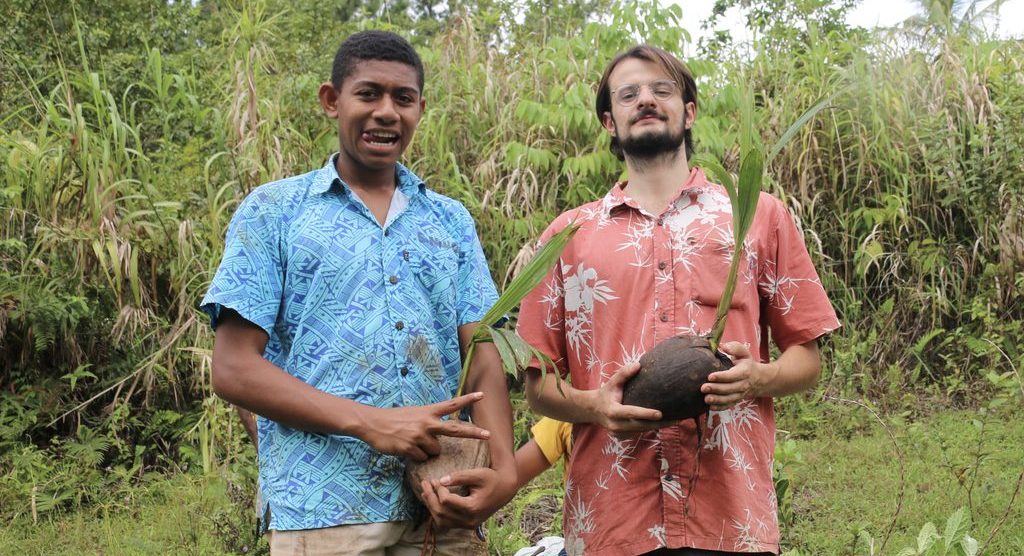
A GROUP of teenagers erupts in laughter on a Suva street corner as Greg Randin waits for a reply that draws more amusement than accuracy.
The camera is rolling. So is the teasing. Within seconds, the clip capturing a street quiz will be posted and shared.
By nightfall, hundreds – sometimes thousands – will have watched it. To most, it is just another funny video. But for Randin, the laughter is only the hook. It is a simple approach, but one shaped by experience.
A decade in the village
Randin first arrived in Fiji 10 years ago as a 19-year-old volunteer.
“I had just learned English,” he says. “I didn’t come to town – I went straight to the village. That was a different world; imagine you’re on Mars all at once.”
He was sent to Dawasamu village in Tailevu.
“I had never taken a cold shower in my life,” he says. Sleeping on the floor, adjusting to late-night visitors and limited privacy all became part of daily life.
What left a lasting impression was the openness. “In Europe, we would not go to a stranger’s house,” he says.
“But they kept inviting me. So I decided to go over. Then every morning I started to go and drink tea with that family.”
Over time, his Fijian improved. During the COVID-19 lockdown, he spent six months in the village. “I was stuck in the village for six months… so my Fijian improved a lot during that period.”
He also became aware of dialect differences.
The digital shift
When Randin first arrived, network access was limited. “You had to climb up a hill.Smartphones were uncommon and kids would come and look at my phone.”
Today, he says, “everyone has a phone”, and with connectivity comes new challenges.
“Most of them are on TikTok so their attention span is very short.”
Engaging the ‘swipe’ generation
Randin structures his content in three strands. “There’s one on education, just general knowledge, one on drugs awareness, and maybe one on just fun, pure humour,” he says.
Humour, he says, is essential to engagement.
“People work on emotions. Amusement is a form of emotion. They watch the video not because of the message but because it’s funny.”
His street quizzes are short and competitive. Teenagers answer questions about capital cities, cultural terms and everyday knowledge. “You have to make it competitive and fun. If it feels official, people just swipe,” he says.
Humour and hard topics
Randin’s content isn’t limited to trivia.
He has also produced skits with young people addressing serious issues, including drug use and the dangers of methamphetamine.
Rather than present warnings in formal language, he builds short, accessible scenes – often humorous – that unpack how drugs such as ice affect behaviour, relationships and decision-making.
By embedding the message inside humour, he aims to keep viewers watching long enough for the substance to register.
The skits addressing ice and other drugs have generated strong discussion online, particularly among younger viewers. In the comment sections, audiences debate peer pressure, consequences and family impact – extending the conversation beyond the video itself.
Viral by accident
Randin’s audience grew unexpectedly. “It was a mistake, in a way,” he says.
While overseas, he posted a video of himself mixing yaqona and speaking Fijian. A week later, he woke up to “a sea of notifications.”
“It was like 5,000 new followers overnight.”
When he returned to Fiji, recognition followed. “I didn’t realise that so many people would recognise me. People come up to me and ask for selfies.”
The dark side of popularity
With the visibility came criticism.
“If you do comedy, you’re going to upset people. If I have 100 good comments, there will be one bad comment.”
He says criticism has come from different communities. “At least 50 per cent of my haters are Indo-Fijian and 50 per cent iTaukei.”
Cultural boundaries
Some argue he should not joke about Fijian culture because he is not Fijian.
“I’m very open to debate,” he says. “But one person is not going to be a spokesperson for the entire Fijian community or people.”
At one stage, he considered stepping away.
“I was like, okay, that’s enough. Just close my account.”
His account was later hacked, but realising an opportunity, he chose to continue.
“You have to take the whole package. You can’t be picky.”
He is, however, conscious of limits. “There are many boundaries I’m not crossing, given my ‘outside’ position.”
Life between worlds
Randin holds a doctorate in anthropology. His academic work examines culture and social interaction. His online work unfolds in public spaces.
He believes French and Fijian humour share similarities.
“Humour is second degree, but it is also contextual,” he says. “When I make humour, I make Fijian-centred humour.”
He also shares cooking videos, adapting European recipes to local ingredients.
Reflecting on social life, he contrasts Europe and Fiji.
In Europe, he says, everything is about “career, stress, and work”.
“What is good in Fiji… is the communal aspect. You can just arrive at someone’s place unannounced, and they’ll be happy to receive you.”
Live, laugh, learn
As the interview concludes and he makes his way out onto the street, a passing cabbie calls out a remark about Randin’s ‘hairdo’, or the lack of it.
Randin fires back without missing a beat.
The two break out in a fit of loud laughs that draw the attention and smiles of passers-by including police officers on patrol nearby.
He has the street’s attention – and that is his starting point.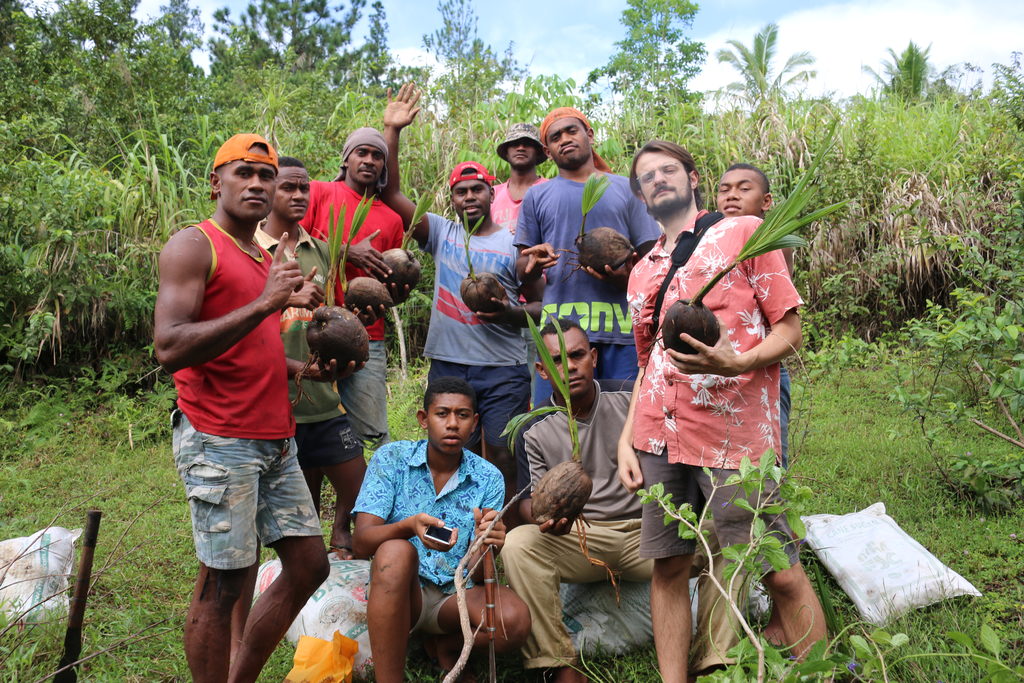
Randin, right, and part of the Delakado Youth Club. Picture: CACCD

Laughter around the tanoa or kava basin are key themes of Randin’s approach to engagement. Picture: GREG RANDIN/FACEBOOK

Randin says he enjoys the communal way of living found across Fiji. Picture: GREG RANDIN/FACEBOOK
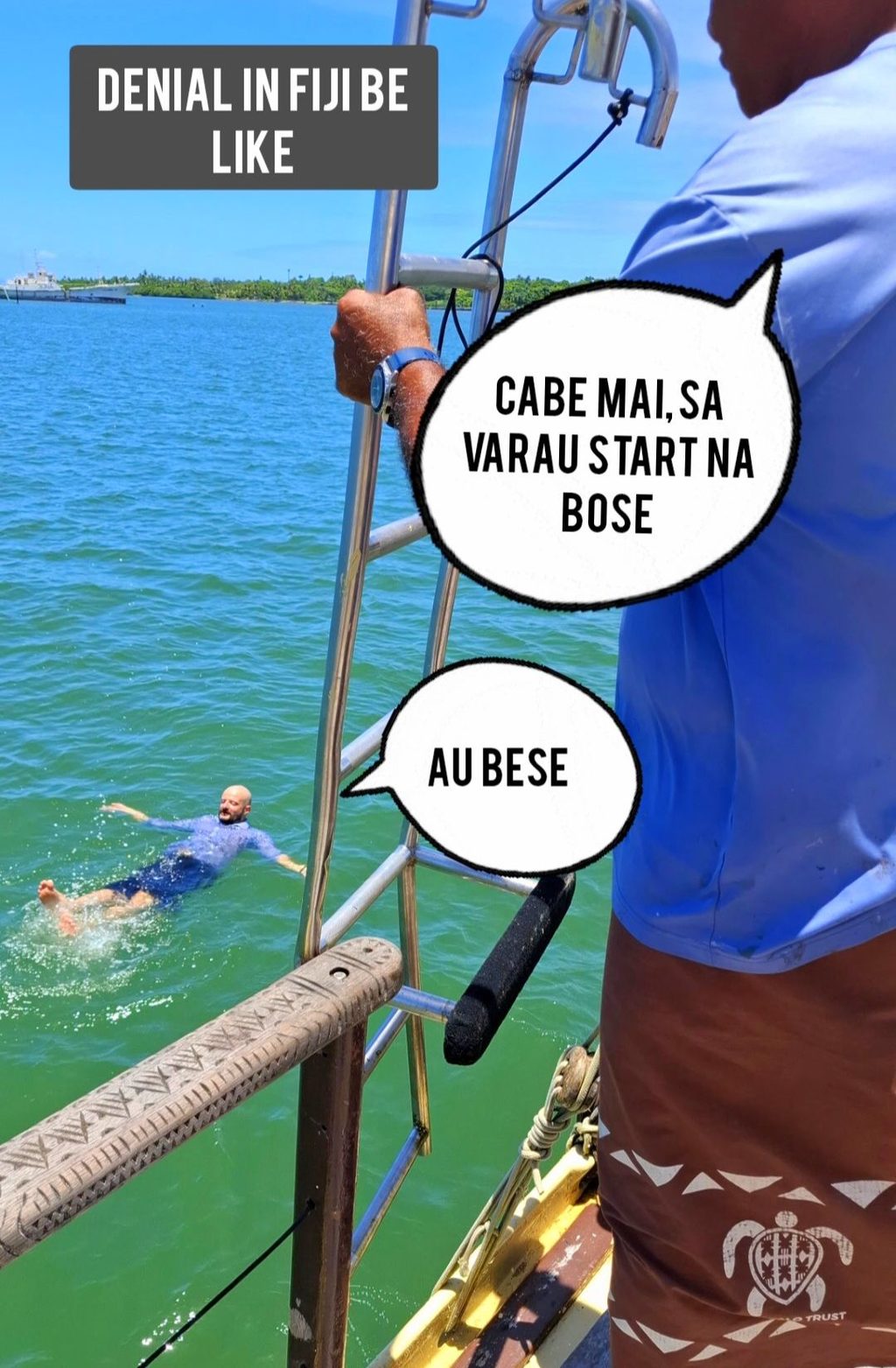
An example of content that can be found on Randin’s social pages. Picture: GREG RANDIN/FACEBOOK
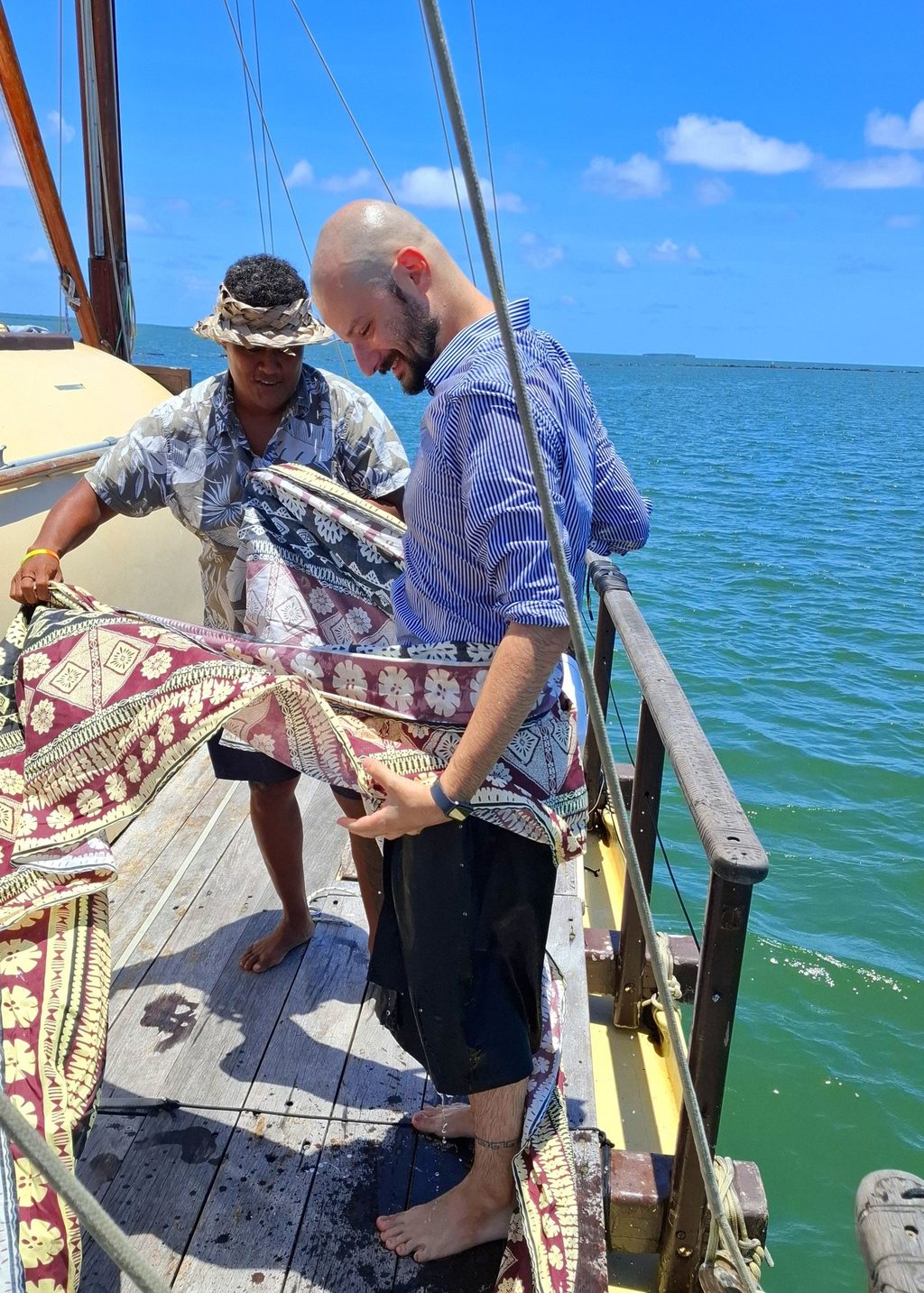
Randin is accorded a traditional welcome on board the Uto ni Yalo by Ivanancy Vunikura. Picture: GREG RANDIN/FACEBOOK

