
Kava Bill FLOYD ROBINSON MICRONESIA While there is strong interest in public consultations about the new Kava Bill, one wonders whether there is sufficient attention on the management on the Kava Dieback disease in Fiji. Do we have estimates of the number of famers having kava plantations across the country and which areas are prone to the Kava Dieback disease? It is a serious threat to our kava industry and let’s maintain consistent tabs on our kava stocks as well as the diseases which threatens this plant, which is so vital to our economy. Meanwhile, the consumption in our communities continues to reach high levels with some enjoying as much as 50- 80 dollars per kava session, let alone the cost of cigarettes and chaser. All in all, one looks forward to wide participation during the consultations for the Kava Bill, leading to a Kava Act. Meanwhile, I will still rate the kava from Qamea Island as the best in Fiji.
Who is hallucinating? RAKESH CHAND SHARMA NADI TAHIR Aslam Gora, is the Founder and CEO of Tag TV of Canada. He is of Pakistan origin and openly claims that his ancestry comes from Hindu Chawla family and is a friend of India. Tahir Gora says that Pakistanis have an identity crisis. Sometimes they claim that their ancestry is from Turkiye and sometimes Arabs. Rajend Naidu’s intense dislike for India and its people expressed through statements in his LTE’S in the past two years makes me believe that he is confused and hallucinating like Pakistan’s population.
A call for action SURESH CHAND NADI I STRONGLY encourage the Fiji Roads Authority to make the construction of bus shelters a top priority in areas that currently don’t have them. For instance, the bus bay near RC Manubhai, Nataly Store, and the one before Challenge Plaza Complex are all without shelters. These bus bays see heavy daily usage by commuters, including school kids and elderly folks heading to Nadi Town. Having these shelters is essential for providing comfort and improving accessibility for bus passengers and anyone waiting for public transport. It’s really upsetting to see commuters, particularly young children and seniors, left out in the open without any protection or seating against the elements. We have a responsibility to our community to create better waiting areas where everyone can feel safe and at ease while waiting for their bus.
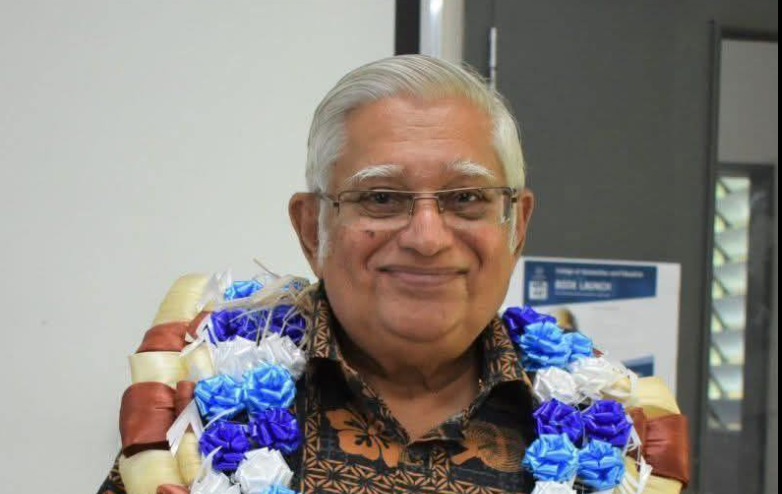
Congratulations in order SHAMAL CHAND KUKU VILLAGE, NAUSORI CONGRATULATIONS Dr Joji Malani on your award “Honorary Doctor of Science” by the University of Otago in New Zealand. Thank you for your dedication, care, and compassion towards your patients. Your support and expertise truly mean a lot to me and my family. We are very grateful for everything you’ve done. You have made Fiji, the South Pacific and the rest of the world proud with your achievement.
Leadership issue AREKI DAWAI SUVA WHEN the people hoped that it would get out of a bad leadership, the three wheeler Coalition Government under the leadership of Rabuka, Biman and Gavoka is worse in my personal opinion. I believe the current government has lost the confidence and trust of informed people because of the mental outlook the current Cabinet has.
A concern DAVID CHAND LAUTOKA I WRITE with deep concern regarding the ongoing environmental damage caused by two invasive bird species in Fiji — the Common Myna and the ever–growing populations of feral pigeons — and the long–standing failure to formally classify them as pests. The common Myna is internationally recognised as one of the world’s most damaging invasive species. The IUCN Species Survival Commission has listed it among the Top 100 worst invasive species, noting its severe impact on biodiversity, agriculture, and human interests. Research from Fiji itself shows that the myna has become “one of the worst invasive species in Fiji”, introduced in the late 1800s and now deeply established across both rural and urban landscapes. Scientific findings globally continue to demonstrate that mynas outcompete, harass, displace, and even injure native bird species. A study published by Cambridge University Press confirms that mynas are known to attack small endemic birds, interfere with nesting, and cause measurable declines in fragile populations. Given this, it is no surprise that many Fijians observe that our native birdlife has drastically declined, with mynas visually dominating many regions where local species once thrived. While exact percentages require further scientific assessment, Fiji’s own national biodiversity reports identify invasive species as a top threat to Fiji’s terrestrial biodiversity, above many other pressures. Feral pigeons, for their part, are well– documented carriers of diseases globally, and Fiji is no exception. These birds contribute significantly to building contamination, droppings–related health hazards, and structural damage — yet remain unlisted as declared pests under existing Fiji legislation such as the Birds and Game Protection Act or related regulations. Meanwhile, the Biosecurity Authority of Fiji (BAF) has repeatedly emphasised that invasive species pose serious risks to the economy, human health, and the environment, and their mandate includes preventing and controlling regulated pests and diseases. In 2020, BAF even signed an MOU to improve management and eradication of invasive mynas — formally acknowledging them as environmental and agricultural pests. Yet despite these acknowledgments, the Government has still not formally declared mynas or pigeons as pests nationwide. This raises the question: Why has the Government slept on this issue for decades? With biodiversity loss accelerating, and invasive species already recognised as a top threat, the continued inaction is difficult to justify. Fiji’s environmental, agricultural, and public–health interests demand a modernised, evidence–based approach to pest classification. Proper legal designation would enable coordinated national control programs, funding support, and structured eradication efforts — all urgently needed. Fiji cannot continue to overlook this threat. The time has come for the Government to act decisively and finally classify the Common Myna and feral pigeons as the pests they unquestionably are.
Important question COLIN DEOKI AUSTRALIA SOME have been debating the question: was Voreqe Bainimarama a great leader? Few leaders in Fiji’s modern history have left as deep and complex a footprint as Mr Bainimarama. His years at the helm, first as a military installed leader after the 2006 coup and later as an elected prime minister from 2014 to 2022, he reshaped the nation’s political, social and international landscape. Whether one views his leadership as transformational or troubling often depends on where one stands politically and culturally. What’s beyond dispute, however, is that his legacy is both significant yet passionately contested by those that view him as arrogant and dictatorial. Supporters credit Mr Bainimarama with attempting to redraw the foundations of Fiji’s national identity. One of his most strategically striking moves was the introduction of the 2013 Constitution which still holds sway in today’s political landscape. While it was forcibly imposed upon the nation without due constitutional process, it replaced race-based electoral rolls with a common voter system without constituencies. And it further declared all citizens to be known simply as “Fijians”. While many celebrated this milestone move, there were many others of our indigenous iTaukei community, who saw this as an attempt at diminishing and stealing their cultural and traditional identity. While it was a bold attempt to move the country beyond ethnic divisions that had long defined the nation’s politics, I believe it contributed to tensions between the two major ethnic races — the indigenous Fijians and IndoFijians. The return to national elections in 2014 and again in 2018 was presented as the restoration of democratic rule under this new framework. His government also invested heavily in infrastructure and social programs. Roads, bridges, rural electrification, water access and transport assistance for school children expanded during his tenure. Free primary and secondary education eased burdens on families. In many rural and maritime communities, tangible improvements in access and services were felt for the first time in decades. These aren’t minor achievements and remain part of his legacy and the lived experience of many citizens. On the world stage, Mr Bainimarama elevated Fiji’s international voice, particularly on climate change. Fiji’s presidency of the UN climate conference COP23 in 2017 was a milestone moment, positioning the country as a moral advocate for small island states facing existential environmental threats. He also broadened Fiji’s foreign relationships beyond traditional partners, pursuing a more diversified diplomatic strategy. Yet these achievements sit alongside serious criticisms on alleged human rights abuses and violations by his opponents and dissenters — some of whom were allegedly taken to the army barracks and severely beaten and their families threatened with serious consequences. These alleged improprieties cannot be ignored or conveniently swept under the carpet. Mr Bainimarama came to power through a military coup, an act that disrupted constitutional rule and reinforced a cycle of extra-parliamentary intervention in Fiji’s democracy via questionable decrees. For many citizens, this origin casts a long shadow over everything that followed. His years in office were also marked by stringent controls on media freedoms and public dissent. Media regulations, emergency powers in earlier periods and legal pressure through questionable decrees led to persistent concerns from human rights groups and press freedom advocates. Opposition figures and trade union leaders frequently claimed the political playing field was uneven and that state power was used to aggressively clamp down against dissenting voices. There were also deep concerns among some indigenous leaders that reforms weakened traditional institutions and diluted long-recognised institutions like the GCC that he forcibly disbanded then abolished with demeaning comments like, “Go drink home brew under the mango tree!” History rarely delivers simple verdicts on strong leaders. Mr Bainimarama’s tenure combined nation-shaping reforms with methods that many believe strained democratic principles and freedoms. He advanced a powerful vision of a non-racial state and raised Fiji’s global profile, yet governed with what appeared to be an iron fist and a firmness that critics say narrowed democratic spaces while creating cracks within the establishment. In the years ahead, his legacy will likely be argued in classrooms, kava circles and parliamentary chambers alike. Perhaps the most honest conclusion is this: Voreqe Bainimarama didn’t leave Fiji unchanged. And whether that change is judged as progress or overreach will depend on which values one holds most dear. If I was asked about his leadership, my simple response would be this: good leadership in my book is about ethics, integrity, visionary values and compassionate restorative justice. Does Mr Bainimarama’s leadership fall into this category of evaluation? Or does he miss the mark? You be the judge!
Three lanes TAI SMITH NASINU SECONDARY SCHOOL RD., KINOYA, NASINU HONOURABLE Assistant Minister, commuter behaviour is dependent on their livelihoods. Their attendance and punctuality is determined by their behaviour. This is a definite. Can you please look at putting up a three lane road from Nausori to Suva at least – four lane would be preferable. Start with all our bridges. In the morning, let’s have a two way from Nausori to Suva both on the Kings Road and Princes Road with a one way in the reverse direction. In the afternoon have a two way from Suva to Nausori and one way in the reverse direction. I saw this being done in Australia and I’m certain we can do it here. This may not be the entire solution, but it may lessen the congestion.
Allow the platform to flourish SURESH CHAND NADI THE letters to the editor section represents a valuable space for sharing and exchanging opinions respectfully. It provides individuals with a platform to express their thoughts on issues they care about. This forum encourages meaningful discussions and constructive debates, which are crucial for maintaining a robust democracy. Without such exchanges, the foundation of democracy may begin to weaken. It is essential to prioritise logical reasoning in our pursuit of truth while remaining cautious of falling into logical errors. Equally important is the need to respect the rights of others while advocating for our own perspectives. Instead of targeting individuals for holding differing views, we should focus on engaging thoughtfully with the ideas they present. I trust that these discussions will be conducted with sincerity Let’s strive to protect and preserve the environment while fostering understanding and mutual ing in our pursuit of truth while remaining cautious of falling into logical errors. Equally important is the need to respect the rights of others while advocating for our own perspectives. Instead of targeting individuals for holding differing views, we should focus on engaging thoughtfully with the ideas they present. I trust that these discussions will be conducted with sincerity and consideration. Let’s strive to protect and preserve the environment while fostering understanding and mutual ing in our pursuit of truth while remaining cautious of falling into logical errors. Equally important is the need to respect the rights of others while advocating for our own perspectives. Instead of targeting individuals for holding differing views, we should focus on engaging thoughtfully with the ideas they present. I trust that these discussions will be conducted with sincerity and consideration. Let’s strive to protect and preserve the environment while fostering understanding and mutual respect.
Flour in kava DINESH KUMAR BA IT is deeply regrettable to learn that certain local kava dealers have taken to adulterating their product with flour for both local retail and export. Such conduct is not only unethical but potentially harmful to consumers who expect kava, not an impromptu baking ingredient, in their cup. This practice undermines public trust and tarnishes the reputation of a product that holds cultural and economic significance. Once identified, those responsible ought to face substantial fines, and their business licences should be permanently revoked. If one wishes to enter the flour trade, one might at least have the courtesy to open a bakery rather than tamper with our beloved kava. What do we expect next? Kava – flour panikeke? Kemudou!
Loss of a prominent writer! RAJNESH ISHWAR LINGAM NADAWA, NASINU IT was with a heavy heart that I learned about the peaceful transition of Mr Bhagwanji Kantilal Bhindi, a renowned educationist, visionary leader, writer and distinguished scholar. For Mr Bhindi, writing was an adventure and learning endeavour full of enlightenment, knowledge and development. Born and raised in Vunimoli, Mr Bhindi clawed his way to stardom. He was a great teacher — a delightful one who inspired, nurtured and educated thousands of students both at secondary and tertiary schools. He was the principal of MGM High School and a lecturer at FNU. He credited his parents who had a deep influence on his upbringing. They nurtured human and moral values such as honesty, respect, compassion, tolerance and love, and these values were embedded in Mr Bhindi as he left an indelible mark in the lives of many. His humility and down-to-earth nature influenced his writing. I quote Mr Bhindi (FT: 03/12/2020), “Every person should write something as it helps in critical thinking, creates joy and happiness, eases pain, spreads important and life-changing messages. Writing is my passion and my hobby.” Mr Bhindi started writing when he was a student. He wrote poems in bits and pieces during high school and university days. He began writing on social, cultural, nature based, personal, political and educational issues. The different situations in life, current news, the environment, people’s behaviour and actions, and events that affected human beings inspired Mr Bhindi to write. The likes of Shakespeare, Edgar Allen Poe, Robert Frost, William Wordsworth and Rabindranath Tagore influenced him deeply. His books touched hearts as his collection of poems defined his passion as a writer. His contributions to the letters to the editor column will be cherished. He was a role model for me. During the COVID-19 pandemic, Mr Bhindi suffered a huge blow when he lost his beloved son and wife, but he did not give up on life and continued writing poems. He was a devoted family man and a pillar of strength for the young ones. His loving spirit, smile, wisdom, poetry and kindness will be missed by many. I’ll miss him and his poems, that were published in this column, namely ‘What it means to be human’, ‘Technology and connection’, ‘Greed and gratitude’, ‘Memories- Energy of life’, ‘Resilience through hard times’, ‘A cane a day keeps the children away’, ‘Suicide – A matter of deep concern’, ‘From punishment to restoration’, ‘Unveiling Fiji’s dropout crisis’, ‘Light your soul’, ‘Collaborate with youth voices’, ‘Social status’, ‘Self-respect’, ‘Digital family’, ‘Art of teaching’, ‘Yearning for learning’, ‘Holiday time’, ‘Road safety’, ‘Wondering if’, and ‘Ocean, the teacher’, which was published last Saturday. Rest high, literary warrior! Until that glorious morning, ni moce mada!
Valentine’s Day FLOYD ROBINSON MICRONESIA ISA LEI, it is that time of the year again, when the atmosphere is saturated with a romantic aroma and love is at an all-time high. The bright red arrows blessed with love fall from the skies. These are not painful but romantic arrows which tickle the heart. Valentine’s Day has arrived. While one is entitled to one’s opinion, let’s just hope that love this weekend, is not controlled by the commercial giants and extends well beyond a single day. Let us check our purses the day after Valentine’s Day. There is a saying that lovers live longer but even sweeter when love is meaningful and long lasting, beyond a single day. Have a lovely weekend and let’s just hope that Valentine’s Day does not distract our Drua players on the rugby paddock.
Just like network SHAMAL CHAND KUKU VILLAGE, NAUSORI I HAD written earlier in the Letters to Editor about poor internet service. Area manager came home, discussed and promised to come back the following week with updates and solutions. Guess the area manager has also vanished just like the company’s poor network.
Lab equipment TAI SMITH NASINU SEC SCH RD, KINOYA, NASINU I HAVE been informed that our lab equipment at the CWMH is limited, and borders on being archaic. If this is true, can we please seek out donors who will give us equipment to be used for the population instead of cars for a single purpose. I have been informed that we have the personnel but not the equipment. We need to conduct tests that could save lives and expedite the results for action to be taken — just to clarify I’m talking about genetic testing. Three wise men.
Mickey Mouse 7s game AJAI KUMAR NADI I THINK Jan Nissar has rubbed enough salt in labelling the World Rugby sanctioned and Fijian popular 7s game as a Mickey Mouse game. Similarly, I do not think the Fijians give two hoots about their footy game either. However, most of Jan’s letters which have a sarcastic slant are logical and a pleasure to read but this one on Mickey Mouse is a bit like a broken record.
Traffic chaos VILI YARANAMUA BA I REFER to your article concerning the traffic chaos along the Suva-Nausori corridor (FT 13/2). Traffic congestion will continue. The long-term planning and practical infrastructure improvements will continue. The increasing number of vehicles will continue. The growing population will continue. During the colonial days and after independence and reaching the new millennium, traffic was flowing quite good. As the years goes on, more vehicles are imported, new roads built and more people buy cars. It is frustrating and stressful. Fiji is just a dot on the world map. We are in the 21st century now. It’s about time now which ever government is in power in the future to build high class cement highways and cement protection walls on both sides as we witness and see in other countries. We have to build up now, no more build across or sideways. As Fred Wesley mentioned, the challenge is to find practical, sustained ways to ease the burden on commuters. Be happy and enjoy driving.
Jawbone restrictions SAMU RAILOA VANUABALAVU GOVERNMENT restrictions with the harvesting and trading of seasonal cucumbers or sasalu is like telling people to eat without moving their jaws. It’s one thing telling businesses how to operate, but regulating the market will invite undesirable dealings as the sharks of the trade vie for a bigger chunk of the market. Already, calls by some traditional chiefs to ban the harvesting of sasalu on their qoliqoli has not gone down well at the grassroots level. It’s open season. Give supply and demand a run. Let everyone make a living while the opportunity lasts.
Traffic congestion TAI SMITH NASINU SEC SCH RD., KINOYA, NASINU JUST a question to our Minister for Transport. Has a study ever been carried out to address the Peak Hour traffic? Have we looked at the possibility of having trains from Suva to Nausori and from Naboro to Suva, at least. I think it is high time that feasibility studies (if any has been done?) is carried out and for the preliminary works to begin. This must be done now as housing settlements are springing up all over the place and before you know it the government will not only pay landowners but will need to relocate settlers. Settlements are springing up right beside the road – a good example is Cunningham Road in Suva where a front door virtually opens up within a meter of the main road. Act now please as we need to stop the urban drift which has resulted in these settlements springing up all over the place. Cost of transportation is always increasing. Commuters will be able to reside in their villagers and return daily. Our children will be able to stay with their families and attend school. This will help bring back stability to the family unit where parents will be able to monitor their children’s daily activities. So, Mr Minister, please get onto this. Look for donors – I’m sure the fancy car for the President could have paid for the feasibility study at least- they maybe some other government who really has Fiji at heart who will assist.
Tariff issue DONALD SINGH NAUSORI IN its summary of the 21-day public consultation, FCCC reportedly revealed that 51 per cent of the 975 submissions supported the reasoning for a tariff adjustment. Publish the names of the individuals and institutions who are supporting the tariff increase. The public deserves to know the 51 percent of the 975 and what they said exactly. Even the 49 per cent might want to be seen. It’s a national matter. Placing the support percentage at 51 looks sinister. The reports coming out during the 21-day sham consultation bordered on comedy and calendars seemed to have taken centre stage. Rigging the numbers would be the ideal way to vindictiveness. I don’t need to say more here. I read the tariff increase decision has been postponed to April. It’s like weakening us with jabs while adding rounds to the bout, then the power punch may not even be required. The public will eventually run out of steam fighting. Oh, talking about the number 51, Government owns 51 per cent of EFL, so as the majority shareholder, Government could pull the curtains down on this nonsense.

