

A RENEWED push to develop Fiji’s bamboo sector is gaining momentum, with government officials and international partners positioning the fast-growing resource as a future pillar of rural enterprise, green manufacturing and eco-tourism.
The focus was highlighted this week during the opening of a bamboo weaving workshop hosted by the Indonesian Embassy, supported by the Ministry of Forestry and staged alongside a bamboo product exhibition at the Fiji Arts Council.
Deputy conservator of Forests Operations and Services, Apisai Rinamalo said the initiative reflected a growing bilateral effort between Fiji and Indonesia to transform bamboo from an underutilised resource into a commercially viable industry capable of supporting sustainable livelihoods.
“This workshop is not only about craftsmanship, but about knowledge transfer, innovation and empowerment,” he said.
“It is about equipping our artisans, youth and community enterprises with the skills and confidence to transform natural resources into high-quality products that can tell a Fijian story while sustaining our forests.”
Untapped potential
Officials believe bamboo offers strong business prospects across several sectors, including furniture manufacturing, handicrafts, construction materials and creative industries, particularly as global demand grows for renewable and climate-resilient materials.
Through the Fiji-Indonesia partnership, forestry officers, artisans and stakeholders have already undergone training in bamboo processing, treatment and product development, where 12 artisans from Naitasiri and Tailevu provinces travelled to Indonesia last year for specialised capacity-building programmes.
The two provinces were selected for pilot initiatives because they are well known bamboo growing regions in Fiji.
Authorities hope the training will support the emergence of community-based enterprises and small-scale manufacturing clusters.
Mr Rinamalo said the Government was now exploring the development of a formal bamboo industry as part of its broader non-timber forest programme, aligning with national priorities on sustainable forest management, rural economic diversification and climate adaptation.
“Bamboo is fast-growing, renewable and well suited to Fiji’s ecological conditions, yet its full potential remains largely untapped,” he said.
Bamboo-tourism links
Beyond manufacturing, officials are also examining bamboo’s role in eco-tourism ventures.
A new community-based bamboo forest park established in Namosi last year is being developed through cooperation between the Ministry of Forestry and local landowners, with tourism authorities also involved in promoting the concept.
Indonesian Ambassador to Fiji Dupito Simamora said the development of bamboo-based attractions could complement Fiji’s expanding tourism sector while creating additional income streams for rural communities.
“There is a sleeping opportunity for Fiji to develop bamboo in the future,” he said.
He added that high-quality bamboo products could become marketable exports if supported by sustained training, product design and industry standards.
Long-term partnership
Indonesia has indicated its intention to extend technical and financial support for the sector, with discussions under way to establish a five-year development roadmap aimed at ensuring the bamboo industry becomes commercially sustainable.
Mr Simamora said future cooperation could include continued skills training, product innovation programmes and broader collaboration with Fiji’s arts and creative industries, particularly as the region prepares for the Melanesian Arts and Cultural Festival later this year.
For policymakers and development partners, this initiative represents more than a cultural or environmental project.
It signals a strategic attempt to nurture a new green industry capable of generating employment, strengthening rural economies and positioning Fiji within the growing global market for sustainable materials.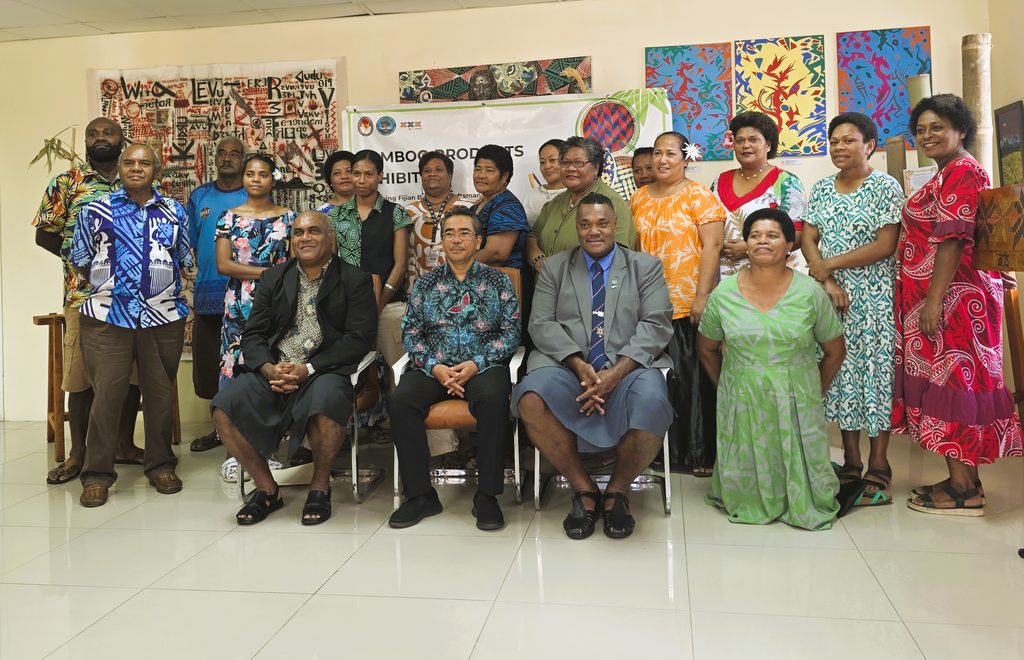
L-R (front-seated): Fiji Arts Council director, Maciusela Raitaukala, Indonesian Ambassador Dupito Simamora, and deputy Conservator of Forests, Apisai Rinamalo.
Picture: ALIFERETI SAKIASI
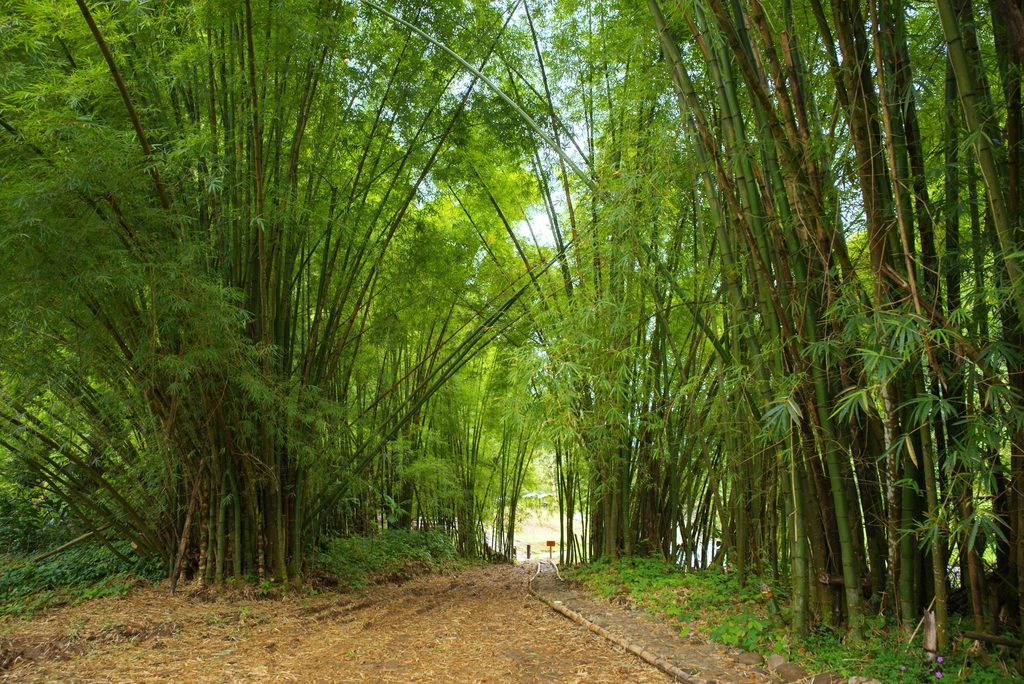
The Dakuinaroba Bamboo Park in Namosi owned by the Mataqali Namara.
Picture: SPINNING VILLAGE

