
Fiji’s growing HIV crisis is being driven in part by the intravenous use of methamphetamine, a pattern that sets the country apart from the rest of the Pacific, church leaders were told this week.
Associate Professor Jose Santos, from the Pacific Regional Security Hub at the University of Canterbury, said Fiji was “the only country in the Pacific where methamphetamine is being injected”.
“Anywhere else in the Pacific it’s smoked, hence the reason why you have a tsunami of HIV cases,” he said.
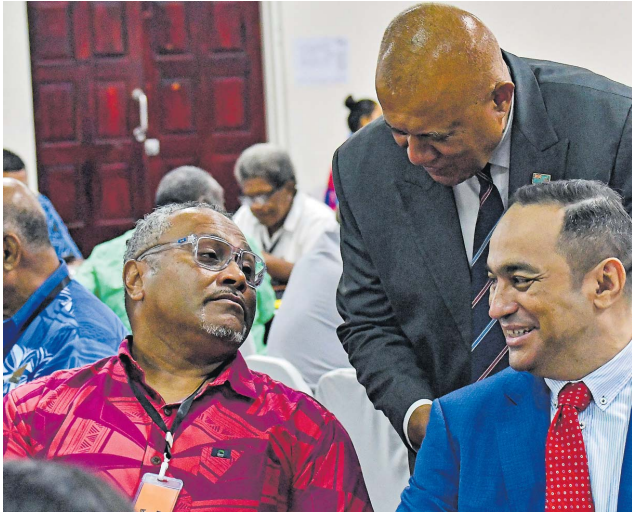
Prof Santos was speaking at the National Pastoral Response to Addressing the Drug Crisis in Fiji, a national ecumenical workshop attended by church leaders and partners from Government and law enforcement.
He said the Pacific’s role in the global drug trade had changed over the past decade. Where the region was once primarily a transit point, it was now developing local markets that were financially viable for criminal groups.
“Ten years ago, the way drugs moved through the Pacific was through facilitators.
“A small number of people from commercial elites or linked to the Government or to the agencies would get paid a large amount of money to facilitate the movement of drugs through the region.”
Payment models later shifted
“You can either get paid in drugs, in meth and cannabis, or you can get paid in cash and if you got paid in drugs, you can sell the drugs, and that will triple your return.
“But the solution is you need to have a local market.”
He said that was why local drug markets were now appearing in Fiji, Tonga, Vanuatu, and Papua New Guinea, giving rise to what he described as an indigenous regional criminal network.
“These groups connect. We have an indigenous regional criminal network which is connected from Solomon Islands to Fiji, to Vanuatu, to Papua New Guinea. They work in conjunction to facilitate the movements of these larger criminal centres.”
Churches as early observers
Prof Santos said churches were often the first to notice changes associated with drug use in their communities.
“The churches are the first ones to realise what’s going wrong. You see your young men not turn up on Sunday; you see the changes in their behaviour. You see who’s turning up to your villages, to your parishes, who should not be there.”
He said coordination with law enforcement was critical.
“There must be coordination between yourselves and law enforcement.”
He warned that relying on media images could create a false sense of distance.
“It’s difficult to turn around and to look at what you see on TV. When people talk about drug use and it keeps you far away, but this is happening in Fiji now.”
Children and human trafficking
Drawing on his experience in Timor-Leste, Prof Santos described how children were often exploited in the drug trade.
“I had 11 and 12-year olds sitting on the street, with their arms out, putting a needle into their arms, injecting and then being taken away by older men.
“Children start to go missing from villages. At first, we think they’ve run away to the city. But you go to the city, and you don’t see them.”
He said traffickers moved victims across countries in the region.
“We used to follow them to Bali and then to Thailand.”
Criminal networks ahead of authorities
Prof Santos said transnational criminal groups in the Pacific were technologically sophisticated and often infiltrated institutions.
“They are utilising technological tactics which the Fijian Government and law enforcement do not have — second-rate subs, drones, security locations, cyber.
“They have people infiltrated within Government, within law enforcement, within your parish or something.”
He said the networks were often a step ahead.
“We are really one foot behind. They are ahead. But we must counter this.”
He warned that delays in action allowed the establishment of local bases.
“Every month that you wait, the speed at which these cartels move means that they are able to set up temporary bases for resupply of speedboats, resupply of the yachts that are taking the grounds in.
“Every time you have one of these bases set up, that means there is a village for those social outposts, which is relying on the funds that are being paid by that base.”
Seizures are not stopping the flow
Despite record seizures in Australia and New Zealand, Prof Santos said, supply remained steady.
“Currently Customs in New Zealand are seizing more methamphetamine and cocaine per week than they previously seized per year. And the drug is still coming through.”
He noted that street prices showed the supply was unaffected.
“One gram of methamphetamine is still $300 in New Zealand. One gram of cocaine is still $350.
“If you were having an impact on the drugs coming into New Zealand, the prices would rise. All these new seizures, it’s a large amount and constant.”
Fentanyl — an emerging danger
Prof Santos said the next major threat was fentanyl, which he said was far more lethal than methamphetamine.
“Fentanyl kills, its potency makes even minor variations dangerous.
“The strength of the fentanyl being the solidest piece changes by 0.5 per cent. Just in strength. If you want 1 per cent stronger, 0.5 per cent. They’re all overdose.”
He also warned that Fiji had little capacity to respond.
“Narcan is the only thing that saves somebody who is low dose on the drug. In the US, people carry it with them. Here, we don’t even know it.”
He said fentanyl was cheaper than methamphetamine and accessible to young people.
“A hit of fentanyl will probably cost the young Fijian on the street five, ten dollars per person. That’ll last them all day.”
Urgency and action needed
Prof Santos said churches must use existing international tools, including those from UNODC, and adapt them in Fiji.
“We don’t have to reinvent the wheel. Let’s grab that tool and contextualise it.”
He warned that delay had consequences.
“When I started seeing this in Southeast Asia, it was much too late. But in Fiji, we can still stop this. Education, partnership, cooperation. If we don’t, I’m not talking 10 years down the line, this will spread.”

