
WITH the increase in drug movements out at sea, licensed officers should be better equipped to monitor suspicious vessels within Fiji’s maritime domain.
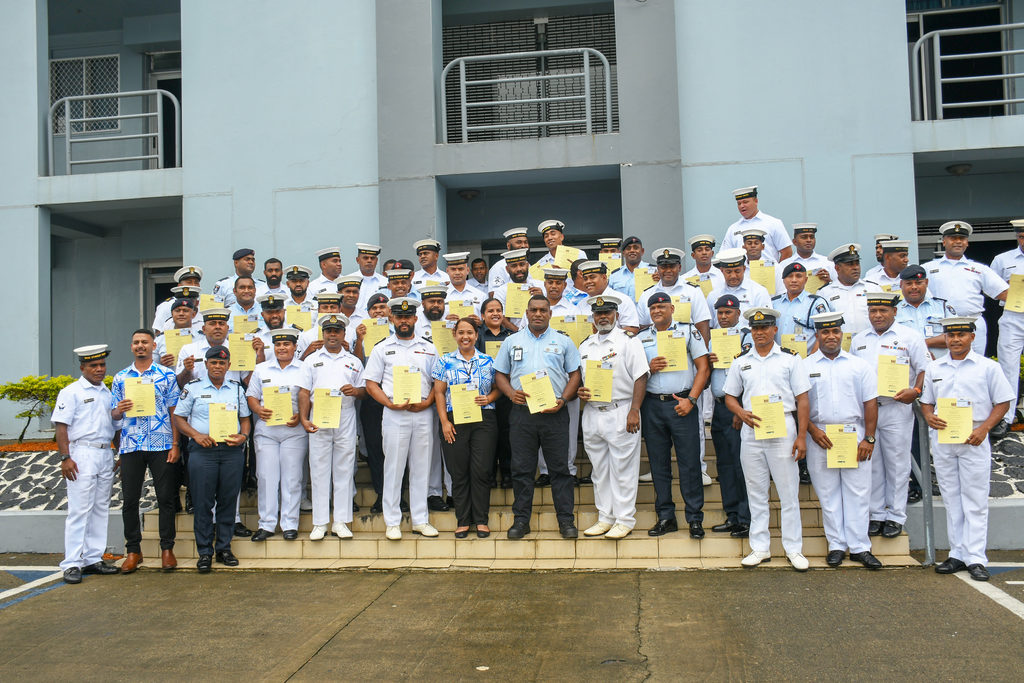
Last week, Fiji’s maritime security capacity received a boost as 65 officers from the Republic of Fiji Navy, the Fiji Revenue and Customs Service (FRCS), and the Fiji Police Force’s Water Police Division successfully completed training in the Boat Masters Licence (BML) and Restricted Master Engineer Licence Class 6 (RMEL6) in Suva.
The certification of operators strengthens inter-agency coordination, making joint operations more efficient and professional, while enhancing border protection and maritime surveillance.
Funded by the United Nations Development Programme, with support from the UK Government, the training was conducted by the Maritime Safety Authority of Fiji.
The chief guest at the event was the Minister for Defence and Veteran Affairs, Pio Tikoduadua, who highlighted that maritime security remained a national priority for Fiji.
He stated that protecting and managing the country’s maritime space required strong inter-agency coordination, well-trained personnel, and continued international support from partners such as the UK and UNDP.
Mr Tikoduadua also emphasised the importance of unity of effort, capacity building, and the responsibility of officers to safeguard Fiji’s seas from threats, including drugs and other non-traditional security risks.
Fiji Navy Commander Timoci Natuva acknowledged the positive impact of the training on operational readiness, noting that completion of the BML and RMEL6 qualifications improves the safe operation and maintenance of vessels while strengthening professional standards across participating agencies. Captain Natuva said the oceans were not there to separate but connect us.
“This the first time for some of our personnel to undertake this course so its important for capacity development.”
He said the training would make personnel competent to operate out at sea.
The MSAF highlighted that participants from the three agencies underwent intensive theoretical and practical training, boosting their capacity to conduct maritime patrols, border protection, search and rescue operations, and coordinated maritime responses.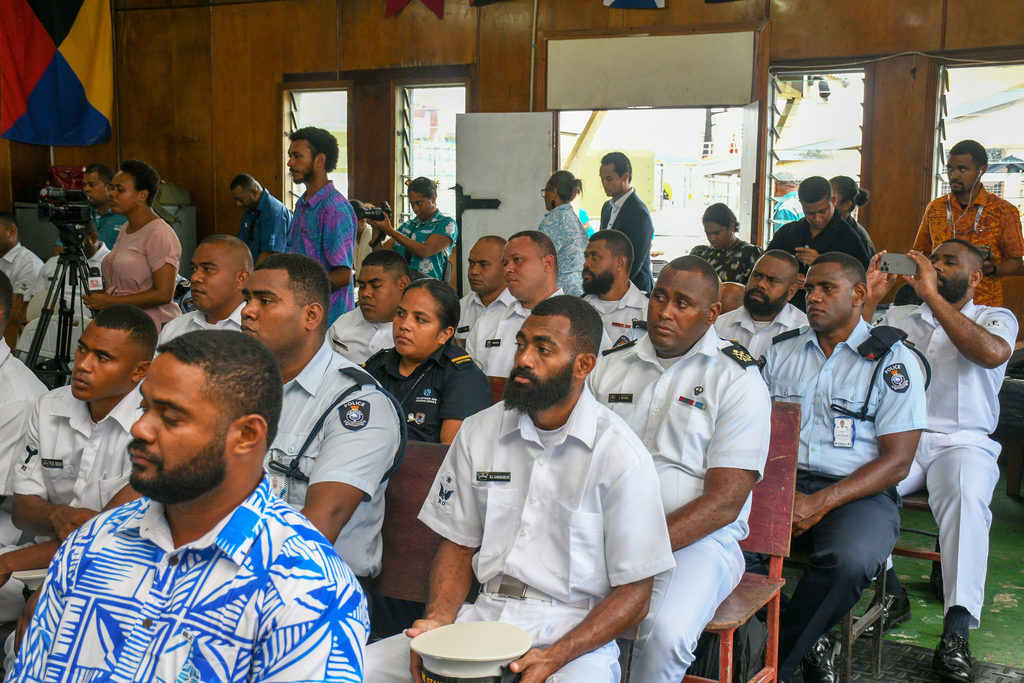
Police officers, Naval officers and Customs officer during their graduation ceremony last week Friday. Picture: LITIA RITOVA

