
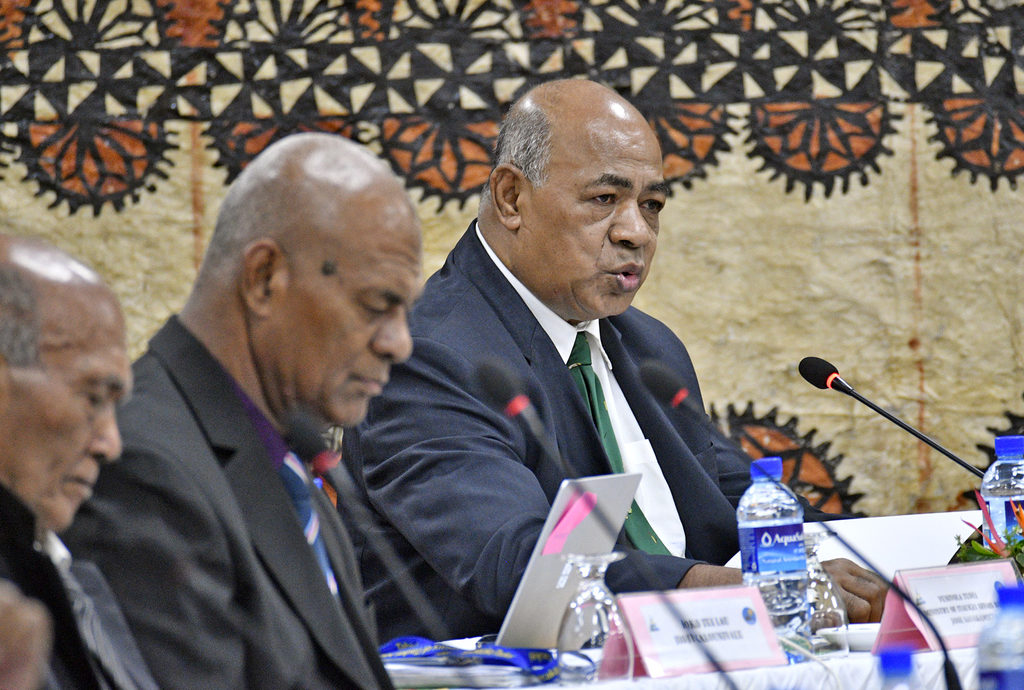
LAU Provincial Council chairman Ratu Meli Saubulinayau believes Fiji is failing its children by not providing enough rehabilitation centres for those struggling with drug abuse. He argues that families and communities, especially in outer islands like Lau, are being left with nowhere to turn for help.
We say Ratu Meli has a strong point. It is an issue The Fiji Times has been advocating for more than four years.
It is a major concern, and we are somewhat relieved that Ratu Meli is now adding his voice to the call.
It has to happen. There must be a real sense of urgency about putting in place measures to ensure rehabilitation centres are established and operational as soon as possible.
Ratu Meli has warned that Fiji’s limited treatment options are weakening national efforts to tackle addiction. This, he says, makes it extremely difficult to assist people battling addiction, even when families and communities are prepared to step in and help.
He also cautions that drugs are no longer an urban problem. They have reached remote island communities where access to professional treatment and counselling services is even more restricted. In such settings, the absence of facilities leaves families feeling helpless and abandoned.
The Government, he insists, must urgently strengthen rehabilitation and mental health services and consider seeking regional and international assistance. Engaging countries such as Australia, New Zealand and the United States could help Fiji develop practical and sustainable solutions. Without proper rehabilitation services, he warns, those fighting addiction are left unsupported, increasing the likelihood of reoffending and deepening the harm to communities.
On June 7, 2024, we wrote: “After three years of pushing for this, we are now anticipating that it’s ‘all systems go’ for rehabilitation centres for drug addicts in the country.”
At the time, Health Minister Dr Atonio Lalabalavu confirmed there were plans to build drug rehabilitation centres in Fiji. Last month, the Ministry of Health finally confirmed that a new rehabilitation hospital for drug addicts will be built in Tamavua over the next two years. At last, we have a timeframe.
The question now is whether this timeframe reflects the urgency of the crisis. Drug abuse is not standing still. The number of addicts is growing, and communities across the country are feeling the strain.
So what happens in the meantime to those struggling to break free from addiction? Jessica Brown, ambassador for the United States-based Foundation for a Drug-Free World, met Government officials in 2024 and highlighted a critical truth. Many addicts cannot quit on their own. Addiction is not a failure of willpower. It is a complex health condition requiring medical treatment, psychological support and sustained social intervention.
When left unaddressed, addiction fuels a range of serious social problems, from crime, prostitution, the spread of HIV, to broken families and entrenched poverty, to name a few. The longer we delay rehabilitation services, the heavier the burden becomes for society as a whole.
While we acknowledge and welcome the confirmed timeframe for the Tamavua facility, there must be firm commitment and genuine urgency behind it. Plans on paper will not save lives. Budgets under discussion will not restore families. Committees and consultations, while necessary, cannot replace immediate action.
Drug addiction will not pause while buildings are designed and contracts are awarded. Every day, more young people fall prey. Every day, families are pushed to breaking point. Every day, the social and economic costs escalate. It is encouraging to see leaders like Ratu Meli standing up and demanding better for our children and communities. This must not be a lone voice. It should be a united national call.
If we are serious about confronting the drug crisis, then rehabilitation must be treated as an immediate priority. Pull out all stops. Fast-track the plans. Seek the partnerships. Allocate the resources.

