
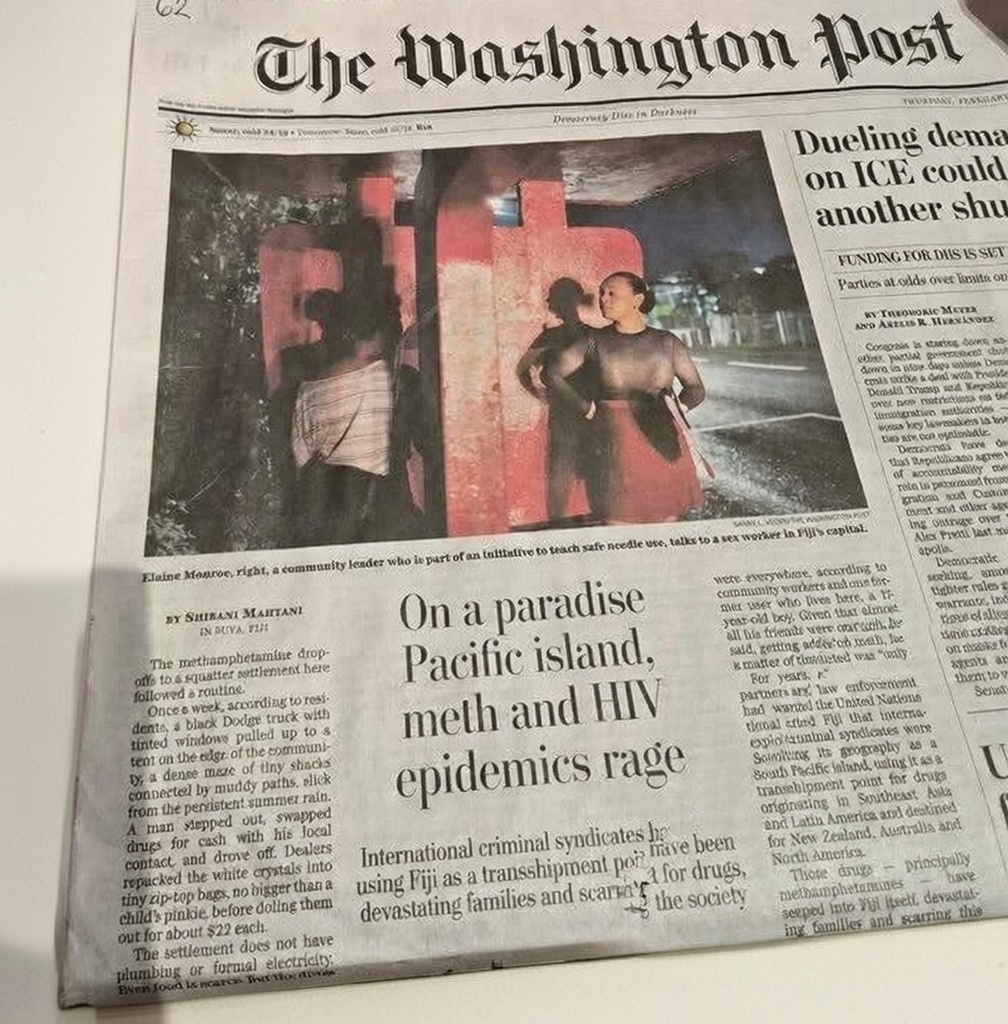
Fiji’s escalating methamphetamine crisis has been thrust onto the global stage, with The Washington Post publishing a front-page report that paints a stark picture of how international drug trafficking is fuelling social breakdown, addiction and a parallel HIV epidemic.
In an article headlined “On a paradise island in the Pacific, meth and HIV epidemics rage,” journalist Shibani Mahtani details how methamphetamine has penetrated some of Fiji’s most vulnerable communities, transforming informal settlements into regular drop-off points for organised drug networks.
“Once a week, according to residents, a black Dodge truck with tinted windows pulled up to a tent on the edge of the community,” the article reports from Suva.
“A man stepped out, swapped drugs for cash with his local contact, and drove off.”
The drugs were allegedly repackaged into small zip-lock bags “no bigger than a child’s pinkie” and sold for about $50 (US$22) each, in communities where access to basic necessities remains scarce.
“The settlement does not have plumbing or formal electricity. Even food is scarce,” the report states.
“But the drugs were everywhere.”
The article includes the account of a 17-year-old former user who said meth use had become so widespread among his peers that addiction felt inevitable.
“Given that almost all his friends were on meth,” he said, “getting addicted was ‘only a matter of time.’”
The Washington Post report also revisits long-standing warnings from international law enforcement agencies and the United Nations, which have cautioned that Fiji’s strategic location has made it attractive to transnational criminal syndicates.
These groups allegedly use the country as a transshipment hub for drugs originating in Southeast Asia and Latin America and bound for Australia, New Zealand and North America.
“Those drugs — principally methamphetamines — have seeped into Fiji itself,” the article notes, “devastating families and scarring the society.”
The global exposure comes amid mounting concern locally over drug-related arrests, large-scale cocaine and meth seizures, and growing links between drug use and the spread of HIV.

